

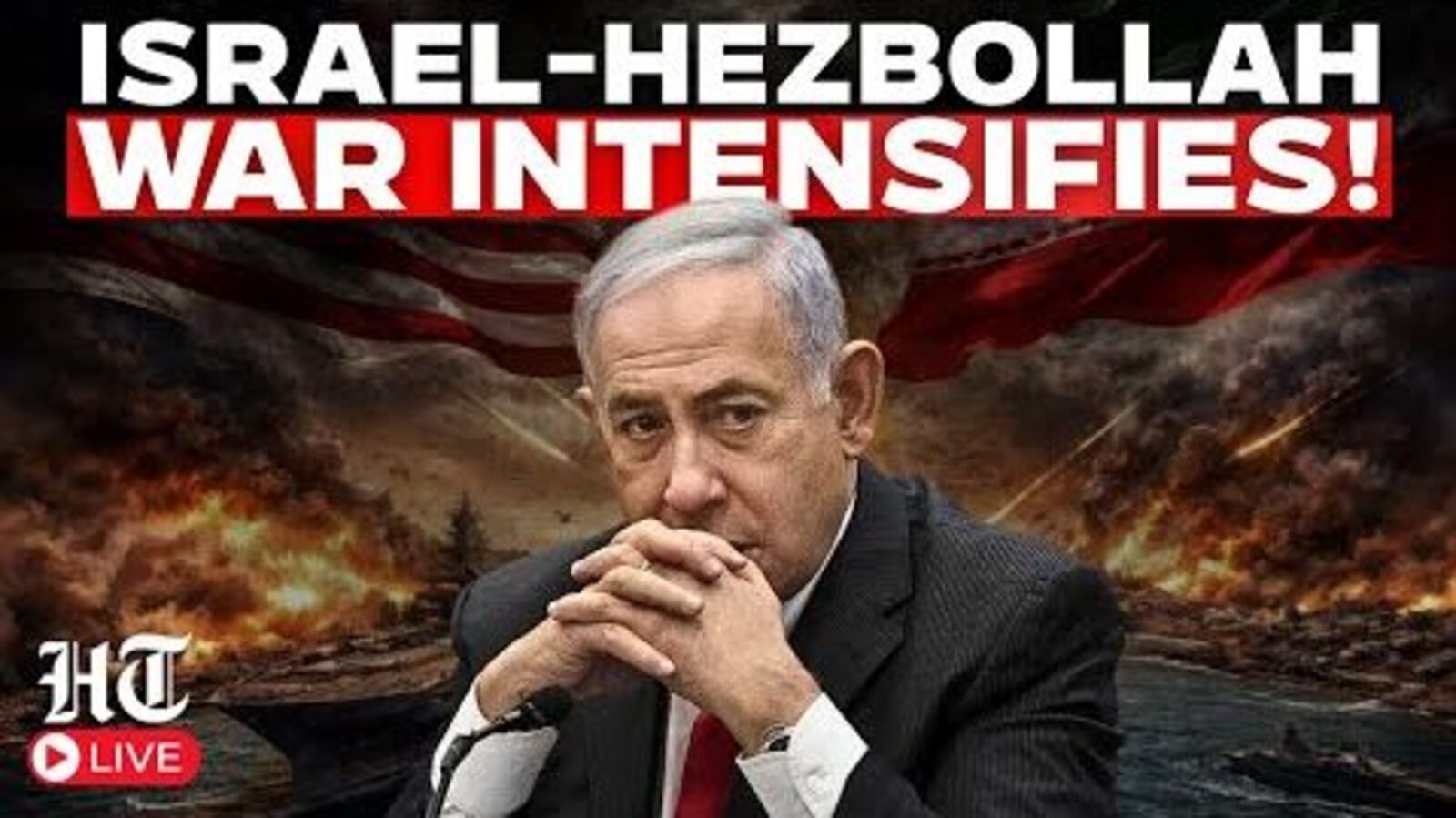
Israel and Hezbollah reached a ceasefire amid rising violence in Lebanon. Two Lebanese security officials said Israel launched around a dozen airstrikes during the first hour of the ceasefire, though no further attacks were reported after 5 pm (local time).

Israel and the Iran-backed Hezbollah agreed to a ceasefire on Friday, according to a US official, after a surge in violence in Lebanon put significant strain on the interim US-Iran agreement aimed at ending the broader conflict in the Middle East.
A senior Israeli official and two Hezbollah sources also confirmed the truce to Reuters. The US official said the ceasefire was scheduled to take effect at 4 pm (1300 GMT).
“If Hezbollah does not attack us, then for us it is not a time of war,” the Israeli official said. Israeli forces would remain in southern Lebanon, the official mentioned.
Two Lebanese security officials said Israel launched around a dozen airstrikes during the first hour of the ceasefire, though no further attacks were reported after 5 pm.
An Israeli military official acknowledged that no strikes had occurred after 5 pm but disputed claims that roughly a dozen airstrikes were carried out following the ceasefire’s start at 4 pm. Nevertheless, a Reuters journalist in northern Israel reported seeing airstrikes taking place in Lebanon at about 4:50 pm.
At approximately 8 pm, Lebanon’s National News Agency (NNA) reported that a drone strike targeted a motorbike on a highway in southern Lebanon, killing two people.
The Israeli military did not immediately issue a response to requests for comment on the reported drone attack.
According to Lebanon’s health ministry, Israeli airstrikes killed at least 47 people across the country since midnight. Meanwhile, Israel said four of its soldiers were killed in southern Lebanon in what was among the deadliest Hezbollah attacks since the war began.
The agreement on Iran calls for the United States, Iran and their respective allies to immediately and permanently halt military operations across all fronts, including Lebanon. However, after an initial decline in hostilities following the announcement of the deal, violence has intensified again over the past week.
Earlier, Hezbollah lawmaker Hassan Fadlallah told Reuters that Iran had conveyed to the group that negotiations with Washington could not move forward in the absence of a comprehensive ceasefire.
A senior US official told Reuters that the ceasefire arrangement was negotiated by American and Qatari mediators, with assistance from Iran.
“Hezbollah and Israel have agreed to a ceasefire. We understand that after the exchange of fire earlier today, Israel and Hezbollah are now in a ceasefire,” the US official stated.
‘Extract a very heavy price’
Israel, which was not involved in the negotiations that resulted in this week’s US-Iran memorandum of understanding, has expressed dissatisfaction with what appears to be a requirement to suspend its military operations in Lebanon. Israel launched its campaign after Hezbollah began cross-border attacks in support of Tehran on March 2.
An Israeli official said the country retained the right to respond to emerging threats and take action to protect its forces and territory.
Earlier, Israeli Prime Minister Benjamin Netanyahu pledged to “extract a very heavy price” from Hezbollah following the killing of four Israeli soldiers.
Israeli officials have slammed the US-Iran agreement, arguing that it falls short of addressing Israel’s concerns regarding Iran’s nuclear programme.
According to Lebanon’s health ministry, Israeli military operations since March 2 have killed 3,912 people in Lebanon, including 746 medics, women and children.
On the Israeli side, at least 32 soldiers and four civilians have been killed during the latest round of fighting with Hezbollah.
About the Author
Garvit Bhirani
Garvit Bhirani is a journalist based in Gurugram. He is a Deputy Chief Content Producer at LiveMint, where he covers national and international news stories, focusing on accuracy and compelling storytelling for readers.
With a total of six years of experience in journalism, he has previously worked with Vaco Binary Semantics for Google, taking on the role of news curation lead, and reported from the field on health, education, and agriculture stories for 101reporters and News9. He has also served as a content editor for entertainment and news media organisations.
Garvit holds bachelor’s and master’s degrees in journalism and mass communication from Guru Gobind Singh Indraprastha University and Gurugram University, respectively. During college days, he joined India’s only non-profit student journalism network, where he anchored daily news updates and produced his own weekly show called ‘Data Fix’.
He was selected for the YES Foundation Media for Social Change Fellowship in Delhi, the Talking Data to the Fourth Pillar residential workshop, and the VOICE Fellowship in Pune.
He holds certificates in COVID-19-verification reporting, data journalism, food & agriculture, tech policy, media literacy and countering misinformation, and tackling election disinformation courses from Thomson Foundation, IndiaSpend, The Dialogue, US Mission in India, and AFP.
He can be reached on LinkedIn or on @garvitbhirani on X
