

Advertisement

Why FG Took $1.5bn from $5bn First Abu Dhabi Bank Facility — Oyedele
The Federal Government has explained why it has so far drawn $1.5 billion from the $5 billion financing arrangement secured with First Abu Dhabi Bank (FAB), saying the facility was deliberately structured to refinance more expensive debt and reduce the government’s overall financing cost.
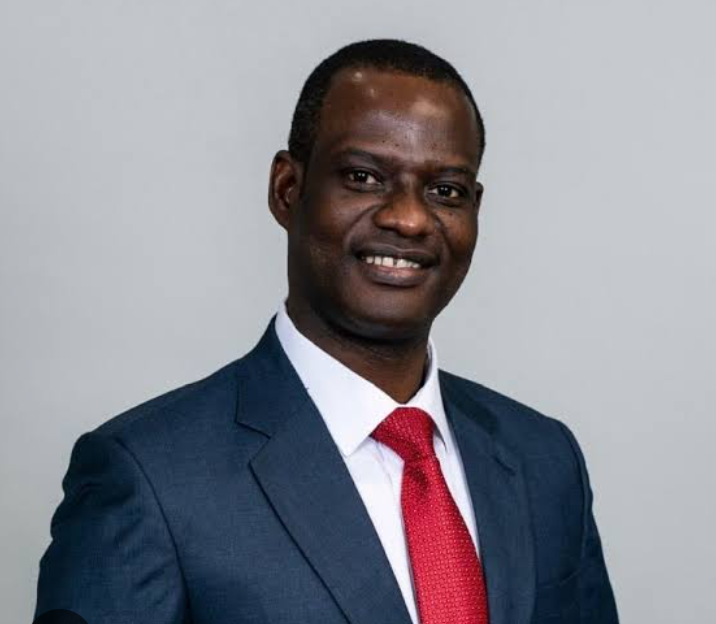
The Minister of Finance and Coordinating Minister of the Economy, Taiwo Oyedele, gave the explanation on Wednesday in Abuja while responding to questions from journalists at a press conference on Nigeria’s economic reform scorecard.
Oyedele said the transaction should be assessed not merely by its structure but by its cost and the savings it is expected to deliver to the country.
He explained that much of Nigeria’s existing debt portfolio was contracted at fixed interest rates when domestic and international borrowing costs were significantly higher.
According to him, Nigerian government borrowing previously attracted double-digit yields, while current yields have fallen to around seven to 7.5 per cent.
The minister said Nigeria could not automatically benefit from the decline in borrowing costs on its existing fixed-rate debt.
He said the FAB transaction was structured differently, using a flexible-rate arrangement that allows the government to benefit if interest rates decline, although the cost would increase if rates rise.
“The all-in rate for this transaction is lower than our existing portfolio. So, the objective is to refinance existing debt and save money,” Oyedele said.
The financing arrangement, according to details provided by the minister, is structured as a Total Return Swap rather than a conventional loan and is backed by Nigerian government securities as collateral.
The broader $5 billion external borrowing plan was approved by the National Assembly in March 2026, while the initial $1.5 billion drawdown was completed in June.
Oyedele said the government deliberately decided against drawing the entire facility at once because unused borrowed funds would attract financing costs.
“We’re assessing it in phases. We don’t want to take all the money at once,” he said.
According to him, drawing funds only when required makes the arrangement more efficient because the government avoids paying costs on money it does not immediately need.
The minister also defended the transparency of the transaction, stressing that the financing arrangement had been subjected to legislative scrutiny.
He said the facility was presented to the National Assembly as part of the country’s broader external borrowing programme.
“This loan was approved, not only by the Federal Executive, but it was also taken to the National Assembly,” Oyedele said.
He rejected suggestions that the FAB transaction was being treated differently from other sources of government financing.
The minister questioned why the facility should attract unusual disclosure requirements when Nigeria also borrows from institutions such as the World Bank and through instruments such as Eurobonds.
He, however, disclosed that the Ministry of Finance and the Debt Management Office would publish frequently asked questions on the facility on their respective websites.
Oyedele said the publication would provide additional information about the debt arrangement and address concerns surrounding the transaction.
The minister’s defence comes amid public and international interest in the structure of the FAB financing, particularly its use of government securities as collateral and its Total Return Swap structure.
He maintained that the government was focused on ensuring that the transaction delivers cheaper financing rather than simply increasing Nigeria’s debt burden.
The finance minister also stressed that the government would continue to assess borrowing decisions based on their economic value and financing implications.
He said the objective was to improve Nigeria’s debt profile, reduce financing costs where possible and ensure that borrowed funds were deployed in line with approved government priorities.
Oyedele’s comments come as the Federal Government continues to defend its broader economic reform programme, which it says has created additional fiscal space while reducing some of the distortions associated with the previous fuel subsidy and foreign exchange regimes.
The government said its reform scorecard showed that Nigeria generated ₦20.4 trillion in incremental Federal Government resources between June 2023 and December 2025, including ₦15.8 trillion in subsidy savings mobilised for the Federation.
