



In less than a month, the world’s attention will shift to one of the biggest sporting events on the planet: the FIFA World Cup. As fans prepare to travel to stadiums across the United States, Mexico and Canada, scientists are warning that dangerous heat linked to climate change could create unsafe conditions for both athletes and spectators.
A new analysis warns that dangerous levels of heat and humidity are now nearly twice as likely as they were the last time the U.S. hosted the World Cup, in 1994, largely due to human-driven climate change.
The study, conducted as part of the World Weather Attribution initiative, found that more than two dozen matches this summer are expected to be played under potentially dangerous heat-stress conditions.
“Matches this summer will be played in conditions made hotter by climate change, putting players and fans at risk,” Simon Stiell, executive secretary of the U.N. Framework Convention on Climate Change, said in a statement obtained by Mongabay.
Researchers used the Wet Bulb Globe Temperature (WBGT), a measure of heat stress in direct sun that combines temperature, humidity, sunlight, wind and cloud cover to identify trends across several host cities. A WBGT above 26° Celsius (79° Fahrenheit) is considered risky, while temperatures above 28°C (82°F) are deemed unsafe for play, according to the study. During the upcoming tournament, the WBGT for 26 matches is expected to reach or exceed 26°C. In 1994, there were likely 21. Five matches could surpass the dangerous 28°C threshold this year, compared with three during the 1994 tournament, according to the report.
Metro areas considered most at risk include Houston, Dallas, Kansas City, Atlanta and New York, where afternoon and early evening matches coincide with peak heat and humidity.
World soccer’s governing body, FIFA, says it is taking measures to protect players during the tournament. These include mandatory three-minute hydration breaks midway through each half, regardless of weather conditions. Match schedules are expected to include at least three days of rest between games. Staff and substitute players will also have access to climate-controlled benches during outdoor matches.
The growing concern over heat comes four years after Qatar moved the 2022 World Cup from its traditional Northern Hemisphere summer schedule to November and December over concerns of extreme desert temperatures — the first World Cup ever held at that time of year.
Stiell said climate action is urgently needed before rising temperatures affect global sport even more.
“We must move faster to protect the game we love and everyone who watches it,” he said. “That means doubling down on the decisive shift to clean energy, which can be a game-changer for people everywhere.”
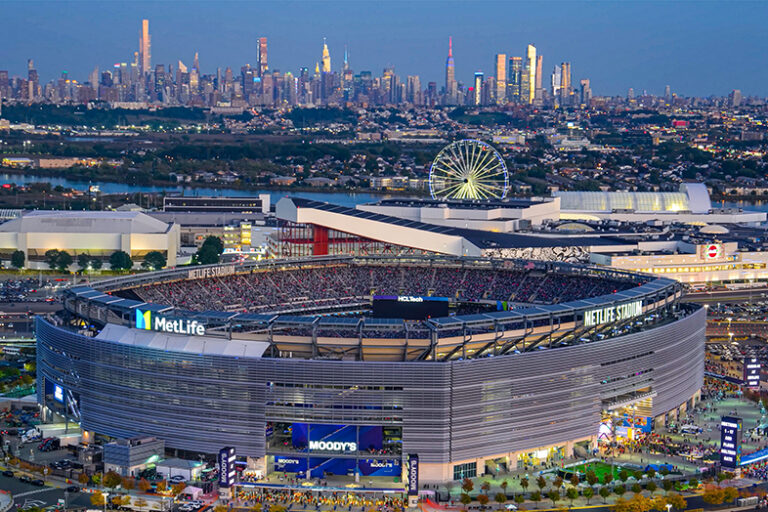
Banner image: MetLife Stadium in New Jersey will host the final of the 2026 FIFA World Cup. Image courtesy of VisitNewJersey.org.


