







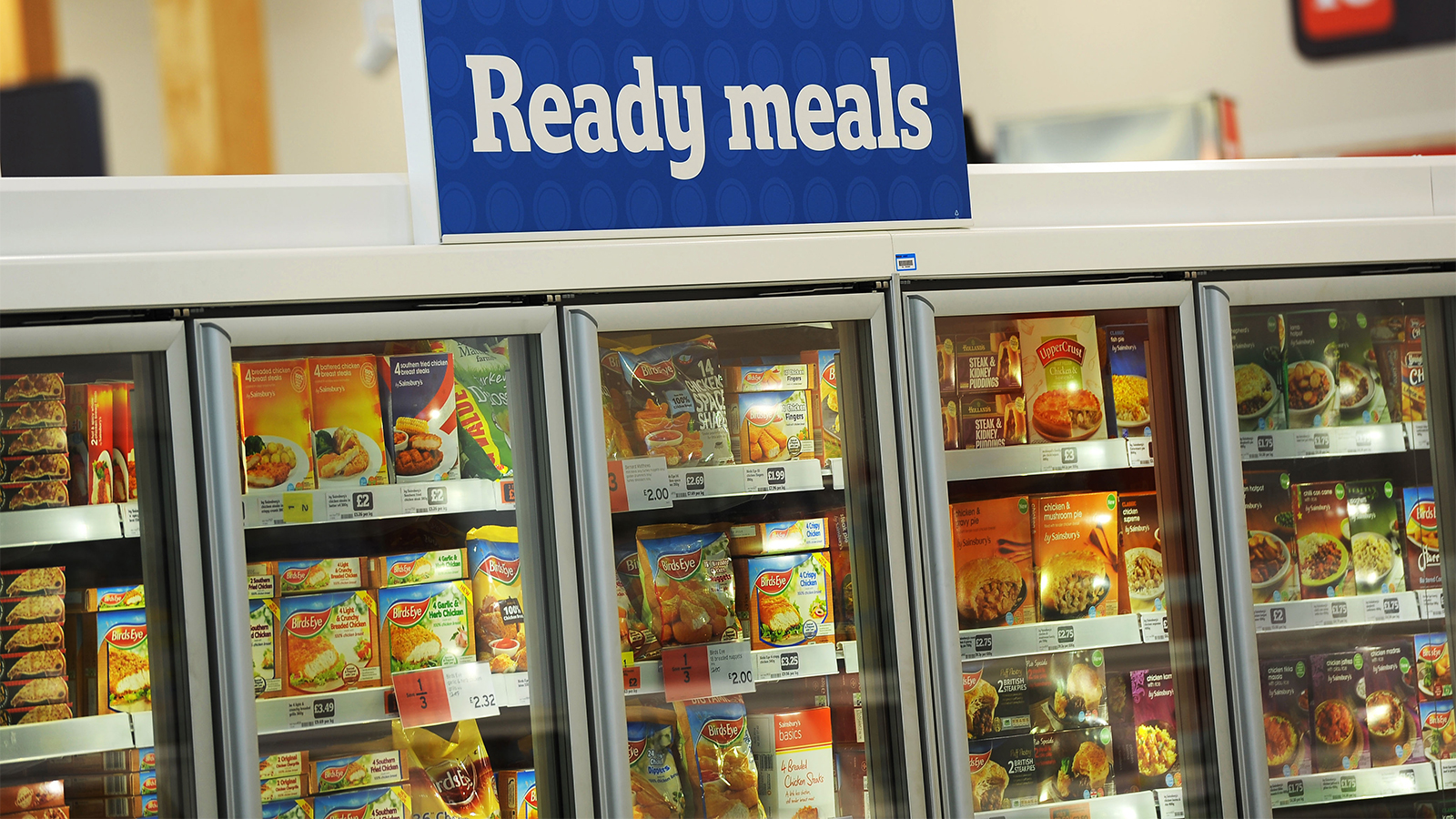
- Diets high in ultraprocessed foods were tied to prodromal Parkinson’s disease, incident Parkinson’s, and Parkinson’s-specific mortality.
- The study followed 120,000 U.K. Biobank participants for a median of 10.5 years.
- Ultraprocessed food intake has been tied to dementia, but data about Parkinson’s disease were sparse until recently.
A diet high in ultraprocessed foods was tied to a higher risk of Parkinson’s disease, prospective data from the U.K. Biobank suggested.
Over a median follow-up of 10.5 years, the highest quartile of ultraprocessed food consumption was associated with three or more prodromal Parkinson’s features (HR 1.65, 95% CI 1.35-2.02), incident Parkinson’s disease (HR 1.32, 95% CI 1.02-1.71), and Parkinson’s-related mortality (HR 3.11, 95% CI 1.56-6.17) compared with the lowest quartile, according to Fang Fang Zhang, MD, PhD, of Tufts University in Boston, and co-authors.
“These findings may prompt further research to understand the mechanisms behind ultraprocessed foods and Parkinson’s disease and influence dietary guidelines and public health policies” to prevent prodromal and incident Parkinson’s disease and Parkinson’s-specific mortality, Zhang and colleagues wrote in the Journal of Neurology, Neurosurgery & Psychiatry.
Ultraprocessed foods and their components have been tied to dementia, obesity, and cardiovascular risk factors, but data about Parkinson’s disease were sparse until recently. Earlier this year, Zhang and other researchers reported that a high consumption of ultraprocessed foods was linked with an uptick in nonmotor prodromal Parkinson’s symptoms in a study of nearly 43,000 U.S. health professionals.
In the current analysis, Zhang and co-authors studied 119,794 U.K. Biobank participants who had a mean baseline age of 56 years; 90.2% were white British. Participants were free of dementia, cancer, or Parkinson’s disease at baseline. Each participant completed at least two 24-hour dietary assessments.
The researchers defined ultraprocessed foods according to NOVA categories, classifying them into four groups: unprocessed or minimally processed foods (fresh fruits, vegetables, legumes, milk, and meat, for example), processed culinary ingredients (such as table salt and sugar), processed foods (canned or bottled vegetables and legumes in brine), and ultraprocessed foods (industrially processed beverages, sauces, and snacks; flavored yogurts; industrially processed breads and buns; and processed meats).
Prodromal Parkinson’s features were determined through ICD codes, primary care data, and self-reported health conditions and included depression, rapid eye movement behavior disorder, urinary incontinence, constipation, anxiety, orthostatic hypotension, hyposmia, and erectile dysfunction. Incident Parkinson’s disease was assessed through ICD codes, and mortality data were obtained from death certificates.
Ultraprocessed food consumption ranged from a median of 8.38 servings/day in the highest quartile to 2.83 servings/day in the lowest quartile. Participants with higher ultraprocessed food intake were more likely to be men, younger, and have obesity, hypertension, diabetes, or high cholesterol than those with lower ultraprocessed food consumption.
During a median of 10.5 years of follow-up, 1,047 participants had three or more prodromal Parkinson’s features, 640 people developed Parkinson’s disease, and 114 participants died from Parkinson’s.
Throughout the study, ultraprocessed food consumption was consistently linked with Parkinson’s disease. “Specifically, we found that each additional serving of commonly consumed ultraprocessed food was associated with a 19% higher risk of prodromal Parkinson’s disease, a 4% higher risk of developing Parkinson’s disease and a 10% higher risk of Parkinson’s disease-specific mortality,” Zhang and co-authors wrote.
The findings suggest that ultraprocessed food consumption “was likely important in the course of Parkinson’s disease,” they added. “The mechanisms underlying these associations remained to be fully elucidated, and vascular diseases could play a mediating or confounding role. … Although we adjusted for hypertension, dyslipidemia, and diabetes, residual confounding due to subclinical vascular burden cannot be fully excluded.”
Dietary intake was self-reported and subject to errors, the researchers acknowledged. Though people with dementia at baseline were excluded, some participants may have had cognitive problems.
A combination of primary care records, hospital admissions, and self-disclosed data helped identify prodromal Parkinson’s; however, olfactory tests and movement assessment data were not reported in the U.K. Biobank study. Unknown confounding also may have influenced results.
MedPage Today. She writes about brain aging, Alzheimeru2019s disease, dementia, MS, rare diseases, epilepsy, autism, headache, stroke, Parkinsonu2019s disease, ALS, concussion, CTE, sleep, pain, and more. Judy started her career with the Congressional watchdog agency GAO and has been a magazine reporter, academic text editor, and radio producer. She holds a BA in English from University of Detroit, MBA from Xavier University, and attended Columbia Radcliffe Publishing Course. Besides writing about neurology, sheu2019s reported on topics ranging from mental health to environmental contamination. Her work has been published in outlets as diverse as Business Week, Conde Nast’s Self, and AlterNet.”,”affiliation”:””,”credential”:””,”url_identifier”:”jg8109″,”avatar_url”:””,”avatar_alt_text”:”Judy George”,”twitter”:”https://twitter.com/MedPageNeuro”,”byline”:”Deputy Managing Editor, MedPage Today”,”full_name”:”Judy George”,”title”:”Deputy Managing Editor, MedPage Today, “,”url”:”https://www.medpagetoday.com/people/jg8109/judy-george”}]”>
Disclosures
This work was supported by grants from the National Natural Science Foundation of China and the Startup grant at Fudan University.
Zhang and co-authors reported no conflicts of interest.
Primary Source
Journal of Neurology, Neurosurgery & Psychiatry
Source Reference: Chen X, et al “Association of ultra-processed food consumption with prodromal, incident Parkinson’s disease and mortality” J Neurol Neurosurg Psychiatry 2025; DOI: 10.1136/jnnp-2025-336045.


