



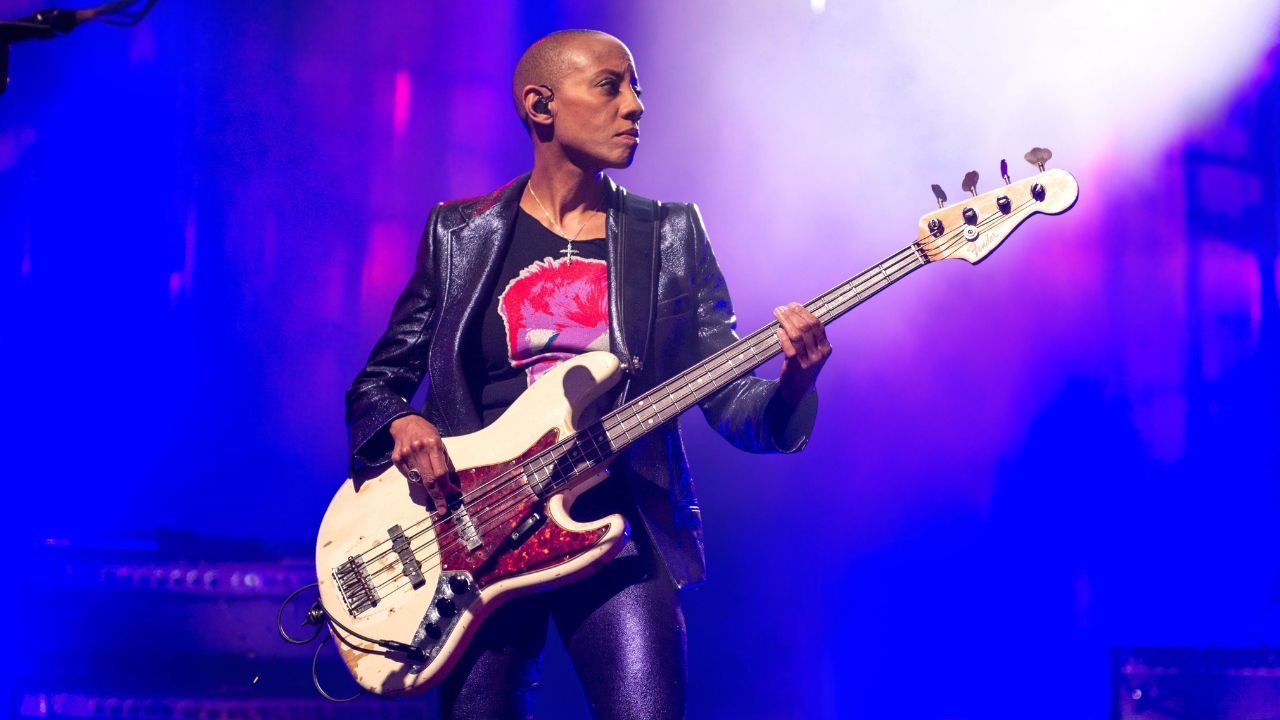

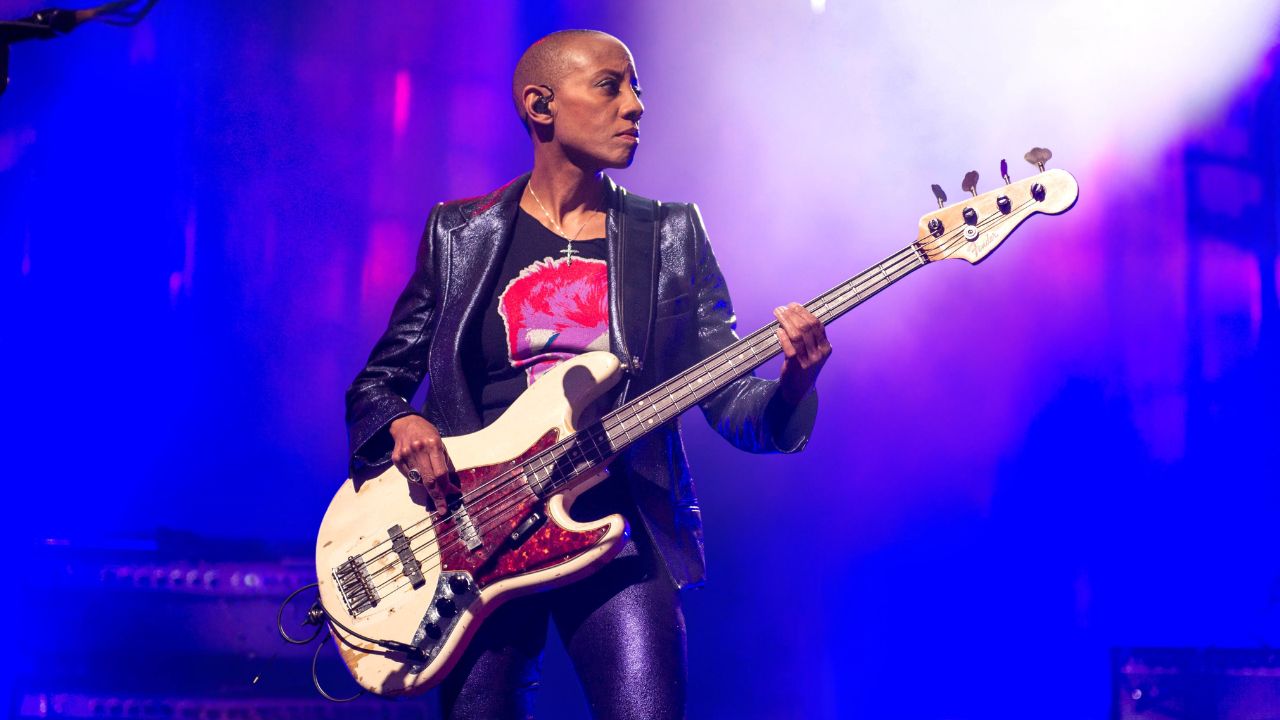
Best known as a member of David Bowie‘s band, which she joined for the Outside tour with Nine lnch Nails back in 1995, bassist Gail Ann Dorsey has carved a niche for herself by always serving the music with which she’s involved.
“Being a good bass player is like being a good lover,” she told Bass Player back in 2014. “You have to be as in tune with the music as you would be with your partner. You have to know exactly when to lead and when to support.”
By the early ‘90s Dorsey had completed her first two solo albums and toured with Tears For Fears, when a production deal brought her to England in time for a phone call from David Bowie.
“I was writing with Roland Orzabel at his home studio in Bath, England, and David called me there. I thought it was someone joking around. He was doing a six-week tour opposite Nine Inch Nails, and he asked me to play bass.
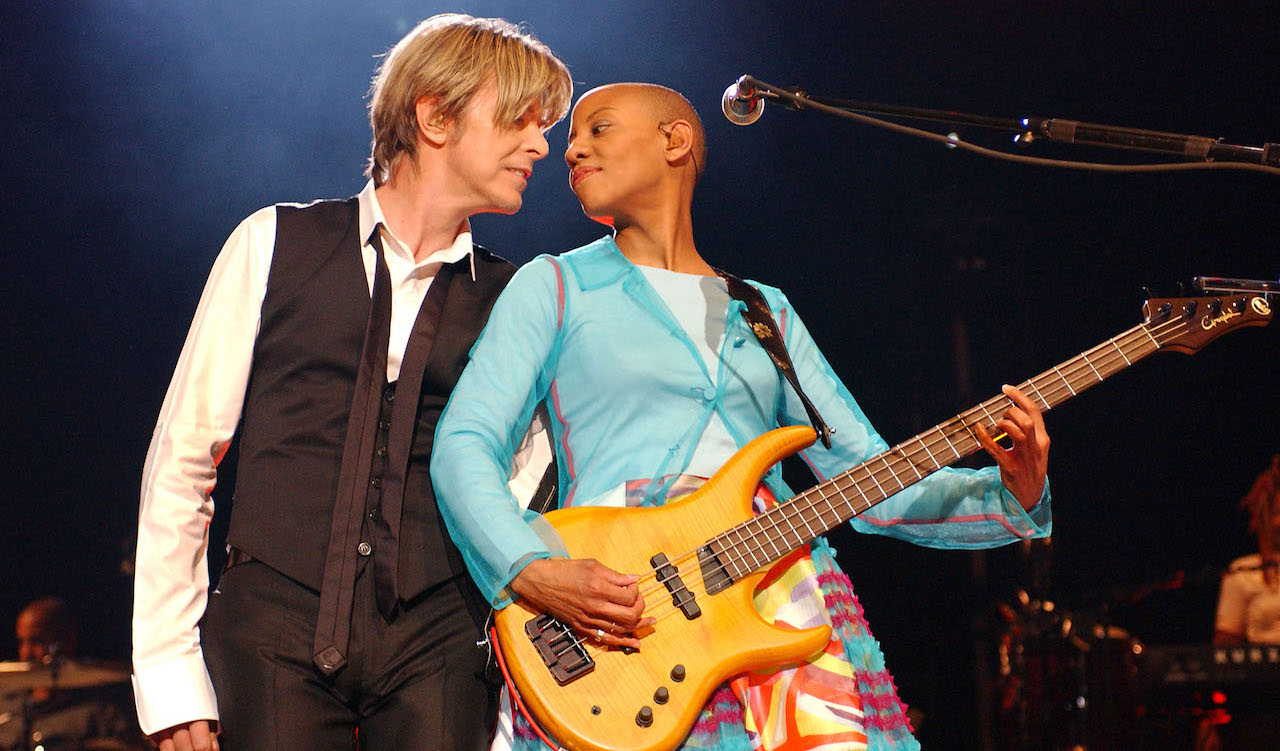

“Those six weeks turned into eight years – the first two virtually without a break. It took me about that long to get the courage to ask him why he hired me. He said he was in a London hotel room in the late ’80s, flipping through channels, when he saw me speak and play on a talk show – I was promoting my first album – and he made a mental note that I was someone interesting he’d like to work with someday. Five years later, he called.”
When Bass Player caught up with Dorsey again in late 2016, Bowie’s passing earlier that year was the first thing she mentioned.
“It still shocks me when I hear his songs in a supermarket and think ‘He’s gone.’ I still find it hitting me in the face hard. There’s no one else in my life I can compare to the connection and the time I spent with him.
“I’ve had family and friends pass away, but with David it’s been a public thing; it’s hard to have a private mourning when he’s so famous, and it’s harder to process it. I get strangers still coming up to me saying how bad they feel.”
David Bowie & Gail Ann Dorsey – Under Pressure | Live in Dublin – A Reality Tour 2003 – YouTube

Bowie’s various bands featured the finest musicians anywhere on the globe: he retained Dorsey for almost 20 years.
“He considered me his bass player, even though I was only on three or four albums. It was the longest stretch I worked with anyone. He gave me exposure and recognition that I’d never dreamed of, and I’m so grateful for that – but his loss brings up one’s own mortality on a deeply personal level.”
How did you approach the bass chair with David Bowie?
Initially I was terrified, so I took a lot of time to learn to play exactly what was on the albums, in all of David’s eras and styles. It was just about getting the notes and making the part feel good.
Early on, he explained to me that he puts a band together the way a director casts a movie: You know what each actor can do and which role they will fill, and you know their personality, so you just turn them loose.

Do you have favorites among Bowie’s past bassists?
They’re all great. My favorites, though, are the early guys, like Herbie Flowers and Trevor Bolder. Herbie is one of the top English session bassists of all time; he did Space Oddity and Diamond Dogs, among others.
Trevor did The Rise & Fall of Ziggy Stardust and was in the Spiders From Mars band. I like that you can hear them really digging in, their flatwounds flapping, much like my session heroes Joe Osborn and James Jamerson.
What were the gig’s most creative and challenging aspects?
The biggest challenge was singing and playing, especially when you’re trying to sing something soulful and laid back while keeping the bass right in the pocket, like when I had to sing the Luther Vandross part on Win from Young Americans.
Did David ever have suggestions about your bass parts?
Sometimes he had a suggestion. If he had a specific thing he wanted to hear, he would ask for it or try to explain it. He would maybe have a vocal melody and some kind of drum machine and some chords – pretty rudimentary things.
Planet Of Dreams (2021 Remaster) – YouTube

There was a song that we did for the Long Live Tibet album called Planet Of Dreams. There’s a bass part at the beginning that he had in his mind. I would never have thought of it, because there’s nothing else going on there to indicate to do that, but he was like, ‘Do this little thing at the front’ – and then after that I was free to figure out how I wanted to approach the song.
You also worked with Lenny Kravitz, who is a bass player himself.
When it comes to the bass part, Lenny is completely the opposite – he wants it to sound exactly like he did it! And that’s a challenge sometimes, but it’s really fun for me because I discovered so much. You know, playing for lots of different people has been the best education for me as a bass player, because I never went to school to study bass.
I can’t read music, I don’t know theory, I don’t know harmony, I don’t understand how to apply all that stuff – so it’s all my ears and patterns in my own visual kind of way. But each artist I’ve worked for has taught me another facet of how to approach the bass, and that’s always exciting. It’s been really like going to school.
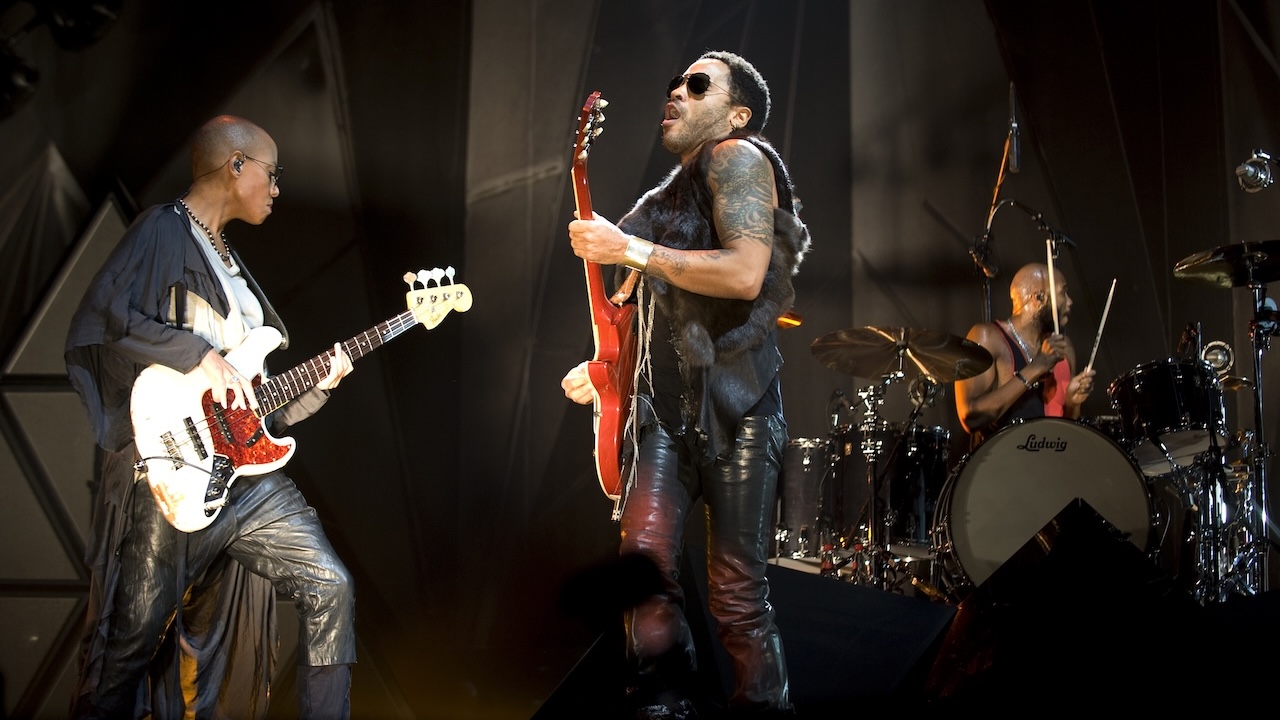
How does Kravitz compare with Bowie, work-wise?
“Lenny is so different from David, as their work ethics are opposite. Lenny works crazy hours where David worked around family times. Lenny will start rehearsals at 11pm, but David would keep things more nine to five, and we had weekends off. But I’ll jump in the car and get into the city whenever Lenny calls.
“Lenny doesn’t give you as much freedom because he plays most of the instruments on his albums, and he wants to hear it as he played it. I try my best to play it like he did and so far, so good. He’s more of a taskmaster, and this is a mirroring job. Lenny’s great because he’s got a huge heart, and is totally fun.”
” data-join-the-conversation-text=”Join the Conversation”>
You must confirm your public display name before commenting
Please logout and then login again, you will then be prompted to enter your display name.