


Advertisement


NITDA Seeks Regional Cooperation to Combat AI-Driven Cybercrime
By Fatih Lawal-Garu
The National Information Technology Development Agency (NITDA) has called for stronger regional and international cooperation to combat increasingly sophisticated cyberattacks fuelled by artificial intelligence (AI).
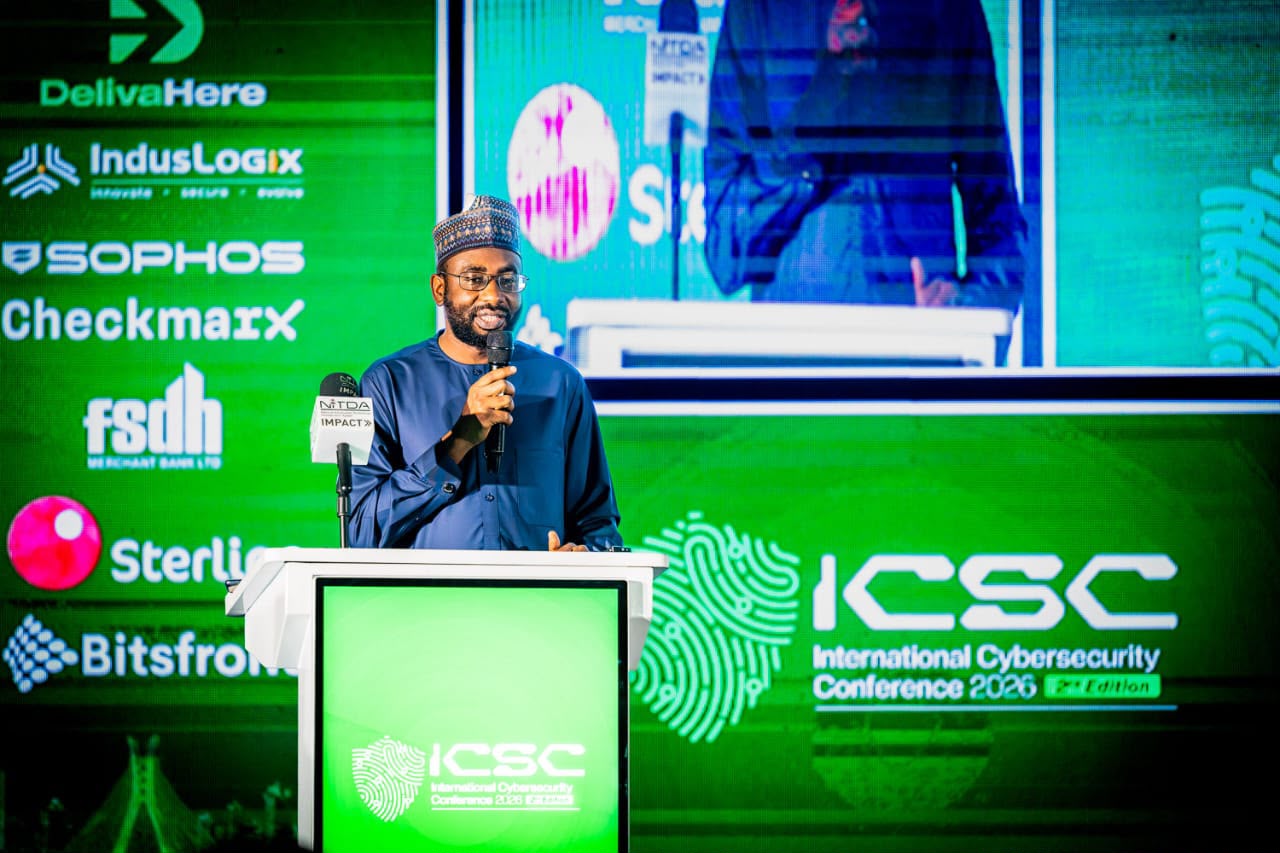
NITDA Director-General, Kashifu Inuwa Abdullahi, made the call at the 2026 International Cybersecurity Conference in Abuja, warning that cyber threats could no longer be tackled in isolation as digital networks increasingly transcend organisational and national boundaries.
Abdullahi said AI was transforming cybercrime by enabling criminals to generate convincing voices, videos and images to deceive victims, manipulate public perception and gain unauthorised access to sensitive information.
He stressed that cyber resilience must go beyond preventing attacks to include the capacity of organisations and countries to recover quickly when their systems are compromised.
The NITDA chief called for coordinated responses among countries and institutions, noting that vulnerabilities in one part of an interconnected digital ecosystem could expose other organisations and systems to attacks.
He said stronger collaboration was essential to improve preparedness, protect critical digital infrastructure and respond effectively to emerging threats.
The Executive Vice-Chairman of the Nigerian Communications Commission (NCC), Dr Aminu Maida, also underscored the need for collaboration, warning that AI-enabled phishing, automated credential attacks, deepfakes and malware were making cybersecurity more complex.
Maida described telecommunications infrastructure as critical national infrastructure, noting that attacks on the sector could have far-reaching consequences beyond individual operators.
He said effective cyber resilience required coordinated efforts involving telecommunications companies, financial institutions, security agencies, regulators and international partners.
On Nigeria’s domestic response, Abdullahi disclosed that NITDA was working with the Office of the National Security Adviser and the National Assembly to review the country’s cybercrime legislation and strengthen the national cybersecurity framework.
He added that the agency was considering a national cybersecurity architecture that would establish minimum standards to guide organisations in securing their systems.
Abdullahi also highlighted the importance of digital sovereignty, arguing that Nigeria needed greater control over its data, digital infrastructure and the technologies used to process information.
He said NITDA had issued the National Sovereign Cloud Regulatory Instrument to address issues relating to data, infrastructure, cloud technology and artificial intelligence.
Representing the Attorney-General of the Federation and Minister of Justice, Lateef Fagbemi, the Director of Public Prosecutions, Rotimi Oyedepo, SAN, said cybercrime had evolved beyond online fraud to include business email compromise, cryptocurrency-enabled fraud, sextortion, child exploitation and AI-assisted deception.
Oyedepo said the Cybercrime (Prohibition, Prevention, etc.) Act, 2015, as amended, remained central to Nigeria’s efforts to combat cybercrime.
He added that work had progressed on a third executive bill aimed at strengthening the country’s legal framework for tackling cybercrime.
The director of public prosecutions emphasised the need for cooperation among governments, law enforcement agencies, industry players, civil society organisations and international partners. He also stressed that investigations and prosecutions must respect human rights and the rule of law.
The two-day conference, held from October 27 to 28, 2026, had the theme, “Cyber Resilience in the Age of AI: Defending Minds, Networks and Nations.”
Abdullahi said the 2026 edition attracted more than 700 registered participants, compared with over 600 participants from 175 organisations at the previous edition.
He added that NITDA was considering expanding the conference in 2027 to strengthen stakeholder engagement and advance collective responses to emerging cybersecurity challenges.