







Advertisement


Nigeria Would Have Faced Worse Economic Crisis Without Tinubu’s Reforms — Finance Minister
By Kabir ABDULSALAM
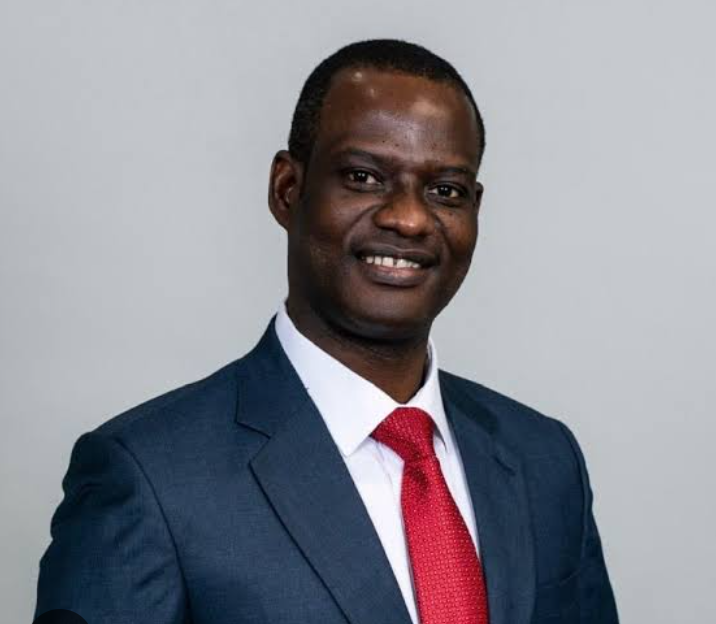
Nigeria would have faced a more severe economic crisis, including deeper fiscal pressures, declining external reserves and greater reliance on borrowing, if the fuel subsidy regime, multiple exchange rates and unchecked Ways and Means financing had continued, the Minister of Finance and Coordinating Minister of the Economy, Taiwo Oyedele, has said.
Oyedele made the submission on Wednesday in Abuja while unveiling the Federal Government’s “Nigeria’s Reform Scorecard: The Benefits, Cost and Harms Prevented,” a review of the economic reforms implemented under President Bola Tinubu’s administration.
The minister said the government was not claiming that the reforms had been painless, acknowledging that their implementation had increased prices, triggered a sharp adjustment in the value of the naira and imposed pressure on households and businesses.
However, he said the government’s assessment showed that the cost of maintaining the old economic structure would have been significantly higher.
According to him, the scorecard compares Nigeria’s economic position before the reforms with its current position and a projected “no-reform” scenario.
He said the projection was based on trends already evident before May 2023, including the pace at which debt servicing was consuming government revenue, the depletion of external reserves used to defend the exchange rate and the growth of Ways and Means financing.
Oyedele said these trends were extended forward to determine where the economy could reasonably have been in 2026 if the previous policies had remained unchanged.
“That third column is not a guess pulled from the air,” the minister said, explaining that the projections were also tested against the experience of comparable economies that delayed similar reforms.
He said the reform programme had created fiscal space that would otherwise have been unavailable to the government.
Between June 2023 and December 2025, subsidy savings generated ₦15.8 trillion for the Federation, with ₦5.4 trillion accruing to the Federal Government and ₦10.4 trillion distributed to states and local governments.
The Federal Government also recorded ₦3.1 trillion in incremental independent revenue, principally from remittances by government-owned entities.
Oyedele said another ₦11.9 trillion was raised through incremental borrowing, but argued that the borrowing requirement would have been considerably higher without the fiscal space created by the reforms.
In total, the Federal Government recorded ₦20.4 trillion in incremental resources during the period.
Those resources contributed to funding ₦30.64 trillion in incremental expenditure, including ₦9.39 trillion for wage adjustments, minimum wage increases and public servants’ allowances.
Another ₦9.37 trillion was used for external debt service, while ₦6.5 trillion went into strategic infrastructure.
The minister said the figures demonstrated that the reforms were not undertaken simply to increase government revenue.
He noted that the Federal Government’s savings from subsidy removal were smaller than the ₦9.39 trillion spent on wage adjustments, minimum wage increases and allowances.
According to him, the central objective was to dismantle systems that had become sources of corruption, arbitrage and economic distortion.
He specifically pointed to the former fuel subsidy system and multiple exchange rates, which he said had undermined the economy.
“The removal of a fuel subsidy that was quietly bankrupting the country, and the unification of an exchange rate system that had become a source of arbitrage, distortion and corruption rather than stability,” he said.
Oyedele said the reforms had also produced tangible social and economic outcomes.
He cited the increase in the minimum wage from ₦30,000 to ₦70,000, improved payment of salaries and pensions, settlement of pension arrears and the expansion of student financing through NELFUND.
More than 1.5 million students, he said, had benefited from the student loan scheme, while millions of households had also received cash transfers.
Despite the gains, Oyedele acknowledged that the reform process remained incomplete, particularly in the areas of poverty and household welfare.
He said the government’s next priority was to ensure that improvements in macroeconomic stability translated into better living conditions.
The government plans to expand cash transfers to vulnerable households, deepen agricultural interventions to reduce food prices and work with state and local governments to improve the distribution of economic benefits.
Oyedele also said the government would continue implementing the Nigeria Tax Act and pursue further reforms to improve budgeting, reporting and accountability.
He said the government expected the tax-to-GDP ratio to continue rising as the harmonised tax system takes effect, while efforts would continue to push inflation towards single digits over the medium term.
On investment, the minister said the government would maintain a unified and predictable foreign exchange market, arguing that predictability was increasingly important for investors.
Oyedele described the scorecard as a “mid-course account” rather than a final assessment of the reforms.
He urged Nigerians to support positive government policies while holding authorities accountable through constructive criticism and fact-based debate.
“We are not here to pretend these reforms were painless,” he said. “We are here to show you, honestly and with the numbers, what they cost, the benefits they delivered, and the harm they prevented.”


