

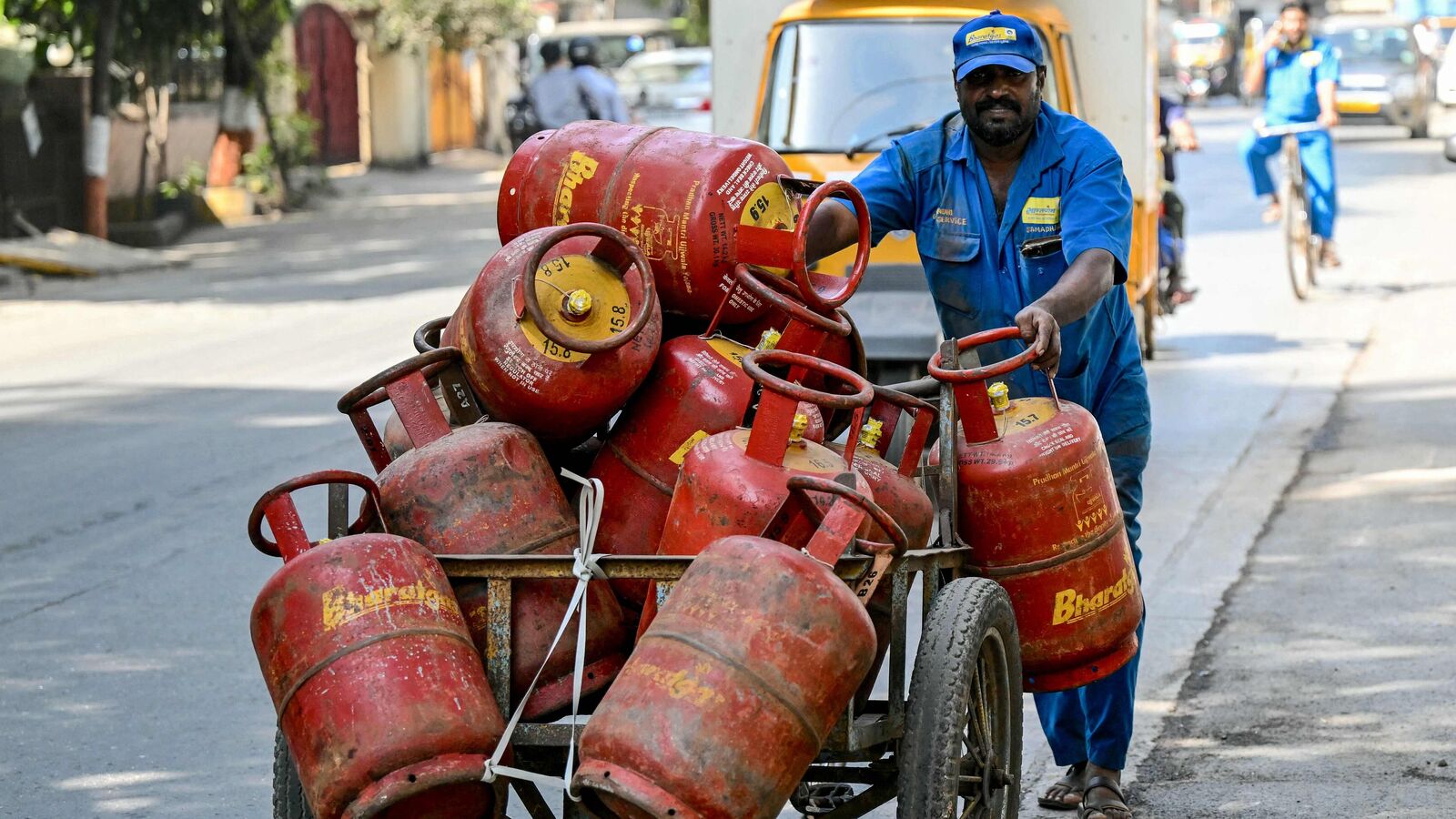
Effective 1 May, the price of a 19-kg commercial LPG cylinder has increased by ₹993, while the price of a 14.2-kg domestic cylinder remains unchanged.
 West Asia following the conflict between US-Israel with Iran that began on 28 February, which has now entered its eighth week. The standoff has disrupted shipping through the Strait of Hormuz, a key global energy corridor. This disruption has impacted oil supplies, contributing to volatility in energy prices.
Bulk diesel and jet fuel prices raised
Indian Oil Corp Ltd. announced that bulk diesel and aviation turbine fuel (ATF), or jet fuel used for international airline operations, have also been raised. The statement and the company website, however, did not specify the revised rates.
The Indian Oil statement said: “Price revisions have been limited to select industrial segments, which constitute a relatively small share of overall consumption and are subject to routine monthly adjustments based on prevailing international prices.”
It highlighted that bulk and commercial LPG comprises of 1% of India’s total consumption. The nation’s annual LPG consumption currently stands at around 33 million tonnes.
On the petrol, diesel and domestic LPG prices, the oil marketing company said: “The retail prices of petrol, diesel and domestic LPG (14.2 kg cylinders), have remain unchanged, fully insulating domestic consumers from the recent increase in international fuel prices.”
New commercial LPG rates in Indian cities
Here are the latest rates of a 19-kg commercial in major cities of the country on Friday after the hike:
- Mumbai: ₹3,024
- Bengaluru: ₹3,152
- New Delhi: ₹3,071.50
- Ahmedabad: ₹3,091
- Kolkata: ₹3,202
- Chennai: ₹3,237
- Pune: ₹3,084
Change in LPG delivery rules
Apart from the price hike, new rules for the LPG booking and delivery system are also expected to come into effect from 1 May, with oil marketing companies (OMCs) preparing to implement revised rules across the country.
According to media reports, some anticipated rule changes include a new booking interval and mandatory OTP-based delivery.
About the Authors
Eshita Gain
Eshita Gain is a digital journalist at Mint, where she joined in May 2025. She writes on corporate developments, personal finance, markets, and business trends, with a focus on delivering timely and relevant stories to a broad audience.
While her core beat lies in business and finance, she is not confined to a single niche and frequently explores stories across domains, including international relations and policy developments.
She holds a postgraduate diploma in business and financial journalism by Bloomberg from the Asian College of Journalism (ACJ), Chennai. During her time there, she received rigorous training in tracking financial data, interpreting corporate filings, and reporting on business developments. She has pursued her graduation from St. Joseph’s University, Bengaluru in a multi-disciplinary course. Her majors included Journalism, International Relations, peace and conflict studies.
Eshita has previously worked in digital marketing, which enables her to write SEO friendly copies that are clear and engaging.
Her primary interest lies in breaking down complex subjects and writing clear, accessible copies that inform readers. She aims to bridge the gap between technical financial language and everyday understanding.
Outside the newsroom, Eshita enjoys reading non-fiction, and exploring new places, constantly seeking fresh perspectives and stories beyond headlines.
Rituraj Baruah
Rituraj Baruah is a special correspondent covering energy, housing, urban affairs, heavy industries and small businesses at Mint. He has reported on diverse sectors over the last eight years including, commodities and stocks market, insolvency and real estate; with previous stints at Cogencis Information Services, Indo-Asian News Service (IANS) and Inc42.
