

The government has decided to keep petrol, diesel, and LPG prices unchanged amid supply stability.


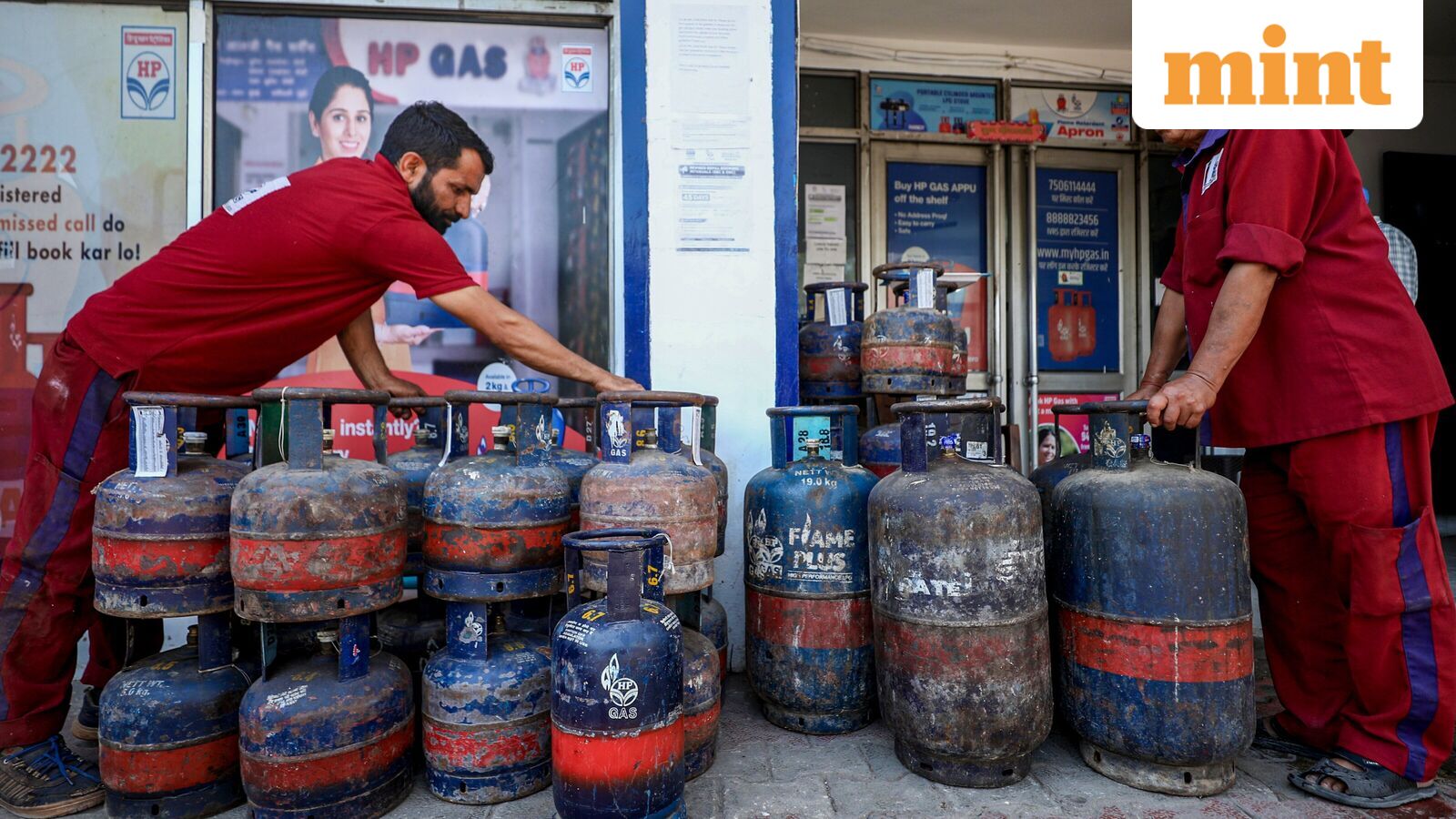
Despite growing pressure to hike fuel prices due to disruptions caused by the Iran war, the central government has chosen not to change domestic LPG rates. However, the price of commercial LPG (19 kg cylinders) has increased by an average of ₹993.
As a result, in Delhi, the cost has risen from ₹2,078.50 to ₹3,071.50, while in Mumbai it has gone up from ₹2,031 to ₹3,024.
These developments come as Indian Oil Corporation, Bharat Petroleum, and Hindustan Petroleum are in the process of finalising new regulations aimed at preventing hoarding, curbing black marketing, and stopping the illegal diversion of subsidised gas.
Check LPG fuel prices in your cities today:
| Cities | Domestic LPG (14.2 Kg) | Commercial LPG(19 Kg) |
|---|---|---|
| New Delhi | ₹913.00 | ₹3,071.50 |
| Kolkata | ₹939.00 | ₹3,202.00 |
| Mumbai | ₹912.50 | ₹3,024.00 |
| Chennai | ₹928.50 | ₹3,237.00 |
| Gurugram | ₹921.50 | ₹3,088.00 |
| Noida | ₹910.50 | ₹3,071.50 |
| Bengaluru | ₹915.50 | ₹3,152.00 |
| Bhubaneswar | ₹939.00 | ₹3,238.00 |
| Chandigarh | ₹922.50 | ₹3,092.50 |
| Hyderabad | ₹965.00 | ₹3,315.00 |
| Jaipur | ₹916.50 | ₹3,099.00 |
| Lucknow | ₹950.50 | ₹3,194.00 |
| Patna | ₹1,002.50 | ₹3,346.50 |
| Thiruvananthapuram | ₹922.00 | ₹3,106.00 |
Petrol, diesel prices to be affected? Govt says…
The government on Friday stated that retail fuel prices will remain unchanged and that the supply of petrol, diesel, and domestic LPG remains steady, even as it implements several measures to address disruptions caused by the evolving situation in West Asia.
“Retail pump prices of Petrol, Diesel and domestic LPG (14.2 kg cylinders meant for regular household use) have been kept unchanged,” the Ministry of Petroleum and Natural Gas said in a release, while noting that oil marketing companies (OMCs) have undertaken “a calibrated price revision… for a small set of products catering primarily to commercial, industrial and premium segments.”
The ministry again emphasised that there is no need for panic buying, urging citizens to “avoid panic purchase of petrol, diesel and LPG as the Govt is making all efforts to ensure availability.”
According to the ministry, the government has ensured “100% supply… to Domestic LPG, Domestic PNG and CNG (Transport),” even as global uncertainties continue to impact energy markets.
On LPG supply, the government said deliveries remain robust despite geopolitical pressures. “On 30.04.2026, around 49.8 Lakh domestic LPG cylinders were delivered against bookings of around 41.6 Lakh LPG cylinders,” the ministry said, adding that “no dry-outs have been reported at LPG distributorships.”
To stabilise demand, the government has taken several measures, including increasing booking intervals and promoting alternative fuels. “Alternate fuels such as kerosene and coal have been made available to ease pressure on LPG demand,” the ministry said.
There is no need for panic buying; the government is making all efforts to ensure availability.
The Centre has also stepped up enforcement to curb black marketing. “More than 2300 raids were conducted across the country,” while penalties were imposed on “342 LPG distributorships” and “73 LPG distributorships” were suspended, the ministry said.
(With inputs from agencies)
About the Author
Mausam Jha
Mausam Jha is a journalist who focuses on world affairs and politics. She provides clear, informative reporting with a good understanding of both global events and their local impact.
Her clear, accessible reporting on political and international issues makes her a trusted source of news and analysis.
For the past three years, Mausam has worked with Mint, covering national politics, IR—including elections—and global affairs.
Before joining her current role, she gained experience working with The Statesman, ANI, and Financial Express, where she honed her skills in political and international news.
She has consistently tracked key electoral battles, including US elections, Japan elections, policy debates, and strategic affairs, explaining how global currents, from great power competition to regional conflicts
Beyond journalism, Mausam has a deep engagement with international relations, diplomacy, war studies, terrorism, political history, and political theory. She is particularly interested in the intersection of statecraft and society on how governance, ideology, and institutions shape lived realities, and how politics shape today’s world order.
An avid reader of classical literature and political thought, she constantly explores the connections between historical ideas and contemporary policy challenges.