



India UPI payments ease slightly in April after record March, NPCI data shows strong year on year growth as experts cite seasonality, not a slowdown.
By Anshul May 2, 2026, 7:50:45 AM IST (Published)
2 Min Read
India’s digital payments activity moderated in April after hitting all-time highs in March, with Unified Payments Interface (UPI) transactions registering a marginal month-on-month dip, largely due to year-end seasonality.
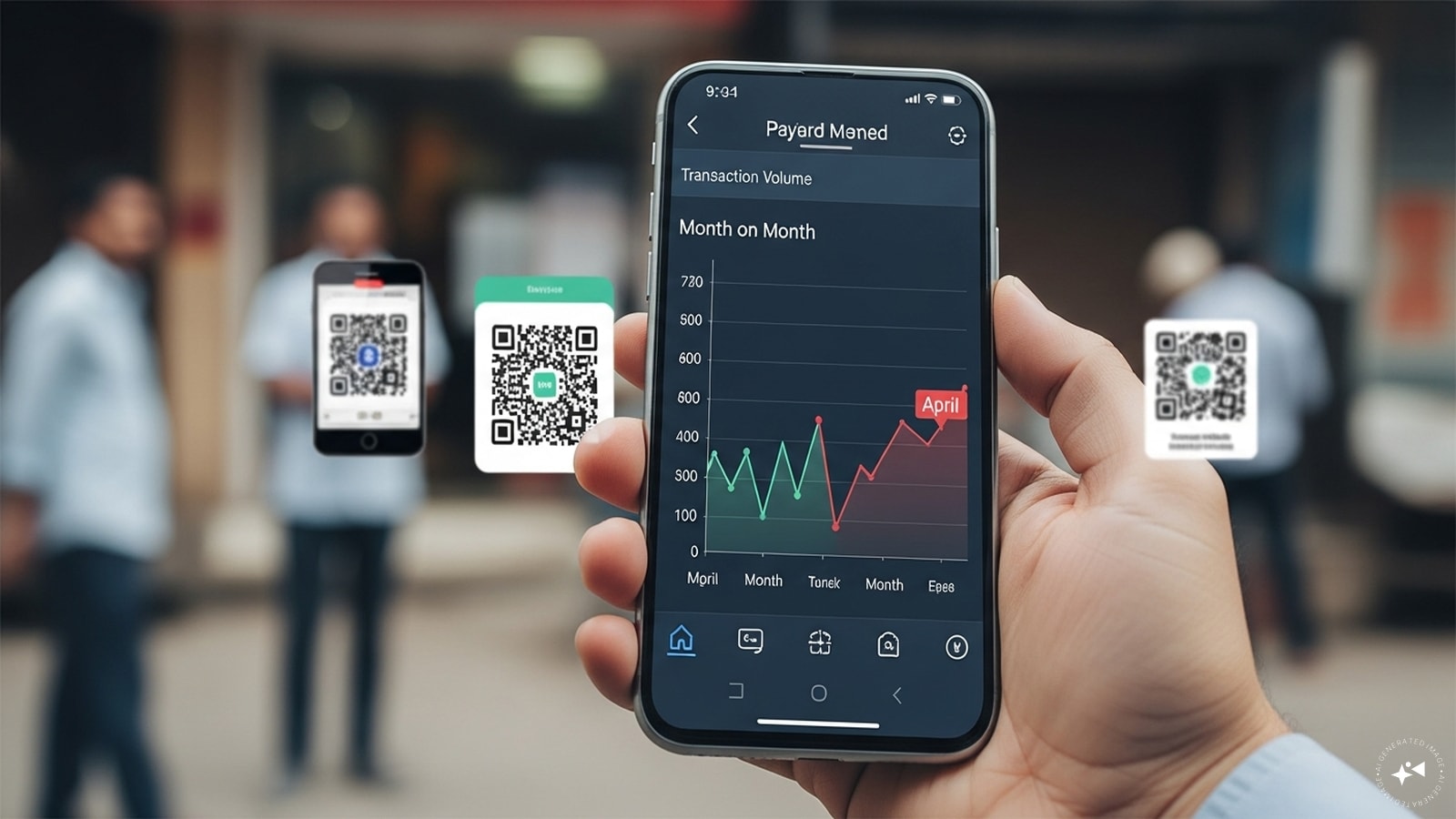
Data from the National Payments Corporation of India showed UPI transaction value declined 1.7% to ₹29.03 trillion in April, compared with ₹29.53 trillion in March. Volumes fell 1.3% to 22.35 billion from 22.64 billion in the previous month.
The moderation follows a typically strong March, when financial year-end activity boosts payment volumes. March 2026 recorded the highest-ever UPI volumes and values since its launch in 2016, creating a high base for April comparisons.
On a year-on-year basis, growth remained strong, with volumes rising 25% and value increasing 21%, indicating continued expansion in digital payments adoption.
Other payment rails reflected a similar trend. Immediate Payment Service (IMPS) transactions declined 1% month-on-month to 362 million, while value dropped 5% to ₹7.01 trillion. FASTag transactions fell 1.6% to 358 million, with value easing 2% to ₹7,025 crore. Aadhaar Enabled Payment System (AePS) transactions recorded a sharper decline, with volumes down 15% and value falling 14% compared to March.
Experts attribute dip to March surge, not slowdown
Akash Sinha, Co-founder & CEO, Cashfree Payments, said the April dip reflects March’s overperformance rather than weakening demand. He noted that financial year-end payments typically drive a surge every year, making the subsequent month appear softer.
He added that daily transaction averages offer a clearer picture of underlying momentum. According to him, faster growth in transaction value compared to volume suggests increasing consumer confidence in using UPI for higher-value payments.
Sinha also pointed to recent regulatory developments by the Reserve Bank of India, including the new two-factor authentication framework and updated e-mandate guidelines, which are expected to reduce transaction failures and accelerate adoption of recurring payments.
Anand Kumar, Bajaj Founder, MD, CEO, PayNearby, said the digital payments ecosystem continues to operate at scale, with UPI becoming an integral part of everyday transactions. He highlighted growing adoption in rural and semi-urban areas, where consumers and small businesses are increasingly relying on digital modes for daily payments.
Bajaj added that ongoing improvements in security, recurring payments infrastructure and credit integration are strengthening user confidence and system reliability. He said expanding digital infrastructure for micro-entrepreneurs and last-mile users will be key to sustaining growth.