


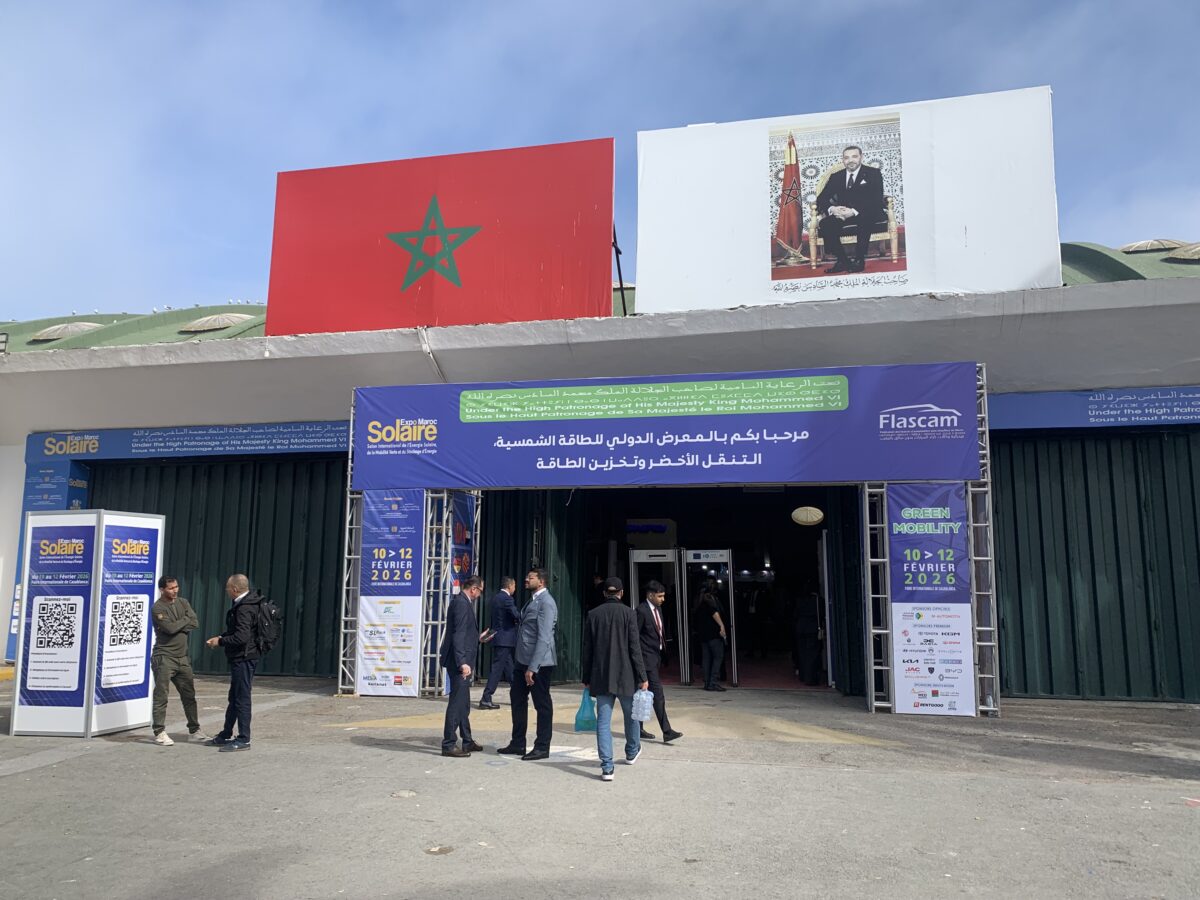
A pavilion dedicated to electric vehicles, a dominant Chinese presence and limited European representation shaped the solar trade show held Feb. 10 to 12 in Casablanca, Morocco. Local distributors warned of rising prices for Chinese solar equipment, while a booming commercial and industrial (C&I) segment, a nascent residential market, emerging storage demand and largely untapped solar potential underscored the sector’s direction.
The 14th edition of Solaire Expo Maroc, held under the banner of electric mobility, took place Feb. 10 to 12 at the Casablanca International Fair in Casablanca, Morocco. Hybrid and electric vehicle manufacturers were on display, including the Moroccan operations of Stellantis and Renault in Kenitra. The event was themed “Centralized and Decentralized Energy Transition: Morocco as a Hub for Renewable Energies and Green Hydrogen between Africa, the Middle East, and Europe.”
Rachid Bougern, founder and director of the exhibition, said the event aimed to reflect the strong national momentum in Morocco’s renewable energy sector and support the Kingdom’s goals of accelerating the energy transition and strengthening energy sovereignty. Beyond expanding generation capacity, Morocco is seeking to build an integrated ecosystem around innovation, energy storage and new mobility solutions.
The free trade show drew around 10,000 visitors – including professionals, students and members of the public – and featured 150 exhibitors from 15 countries. Regular participants included Green Power Afrique, JA Solar and Aesolar. Asian companies highlighted battery storage technologies, while mounting system suppliers K2 Systems and Dome Solar, along with structural engineering specialist Adiwatt, returned with independent stands.
Aside from Econosol, which specializes in residential PV and turnkey C&I solutions, Moroccan installers were largely absent from the exhibition floor. By contrast, local B2B solar equipment distributors – numbering around 10 nationwide – were strongly represented, including Solarway by Disway, Clearenergy and Erra Solar Company.
Distributors described the market as “very dynamic,” reporting growth in both revenue and volumes despite modest price adjustments after China eliminated VAT rebates on certain solar equipment exports. The sector continues to rely on major international brands such as Huawei, Jinko Solar, Longi, Canadian Solar and GreenPower Energy. Distributors said they prioritize proven technologies suited to local conditions and customer expectations, with no significant supply chain or customs clearance disruptions reported.
Two key public institutions were notably absent: ONEE, the National Office of Electricity and Drinking Water, and Masen, the Moroccan Agency for Sustainable Energy. ONEE oversees grid integration of solar power, while Masen leads national renewable energy strategy. Masen is preparing 12 new photovoltaic plants and planning a large-scale solar measurement campaign to collect irradiation and meteorological data for future technical and economic studies.
Morocco benefits from roughly 3,000 hours of sunshine per year, giving it substantial solar potential. An estimated 1 GW of installed PV capacity — about 60% to 70% of total production – is currently used for agricultural irrigation.
Residential solar remains limited due to the absence of strong incentives and a clear regulatory framework. By contrast, the commercial and industrial segment is expanding under Law 82-21, which allows self-generation and surplus power sales.
Morocco and Switzerland have also signed the Solar Rooftop 500 agreement, which aims to deploy 500 MWp of rooftop PV by 2030 for industrial and service-sector companies. The initiative represents an initial step toward Morocco’s target of reaching 3 GW of solar capacity by 2028.
This content is protected by copyright and may not be reused. If you want to cooperate with us and would like to reuse some of our content, please contact: editors@pv-magazine.com.
Popular content