

Guitar World Verdict
If you’re looking for a pedal that does high-gain shenanigans or has multiple tone-shaping options, the BD-2 Blues Driver isn’t it. What it does do, however, is deliver an incredibly dynamic, almost transparent overdrive that reflects the carefully curated gear in your rig. Don’t let the low price fool you. This is a solid choice for professionals and beginners alike.
Pros
- +
Delivers a wealth of versatile drive sounds
- +
Genuinely gives you amp-like touch response
- +
Lots of range in the gain control
Cons
- –
Tone control can get a little harsh at higher settings
You can trust Guitar World
Our expert reviewers spend hours testing and comparing guitar products so you can choose the best for you. Find out more about how we test.
What is it?
I’ve often heard it said that if you ask someone to draw a picture of a guitar pedal, the likelihood is they will draw something akin to a Boss compact. It’s a format with heritage that harks back to the release of the Boss OD-1 Overdrive, the PH-1 Phaser, and the SP-1 Spectrum in the ‘70s, and has since developed into an expansive range of pedals that follow the successful compact design. Perhaps one of the most famous is the BD-2 Blues Driver overdrive pedal.
It’s a fully analog, transistor-based pedal that uses multiple gain stages to emulate an amplifier’s natural breakup. That may sound a little complicated, but one reason Boss’ compact pedal range has become so ubiquitous is its simplicity.
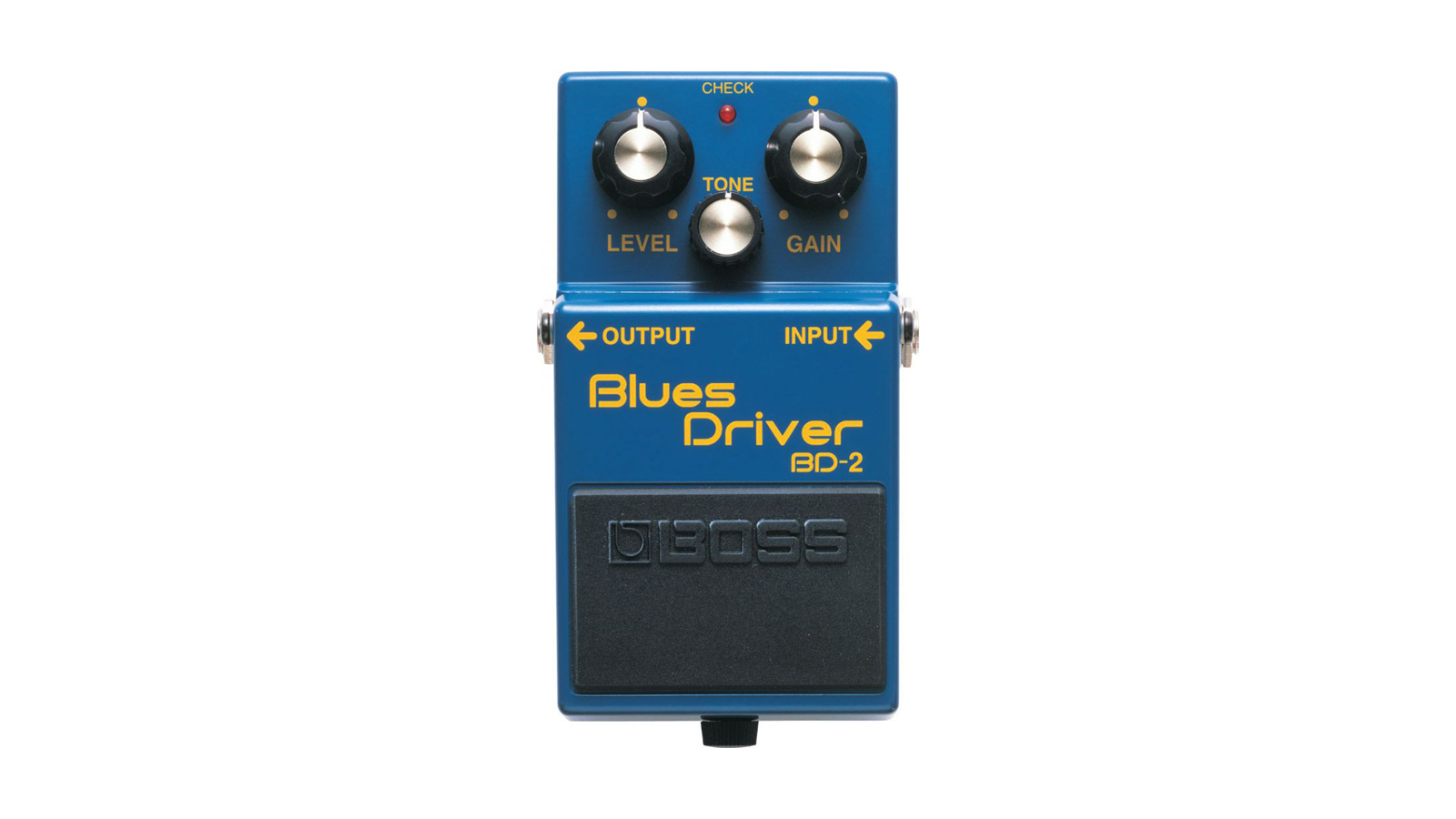
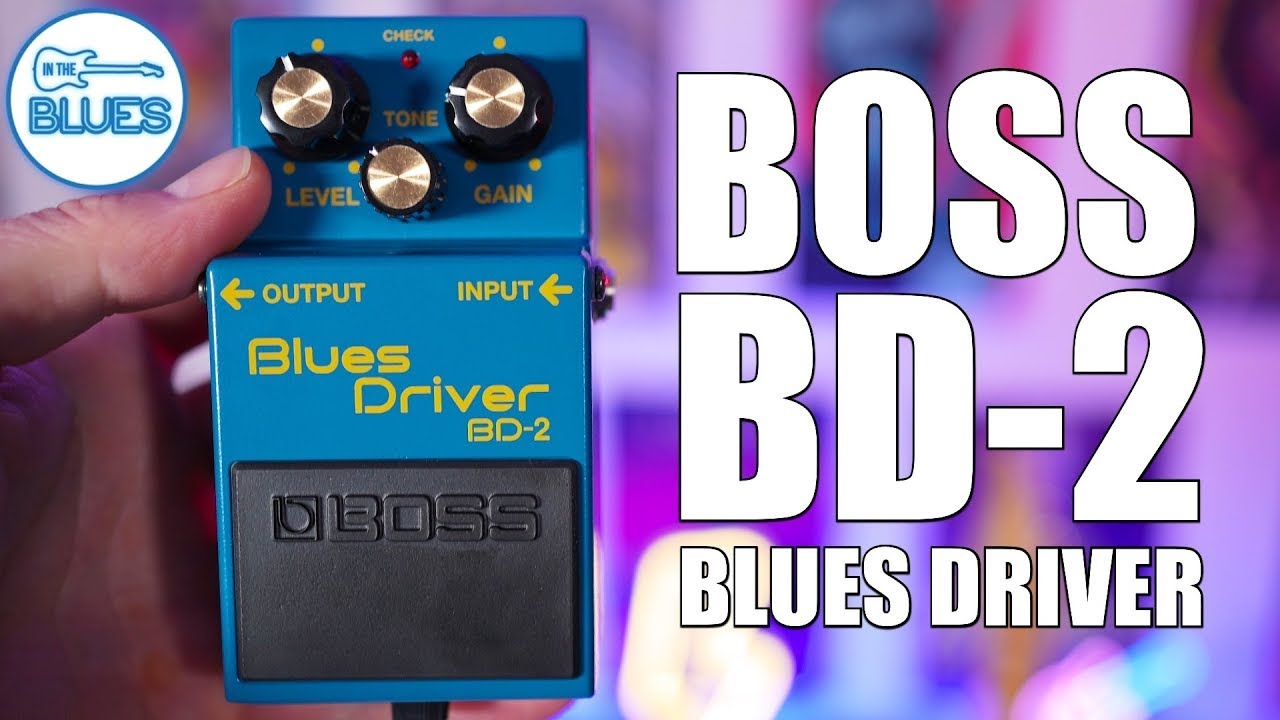
The user sees just Gain, Volume and Tone controls, plus a footswitch. That’s it. In return for that simplicity, you’re rewarded with affordability as the pedal comes in at around $109. It’s also worth noting that the BD-2 circuit is not a clone of something else, but is its own thing, as are many other Boss pedals.
The BD-2 name insinuates the existence of a BD-1, but that’s actually not the case. In Boss history, the “1” designation was initially reserved for its first-generation compact pedals from the late 1970s; therefore, when Boss designed new circuits in the ’80s and ’90s, they automatically assigned them a “2” to signify they belonged to the modern generation of pedals.
Hitting the scene in 1995, this pedal has remained practically the same circuit since its release, aside from a shift to the more modern surface-mount components in the late 2000’s.
So, with over 30 years of tone under its belt, let’s have a look at what all the fuss is about.
Specs
- Launch price: $109 | £109 | €105
- Type: Transistor-based analog overdrive pedal
- Controls: Tone, Volume, Gain
- Connectivity: 1 x ¼” input and output
- Bypass: Buffered
- Power: 9v, centre negative, 20mA
- Dimensions: 73x129x59mm/2.8×5.0x2.3”
- Weight: 360g
- Contact: Boss
Build quality
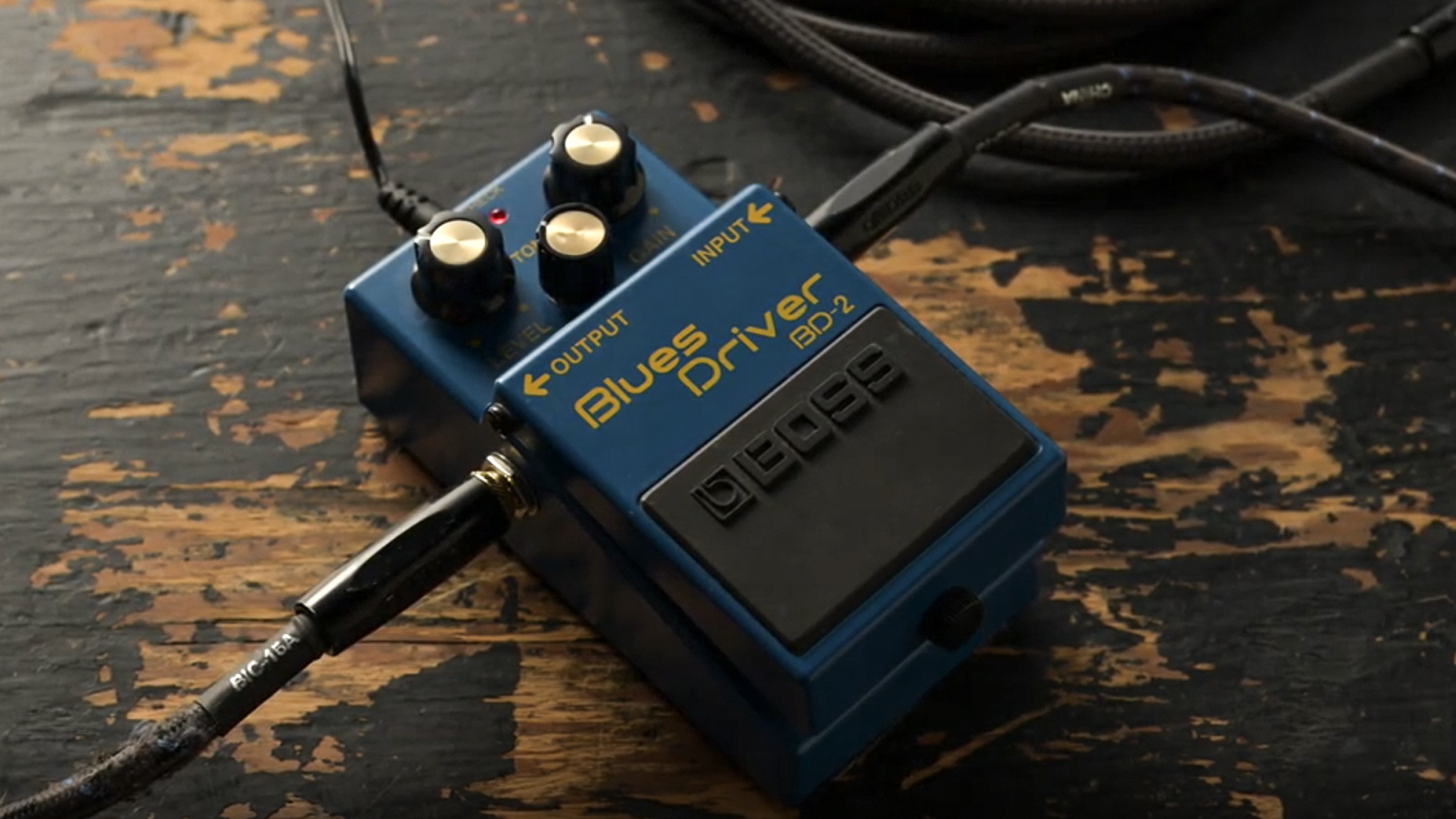
Build quality rating: ★★★★★
The aluminum chassis is solid enough that it feels like you could build houses with it
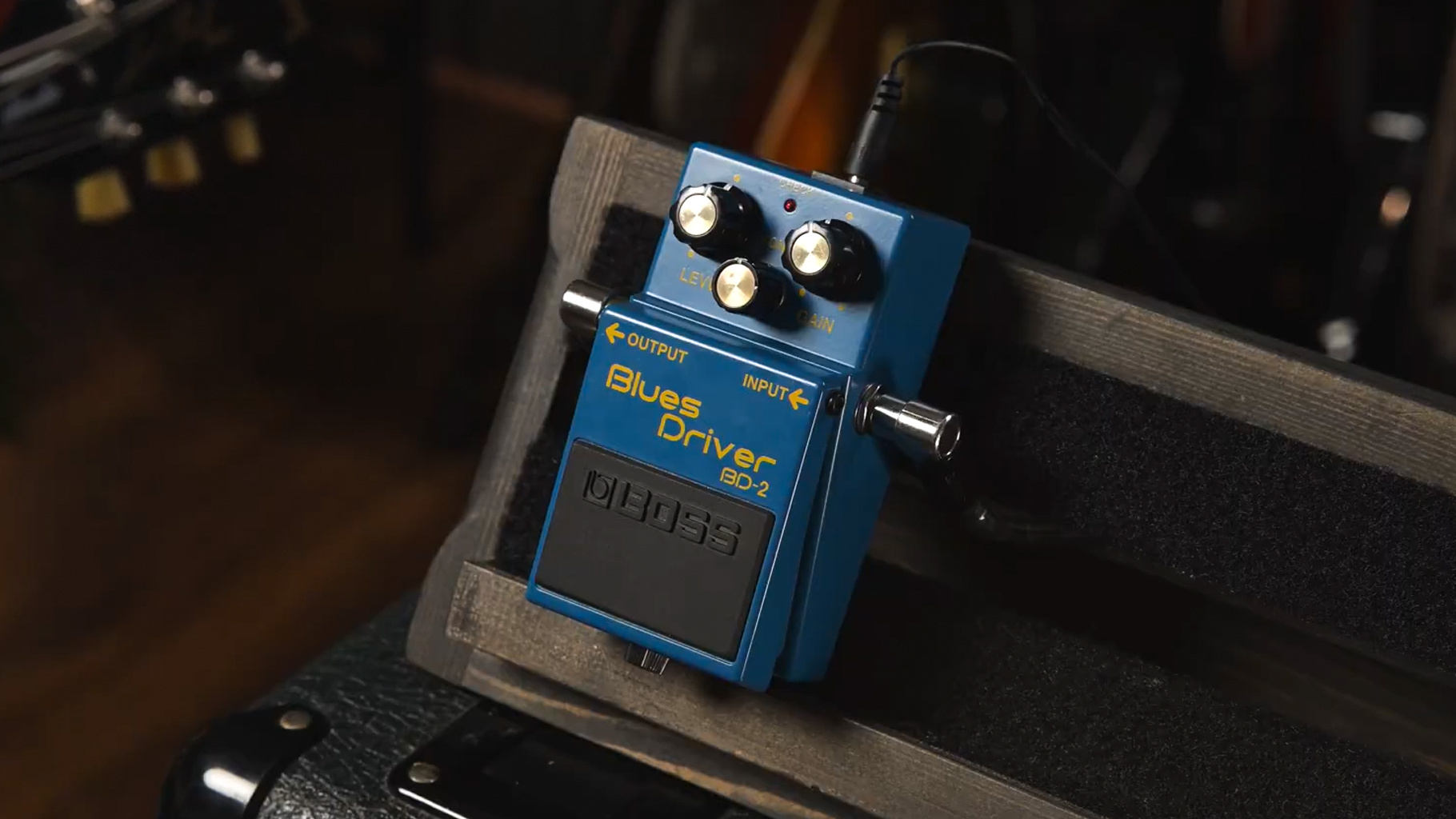
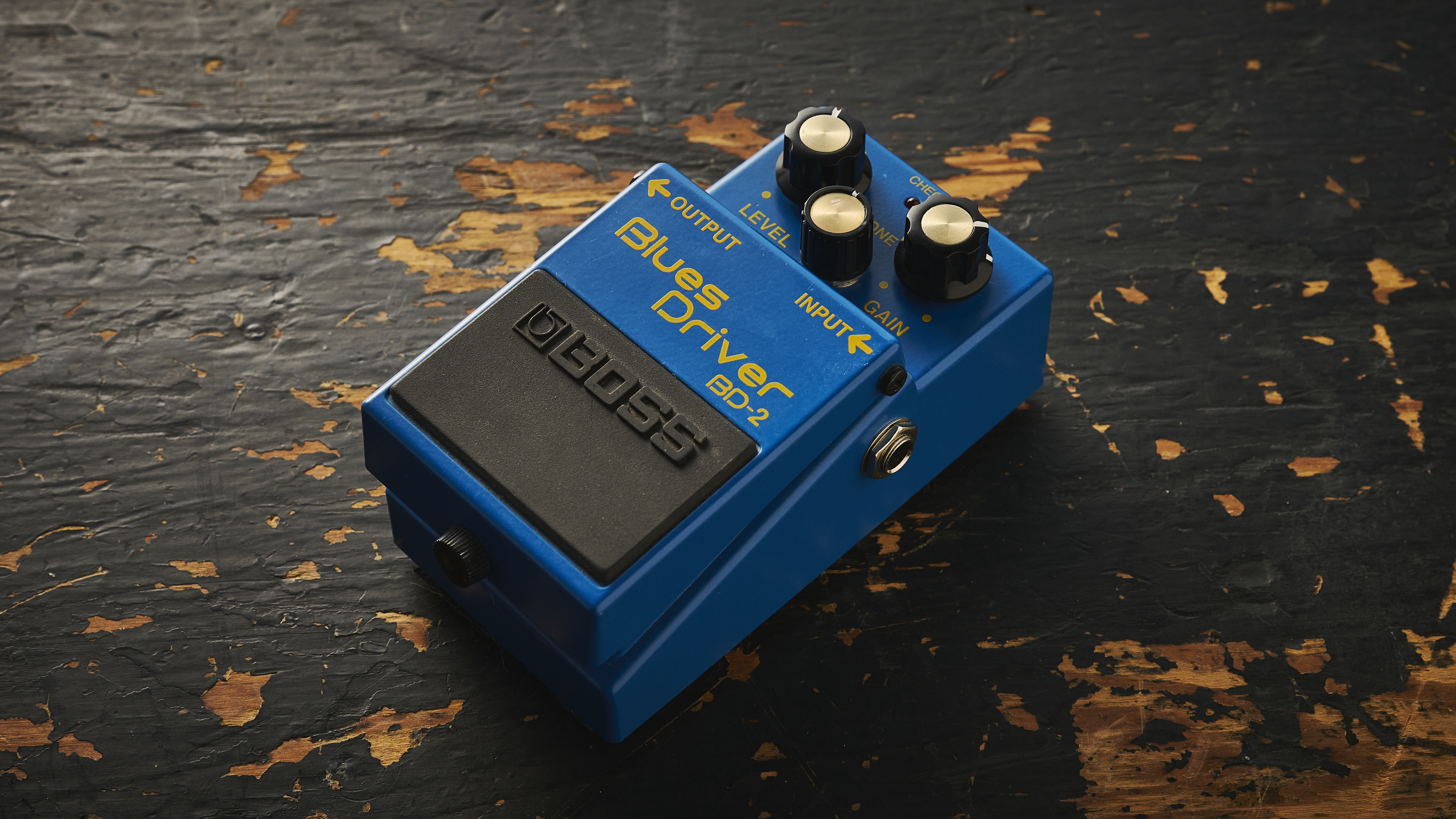
Boss is famous for pedals that genuinely outlast most users. I’ve gigged a BD-2 at literally hundreds of events, and it hasn’t choked once. In fact, it barely even has a scratch. Whilst I consider myself to be a trustworthy individual, if you want proof, the pictures here are of my own unit.
The aluminium chassis is solid enough that it feels like you could build houses with it. Most of the front panel is taken up by the large rectangular footswitch that forms part of that chassis, so it can easily stand up to years of abuse from even the most enthusiastic stompers. This is furthered by the extra protection of the rubber contact on the footswitch.
You access the battery compartment by lifting the footswitch out of the way having unthreaded the thumb screw at the front. This, the three controls, two jacks, and DC power input all feel perfectly robust in use. Honestly, there’s nothing fancy here, so very little can go wrong.
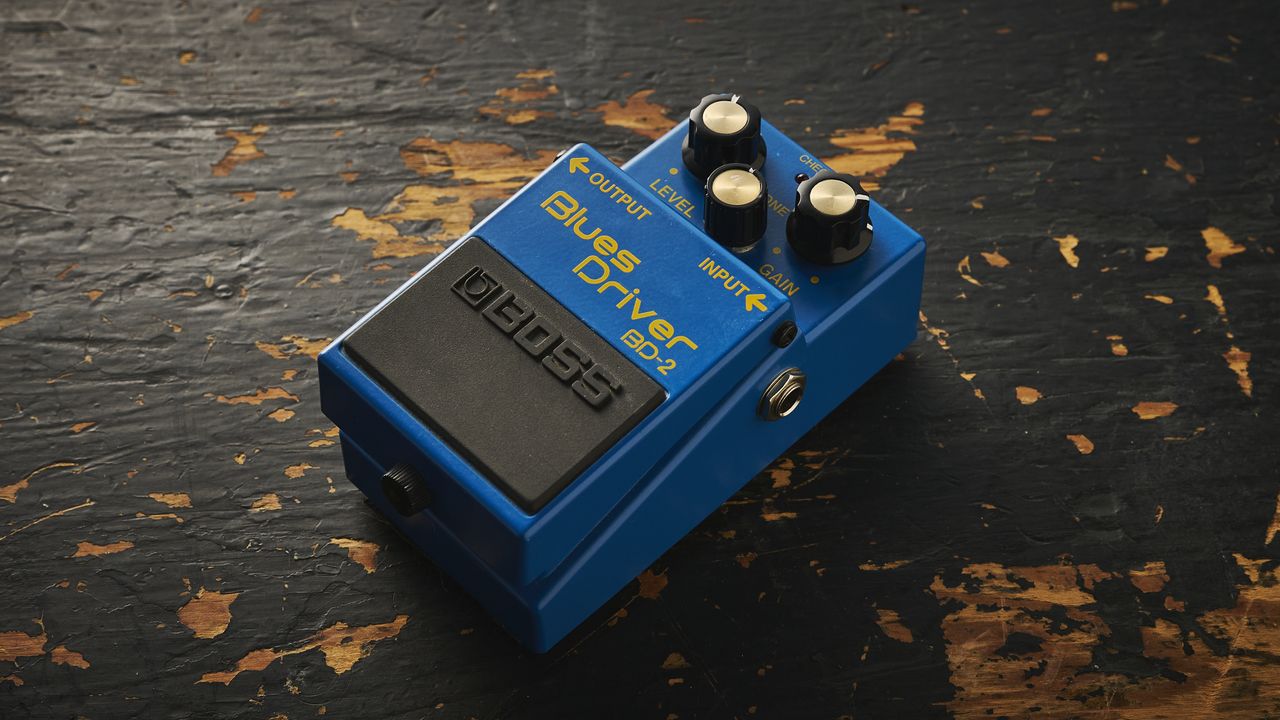
Okay, I’ll admit the aesthetic isn’t exactly exciting; the blue finish and yellow text gives the stomp a somewhat dated look, especially in today’s market. On the other hand, I can imagine a substantial backlash if Boss changed this appearance after an iconic 30 years in production. Like it or not, it’s classically Boss and instantly identifiable.
Usability and features
Usability and features rating: ★★★★½
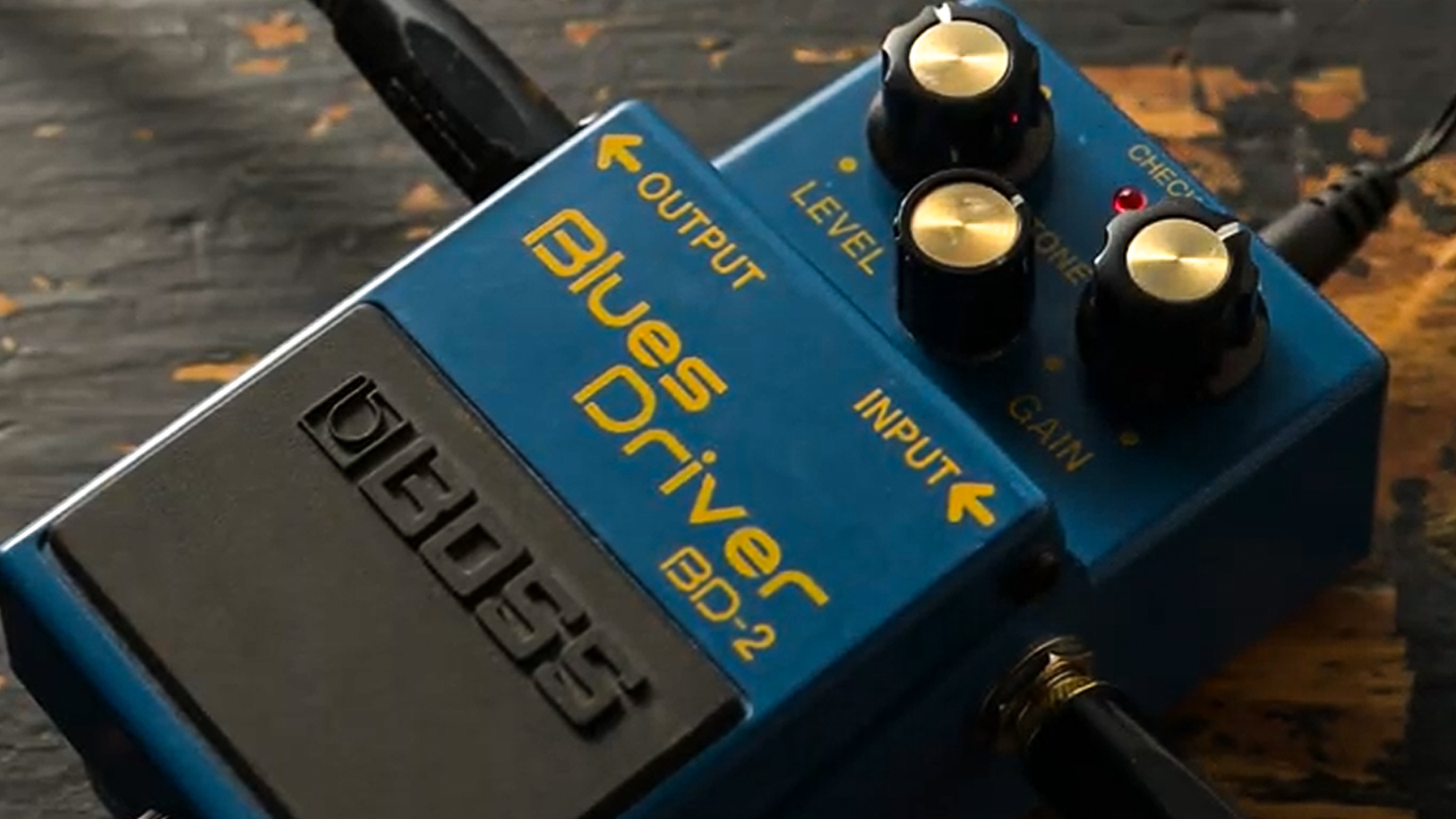
The massive footswitch is impossible to miss, and the pedal’s size means most won’t have trouble fitting it onto their pedalboard
As I alluded to earlier, there’s very little to this pedal. The Level, Tone, and Gain controls are all self-explanatory, and there are no bells and whistles to speak of. The simple aesthetic means these controls are clearly labeled, along with the input and output jacks. So, operation is almost foolproof.
I say almost because, as a fussy reviewer (it my the job, after all), those three controls sit close enough together that turning the central Tone control can, on occasion, accidentally move the Level and/or Gain controls.
As with most analog pedals, the BD-2 draws a tiny 20mA, so it’s an easy job for any pedalboard power supply. If you run it on a battery, the aforementioned battery compartment is easy to access, and the battery sits nicely in place within the enclosure.
The massive footswitch is impossible to miss, and the pedal’s size means most won’t have trouble fitting it onto their pedalboard.
Sounds
Sounds rating: ★★★★
The Blues Driver is often presented as a transparent pedal, and while that is relatively true compared to many other overdrives, it still subtly affects your tone’s overall EQ. Running it into my Fender Hot Rod Deluxe IV, there’s a very slight reduction in low end and a touch more presence in the high mids.
Gain-wise, there is enough on tap to get into some pretty heavy drive sounds, but higher gain settings accentuate those high mids, resulting in some fizzy tones that are not all that pretty, so best leaving the gain control at somewhere below 70%.
At that setting, there’s plenty of drive for well-overdriven bluesy leads and tight, classic rock rhythms, with a pleasant high-end bite. Here too is where many will discover what this pedal’s main strength is – its dynamic response.
The pedal feels truly alive, reflecting how hard I pick. There’s a significant reduction in drive with a light attack, and an aggressive bite coming through as I dig in. Similarly, it cleans up incredibly well on the volume control. Even at the highest gain settings, the Blues Driver gets glassy clean when I roll the guitar volume back.
With this in mind, I leave the gain at around 70% and do the rest with my volume control and picking. In short, this is what makes the Blues Driver the iconic pedal that it is.
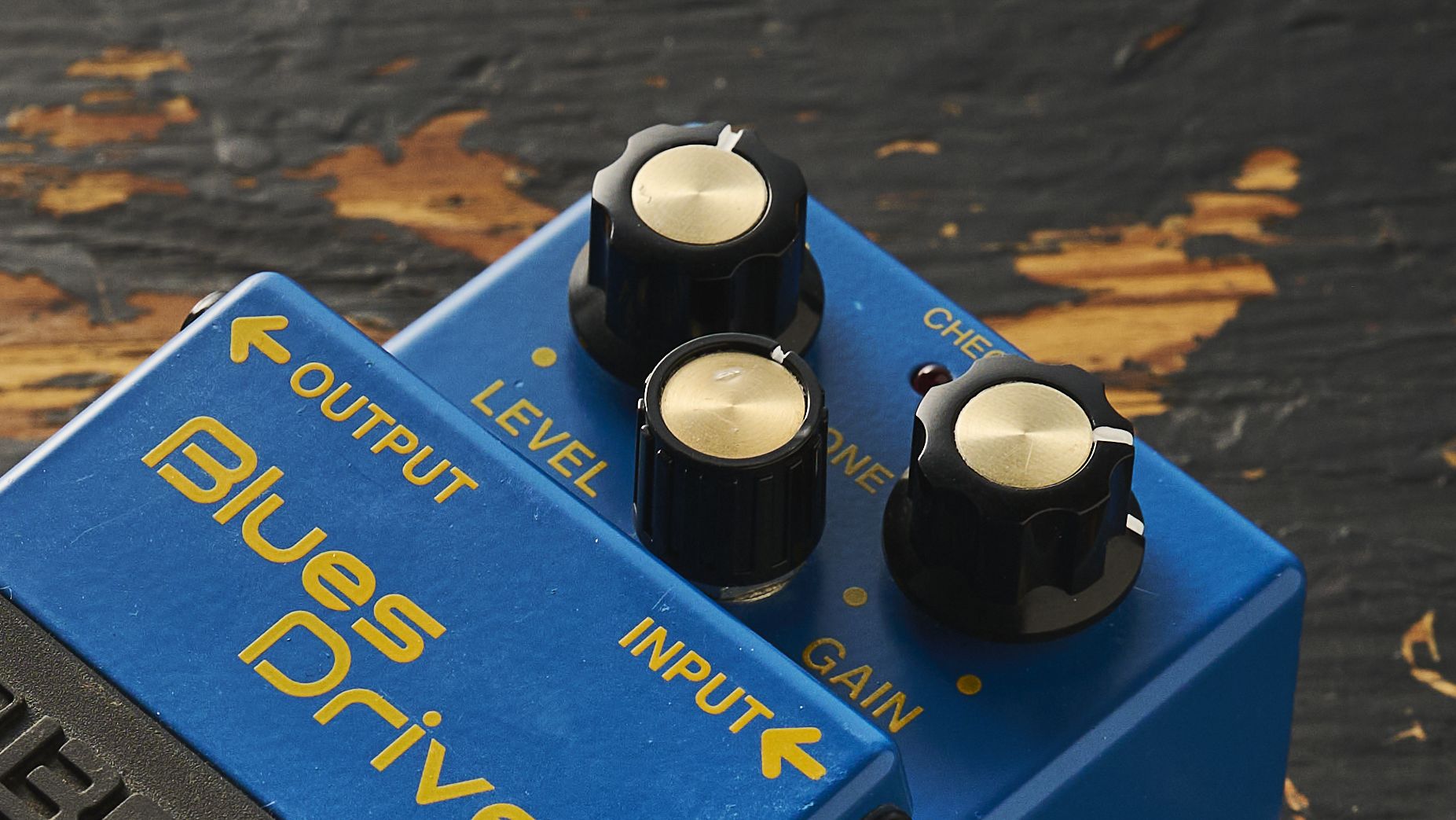
The pedal feels truly alive, reflecting how hard I pick
Another factor is how it pairs with other drive pedals. I find the mid hump of a Tube Screamer pairs well with the bite of the Blues Driver in order to push the unit into saturation for those soaring leads.
That’s not to say the lower gain settings aren’t handy. On numerous occasions, I’ve found myself at the mercy of a high-headroom valve amp provided by a venue, on a stage too small to let me push it. Here, the Blues driver can save the day.
With the gain control at 25%, the signal stays clean and nearly transparent, while offering a little compression and breaking up a bit when I dig in. It nicely simulates an amp on the edge of breakup and saves me from the spiky nightmare of a high-headroom tube amp.
There is plenty of level here to push a driven amp into saturation, although I would typically prefer the mid-hump of a Tube Screamer or Klon clone for this.
And lastly, the Tone control is useful for dialling out some of that fizz, but be careful as things get a little lifeless if you go too far anti-clockwise, and very shrill if you go too far the other way. It’s ideal, however, for matching the Blues Driver to your guitar.
For example, on my Telecaster with its bright vintage pickups, I’ll dial the tone back a little to tame that high end, and do the opposite on my Les Paul to maintain that bite.
Verdict
There are certainly some ugly sounds in the Boss BD-2 Blues Driver. The Gain control can make things fizzy, and the Tone control can remove life from a sound in one setting and make it too harsh in another.
However, use it correctly, and it will add an almost transparent gain to your rig that will go from a nice compressed, pushed clean feel to a rewarding drive, and all in a way that reflects your carefully chosen guitar and amplifier.
And in such a simple, affordable pedal, these tones are easy to figure out. Its crowning achievement, however, is a dynamic response that reacts to your playing like premium pedals over three times the price.
Guitar World verdict: If you’re looking for a pedal that does high-gain shenanigans or has multiple tone-shaping options, the BD-2 Blues Driver isn’t it. What it does do, however, is provide an incredibly dynamic, almost transparent overdrive in a way that reflects the carefully curated gear in your rig. Don’t let the low price fool you. This is a solid choice for professionals and beginners alike.
Swipe to scroll horizontally
|
Test |
Results |
Score |
|---|---|---|
|
Build quality |
It’s a little plain in the looks department, but, like all Boss compact pedals, the Blues Driver will last decades. |
★★★★★ |
|
Usability and features |
There are no bells and whistles here, resulting in a straightforward pedal. |
★★★★½ |
|
Sounds |
A natural-sounding overdrive that will reflect the sound of your rig with an impressive dynamic response. It can be harsh if not set correctly, however. |
★★★★ |
|
Overall |
A well-built, easy-to-use, and dynamic choice for both pros and beginners alike. |
★★★★ |
Also try
Nobels ODR-1
$119 | £99 | €98
The Nobels ODR-1 rose to notoriety through being part of many a Nashville pro’s rig. Similar to the Blues Driver, it aims at a natural-sounding overdrive that reflects the guitar and amplifier you’re using, but with a slightly smoother sound and a little more gain.
” data-widget-type=”deal”>
Boss SD-1 Super Overdrive
$69 | £79 | €69
If you’ve tried a few ‘transparent’ pedals and found they don’t quite do it for you, give the Boss SD-1 a look. Its mid-humped nature makes it perfect for boosting driven amps, but it also has plenty of gain for use as a standalone overdrive.
Read more: Boss SD-1 Super Overdrive review
” data-widget-type=”deal”>
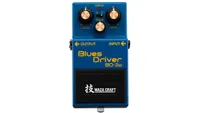
Boss Waza Craft BD-2W Blues Driver
$186 | £169 | €158
If you’re in the position to spend a little more cash, the Boss Waza Craft series takes a selection of classic Boss Pedals and gives them a bit of a glow-up. In the case of the Blues Driver, that means a lower noise floor and a smoother sound with more low mids.
Read more: Boss Waza Craft BD-2W Blues Driver review
Hands-on videos
Reverb
intheblues
A Blues Guitarist and the BOSS BD-2 Blues Driver Pedal – YouTube

” data-join-the-conversation-text=”Join the Conversation”>
You must confirm your public display name before commenting
Please logout and then login again, you will then be prompted to enter your display name.
