

Explore the “Feral Metaverse” of Theo Triantafyllidis, the winner of the 2026 Frieze London Artist Award, which is co-commissioned and co-produced with Forma in collaboration with Google Arts & Culture.
Eva Langret
Director of EMEA, Frieze
Amit Sood
Vice President & Founder, Google Arts & Culture
Courtesy of the Artist and The Breeder Athens
Listen to article
[[duration]] minutes
This content is generated by Google AI. Generative AI is experimental
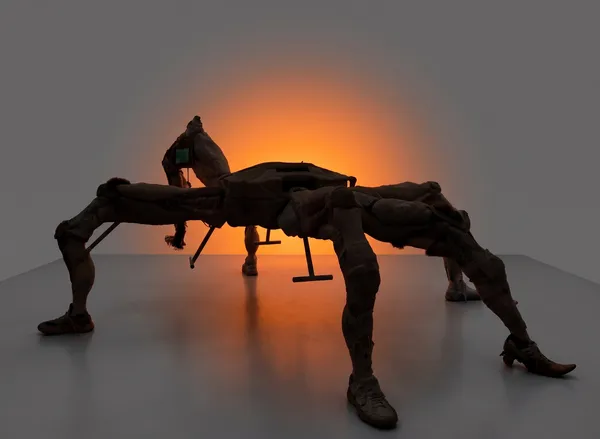
Athens-based artist Theo Triantafyllidis is the recipient of this year’s Frieze Artist Award, which supports artists at pivotal moments in their careers as they create ambitious new work. Triantafyllidis works with video games, live simulations, performances, and physical installations to build playful worlds exploring complex phenomena. At Frieze London, he’ll present ‘Feral Metaverse (Spider), 2026,’ a participatory climbable spider sculpture and live multiplayer game rooted in shared experiences.
In Triantafyllidis’ words, “spiders are the original engineers.” Strange, intelligent and unexpectedly tender, the spider became a central figure for an artwork built around physical contact, cooperation, and play.
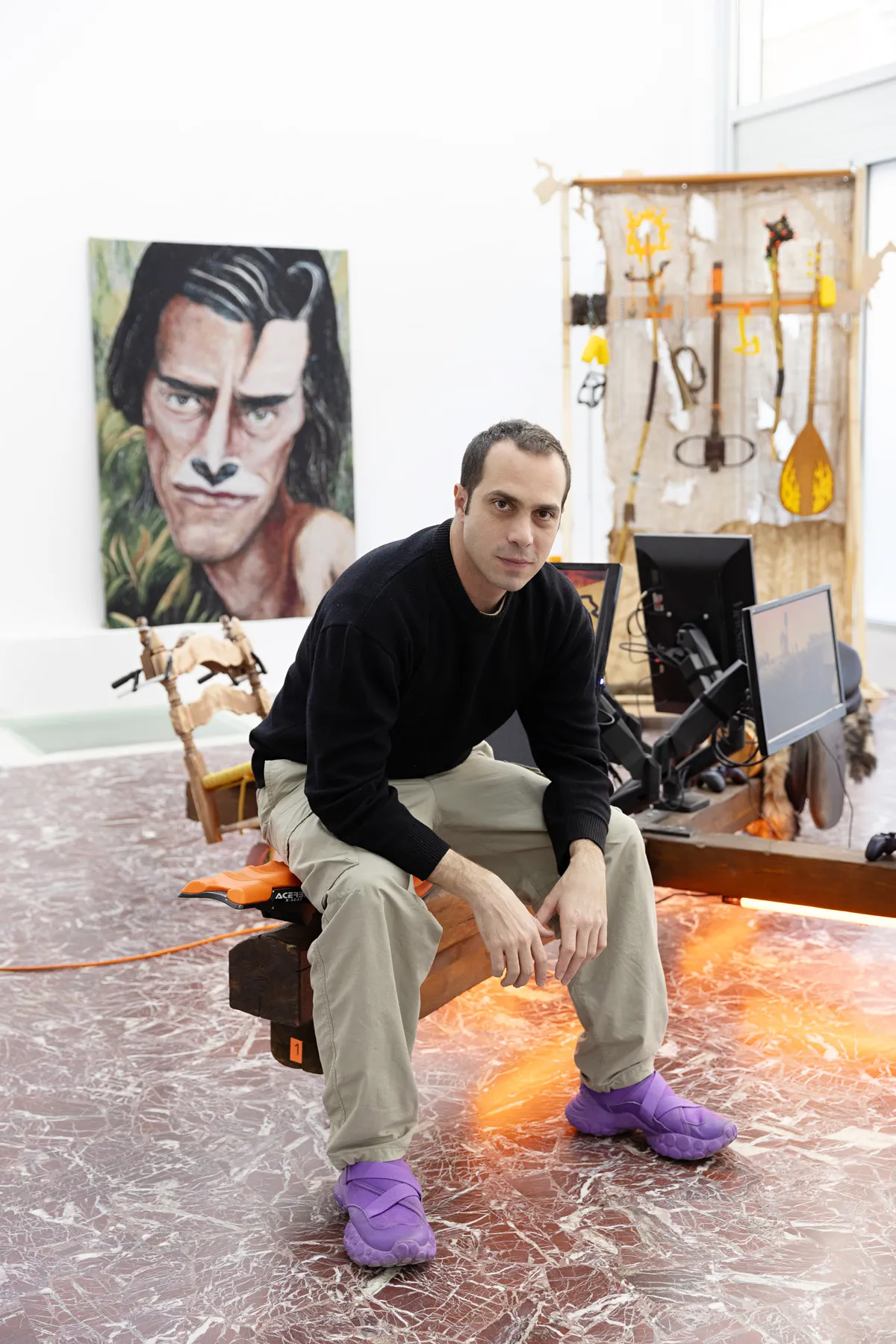
Theo Triantafyllidis, Photo: Paris Tavitian, Courtesy of the Artist and The Breeder, Athens.
A virtual world, multiplayer game, and giant spider
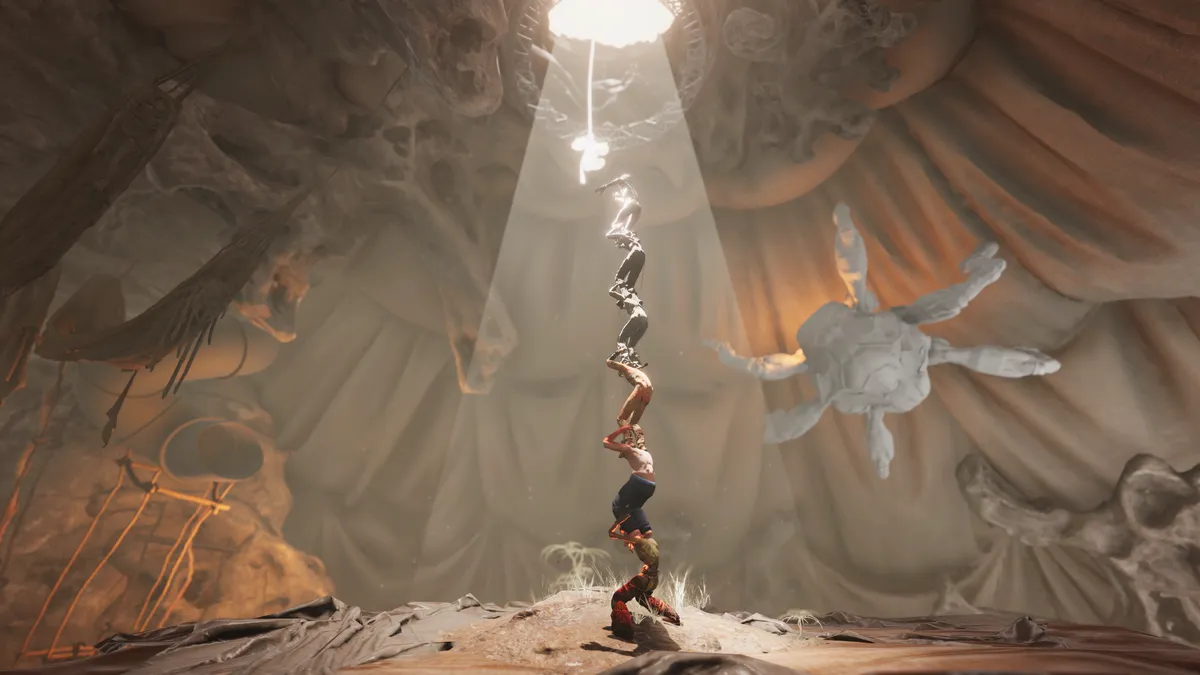
From afar, the giant spider-shaped structure might appear intimidating, but up close, its softness invites touch. Visitors are encouraged to help one another climb the sculpture. Once players are aboard the legs, the experience extends into the Feral Metaverse, a shared digital environment where players collaborate, move, and form temporary collective bodies together.
Theo Triantafyllidis, ‘Feral Metaverse (Spider), 2026.’ Game still. Courtesy of the Artist and The Breeder, Athens.
An interdisciplinary team working with Google AI
The award allowed Triantafyllidis to expand his team of sculptors, fabricators, textile designers, game developers, and civil engineers. For this project, the group introduced Gemini into their workflow, working with it as a tool and collaborator as they generated the sketches, character designs, backdrops, and 3D renders that shaped the look and feel of the game. In rendering AI outputs as sculptural material, they were able to push both the game and the audience interaction with it.
The experience, which requires players to watch each other, exchange advice, and learn together, will move between the screen and the booth at Frieze. It’s a testament to how both public and online spaces can foster cooperation and warmth.
Visit Google Arts & Culture to learn more about the making of the work, which will be on display at Frieze London in The Regent’s Park from October 14–18.
Get the latest news from Google in your inbox
Sign up for our newsletters with product updates, event information, special offers, and more.
Your information will be used in accordance with Google’s privacy policy. You may opt out at any time.
