

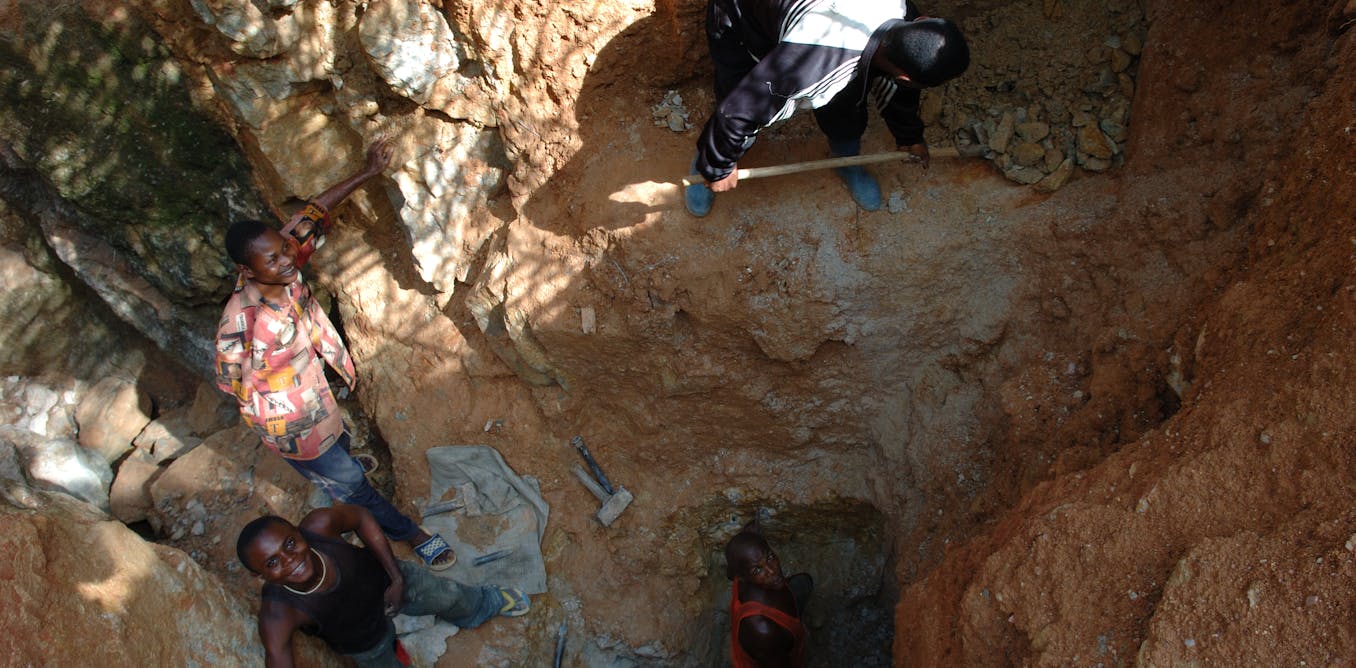
The Democratic Republic of Congo (DRC) is taking an unusual step to secure its critical minerals. It plans to create a new paramilitary unit to protect mining sites and transport routes, backed by funding and support from the United States (US) and the United Arab Emirates (UAE).
In the past, mining companies contracted private security companies to protect their assets and infrastructure. For instance, in 2020, Frontier Services Group Congo signed an agreement with a Chinese mining firm, Sicomines, to provide security services for its mining operations.
But the scale and geopolitical significance of mineral security in the DRC has changed significantly. The country hosts substantial deposits of critical minerals, including cobalt, copper and other resources, that are used in electric vehicles, renewable energy systems and modern technologies. As global demand for these resources rises, control over their extraction, transport and trade is becoming increasingly strategic.
The proposed unit (mining guards) is expected to oversee major mining areas across the country. Around 20,000 personnel could be deployed by 2028 across the mining provinces under the supervision of the General Inspectorate of Mines. The overall goal is to reduce smuggling, replace corrupt security forces, and improve transparency and the traceability of minerals. The initiative also aims to limit the
influence of armed groups, which have long been active in parts of eastern DRC and are often linked to illegal mining and the trade of minerals. Increasing insecurities in eastern DRC drive mining investors away.
In principle, this could help address long-standing concerns about illegal trade and weak control over mining activities. For international partners, this could create conditions that make it easier to invest in the DRC’s mining sector while meeting growing expectations around responsible sourcing.
However, improving resource governance in the DRC will require more than a single intervention. We are researchers interested in resource governance, and have recently published a paper that examines the environmental, social and governance landscape of the DRC. The aim of the research was to assess whether current governance practices enable participation in regulated, high-value minerals markets.
We conclude from our findings that the DRC’s 2018 Mining Code expanded state participation and strengthened environmental and social obligations. But enforcement remains weak, transparency is partial, and community consent mechanisms are procedural rather than rights-based. Without these issues being addressed, security measures alone are insufficient to resolve resource-governance challenges in the DRC.
Why DRC is at the centre of global competition
The DRC holds a unique position in the global economy. It produces almost three-quarters of global cobalt output and also contains substantial deposits of gold, tantalum, tin, copper and tungsten. This has made the country a focal point for international competition.
Chinese companies currently dominate much of the DRC’s mining sector, particularly cobalt production. The US and the European Union are seeking to secure more reliable access to these resources and reduce dependence on existing supply chains.
Recent partnerships between the US and the DRC aim to support regional supply chains for electric vehicle batteries and to invest in transport and processing infrastructure. The proposed mining guard can be seen as part of this broader effort to strengthen control over the sourcing and governance of these minerals.
National security forces have been deployed in mining areas before
Using national security forces to protect mining operations is not new in the DRC. For decades, the DRC’s state security forces, including the national army, the Republican Guard and military-aligned police units, have been deployed around mining sites, transport corridors and mineral-rich territories. But this approach has had mixed results.
In some cases, security forces have been linked to illegal mining, informal taxation of artisanal miners and abuses against local communities. Rather than solving governance problems, their involvement has sometimes reinforced them, raising concerns about this new mining guard.
The deeper governance problem
Our research shows that laws already exist to regulate mining, protect the environment and support local communities. The difficulty lies in enforcement. Illegal mining, smuggling and corruption remain widespread. Oversight institutions often lack the resources and independence needed to monitor activities effectively.
As a result, it is often difficult to trace where minerals come from or the conditions under which they are produced. This is becoming a growing concern for global companies under pressure to show that their supply chains are responsible. International frameworks, such as those developed by the OECD, require companies to assess risks in their mineral supply chains. This increases the importance of reliable systems for monitoring and verification.
What should change
We argue that strengthening security alone is unlikely to resolve these issues; more fundamental changes are needed.
For instance, companies need to be held legally accountable for environmental damage. Local communities need enforceable rights, including a real say in decisions that affect their land. Payments and contracts must be transparent and open to scrutiny. Crucially, mining projects should proceed only where there is clear evidence that environmental and social standards can be met and enforced. In many parts of the DRC, the absence of such governance and
accountability mechanisms has contributed to conditions that enable insecurity, illicit mineral trade and the persistence of armed group activity.
The new mining guard reflects a broader shift in the governance of mineral supply chains. It shows that access to resources is no longer solely about geology or production capacity.
Trust is becoming just as important. The DRC’s minerals will remain essential to the global energy transition. But the country’s long-term position in these supply chains will depend on whether it can demonstrate that its resources are managed in a way that is credible, transparent and accountable.
