







As researchers keep looking for ways to deescalate treatment in HER2-positive breast cancer, a trial from China looked at a chemotherapy-free regimen with endocrine therapy, a CDK4/6 inhibitor, and trastuzumab (Herceptin) and pertuzumab (Perjeta; HP).
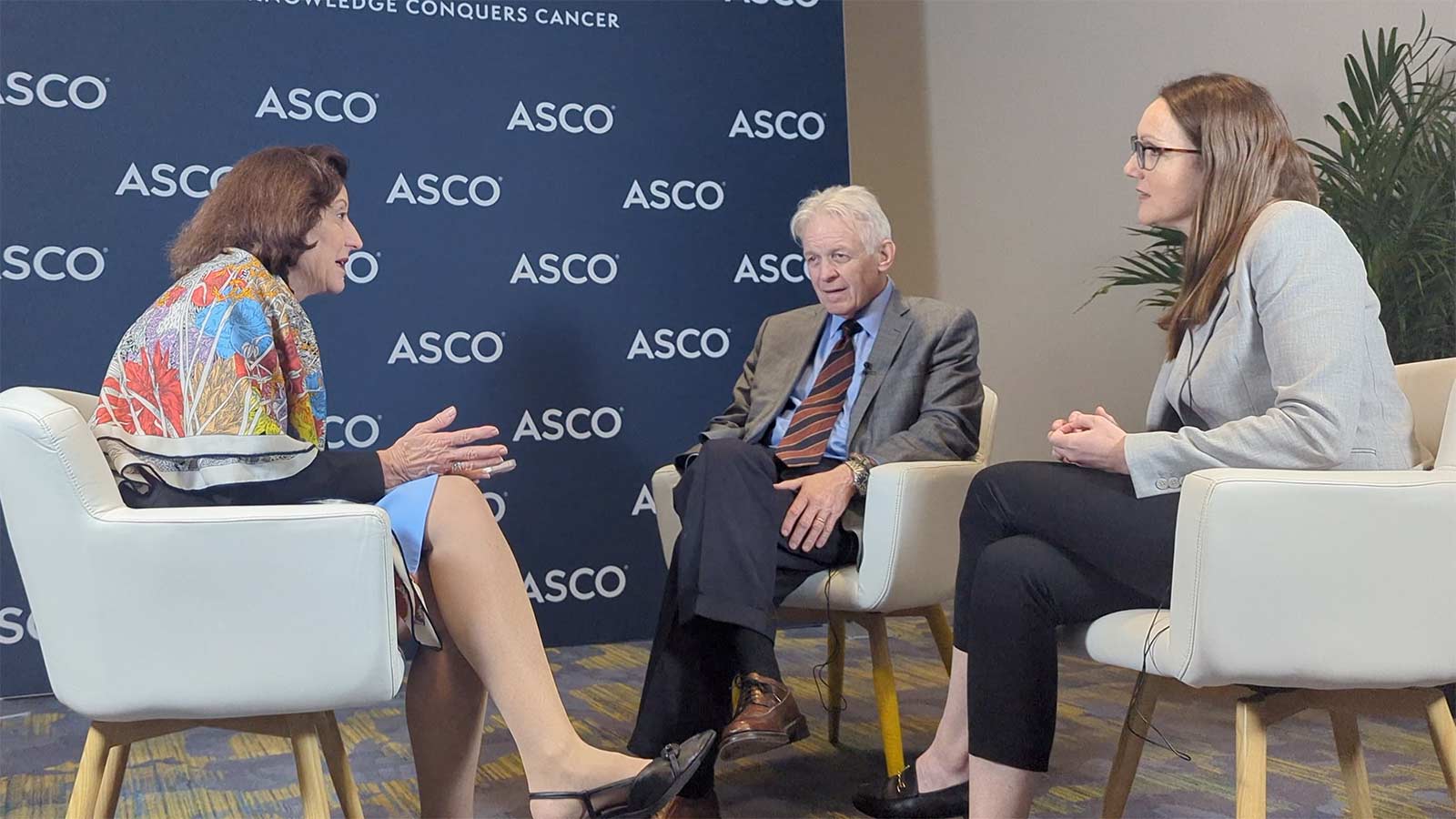
In this seventh segment of MedPage Today‘s expert roundtable, moderator Hope Rugo, MD, of the City of Hope Comprehensive Cancer Center in Duarte, California, along with William Gradishar, MD, of Northwestern University Feinberg School of Medicine in Chicago, and Laura Huppert, MD, of the University of California San Francisco, continue their discussion about predicting pathologic complete response (pCR) as well as the future of chemotherapy-free regimens.
Watch the entire roundtable series here.
Following is a transcript of their remarks:
Rugo: An MRI probably alone isn’t good enough. An MRI and biopsy with functional tumor volume attached to the MRI has a very good predictive rate. It’s not perfect, but very good prediction of pCR [pathologic complete response], and that may be one way to help us as we move forward, because certainly the pCR rates in the West German Study Group trials, I guess combined analysis looked, the outcome looked really good based on pCR.
There was some data presented looking at a treatment — again done in China — with no chemotherapy. So HR-positive disease with endocrine therapy, a CDK4/6 inhibitor, and HP, would you ever use such a thing?
Huppert: Yeah, I think not yet. I think it’s possible that in the future we’ll have sort of even better HER2-targeted agents with a combination of endocrine therapy and have chemotherapy-free regimens, which I think would be great for our patients. But I think the pCR rate in that study wasn’t high enough for me to use that yet.
I think the goal for these patients is curative. So I think we do want to deescalate, but we also want to keep in mind that we do want to get as many patients to pCR as possible since pCR correlates with long-term improved outcomes.
So I wasn’t compelled by that lower rate of pCR at the moment, but I think an adaptive design where you may do something like that and escalate down the line, or with some of these novel agents that may be even more effective. I think it’s something we could look towards in the future.


