





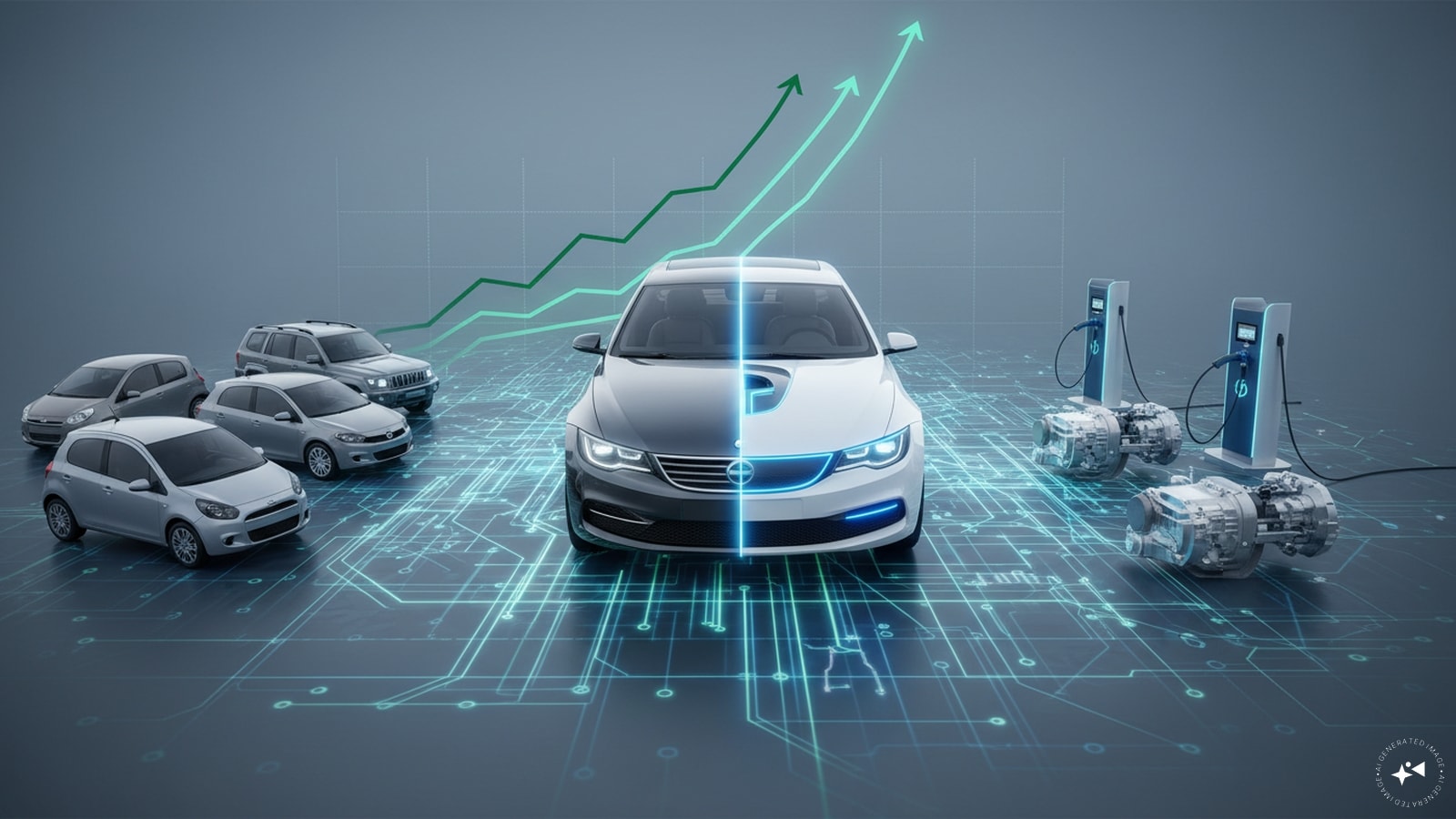
India has notified the Corporate Average Fuel Economy (CAFE-3) norms, setting new fuel-efficiency and CO2 requirements for passenger vehicles from April 1, 2027, to March 31, 2032.
The rules apply to M1-category vehicles, which broadly cover passenger cars such as hatchbacks, sedans, SUVs and MPVs, with up to eight passenger seats apart from the driver.
For carmakers, the new rules will affect the way vehicle fleets are planned, while for customers, the impact is likely to come through the technology and powertrain choices offered in new cars.
Small-car issue
One of the biggest changes is that small petrol car weighing up to 909 kg will not get a separate CAFE concession. Maruti Suzuki India had sought such a benefit, while Tata Motors, JSW MG Motor and other automakers opposed it.
The September 2025 draft had proposed a 3 g/km reduction in the CO2 figure used for CAFE calculations for petrol cars up to 909 kg. The dispute eventually reached the Prime Minister’s Office.
The final rules remove that separate benefit. Instead, the government has changed the overall formula used to set a carmaker’s target.
Weight now matters
CAFE targets are calculated for each manufacturer based on the weighted average unladen weight of its new vehicles. The final rules set the reference weight at 1,229 kg. The annual weight multiplier will decline from 0.00158 in FY28 to 0.00131 in FY32.
This means a carmaker’s fleet mix will matter. A manufacturer selling more heavier vehicles will have a different target from one selling a larger number of lighter vehicles.
For example, under the final FY28 formula, a 909 kg car gets a target of about 82.8 g CO2/km, compared with around 76 g/km under the September 2025 proposal. For a 2,500 kg vehicle, the target works out to about 142.4 g/km, compared with roughly 151.4 g/km under the earlier formula.
For carmakers, this could influence vehicle weight, engine efficiency, powertrain choices and the mix of models they sell.
For customers, the notification does not directly set car prices or guarantee a specific improvement in mileage. However, carmakers may need to use more fuel-saving technologies or cleaner powertrains to meet their fleet targets.
EVs get a boost
The rules retain a strong compliance advantage for electric vehicles through super credits.
A battery electric vehicle (BEV) or range-extended electric vehicle (REEV) counts as three vehicles when a manufacturer’s fleet performance is calculated. Plug-in hybrids and strong hybrids running on flex-fuel ethanol get a 2.5x factor, strong hybrids get 1.6x, while flex-fuel ethanol vehicles get 1.1x.
For carmakers, this gives greater compliance value to every EV sold. It can therefore support the expansion of electric and hybrid models as manufacturers work towards their fleet targets.
For buyers, that could mean more focus on EVs and hybrid technology in manufacturers’ future product plans.
The rules are less generous to EVs than the first CAFE-3 proposal. The June 2024 draft had proposed a 4x factor for BEVs, compared with 3x in the final rules. It had also proposed a 5x factor for hydrogen fuel-cell vehicles, which are not included in the final super-credit table.
Credits ease burden
CAFE-3 also introduces a credit-debit system.
A carmaker that performs better than its target earns credits, while one that performs worse accumulates debits. These are recorded in a manufacturer-level passbook. Credits can be carried forward within a compliance block.
The first compliance block covers FY28-FY30, while the second covers FY31-FY32. Unsettled credits lapse at the end of the relevant block. Carmakers can also trade credits with other manufacturers.
A manufacturer with a deficit can buy credits from the Bureau of Energy Efficiency. The price starts at ₹2,500 per g CO2/km in FY28 and rises to ₹4,500 in FY32. Credit trading and buyouts will be allowed from October 1 to October 31 each year.
This gives manufacturers another way to manage compliance instead of having to meet the target entirely through every individual model.
The rules also allow a manufacturer to claim 1 g CO2/km for each eligible fuel-saving technology, subject to a maximum benefit of 9 g CO2/km.
These include start-stop systems, tyre-pressure monitoring, regenerative braking, six-speed or higher transmissions, efficient alternators, micro-hybrids, LED lighting, advanced glazing, electric water pumps and more efficient air-conditioning systems.
From April 2027, manufacturers will also have to report CO2 performance for each model under both MIDC and WLTP testing cycles. For carmakers: CAFE-3 makes fleet planning, vehicle weight, electrification and fuel-saving technology more important.
For customers: the rules do not prescribe a particular car, price or mileage figure, but they are likely to influence which engines, hybrids, EVs and efficiency technologies manufacturers bring to market from 2027 onwards.


