







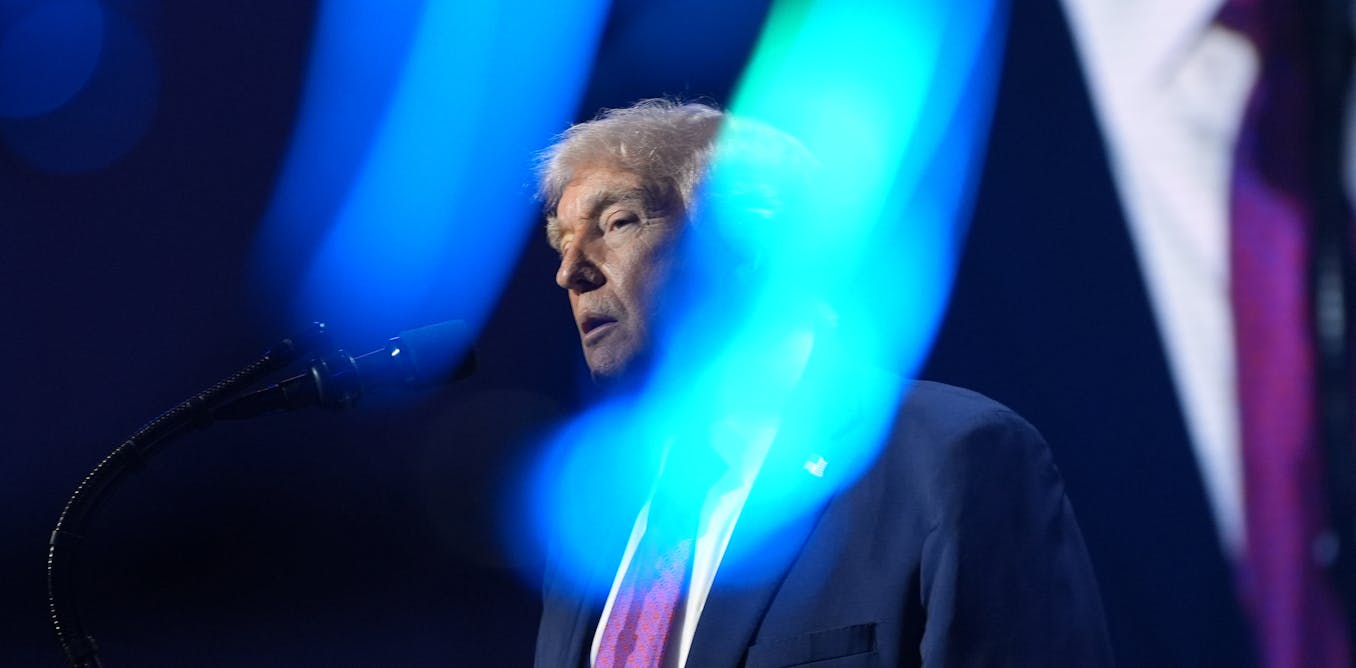
Donald Trump still has the capacity to shock. The American president’s unauthorized war against Iran finds him in a vicious destructive mode, recently threatening to push Iran “into the Stone Ages” and to end Iranian civilization if Iran did not agree to “unconditional surrender.”
Read more:
Donald Trump’s apocalyptic and profane threats against Iran expose the unhinged language of war
Even as the passing weeks have left Iran still standing, Trump’s words and deeds have already inflicted severe damage on the global economy and regional peace in the Middle East.
Trump’s turn toward a wartime posture is striking, but not entirely unexpected. His second-term conduct shows a growing tendency to push an earlier taste for disruption toward outright destruction — at home and abroad.
He now routinely acts in the belief that those who dare to resist his plans deserve the severest forms of punishment that imperial presidential power can deliver.
But Trump’s conduct is grounded in centuries of American experience. The United States has an enduring tendency toward retribution and destruction.
Trump 2.0
Trump’s scorched-Earth proclivity was obvious before the war with Iran. Warning shots came on Jan. 6, 2021, with the assault on both the Capitol and constitutional provisions for presidential succession. Similarly bold efforts began in 2025.
Globally, Trump has been sweeping away leaders, regimes and multilateral systems, using both military and political weaponry: the special operations extraction of Venezuelan President Nicolás Maduro, for example, as well as the launch of illegal attacks on purportedly drug-running fishing boats in the Caribbean and Eastern Pacific (now tallying more than 50 obliterating strikes and 163 deaths).
International ravaging has been a hallmark of Trump 2.0: dismantling highly integrated global trading networks; fuelling a surge in military recruits in allied countries like Canada and Denmark/Greenland; denouncing NATO.
There’s been destruction on the home front too: Elon Musk’s DOGE chain-sawed through congressionally authorized agencies and funding, for example, including the Environmental Protection Agency and 5,800 research projects at the National Institutes of Health. The anti-woke Trump administration has eviscerated diversity, equity and inclusion programs in government, the private sector and academia.
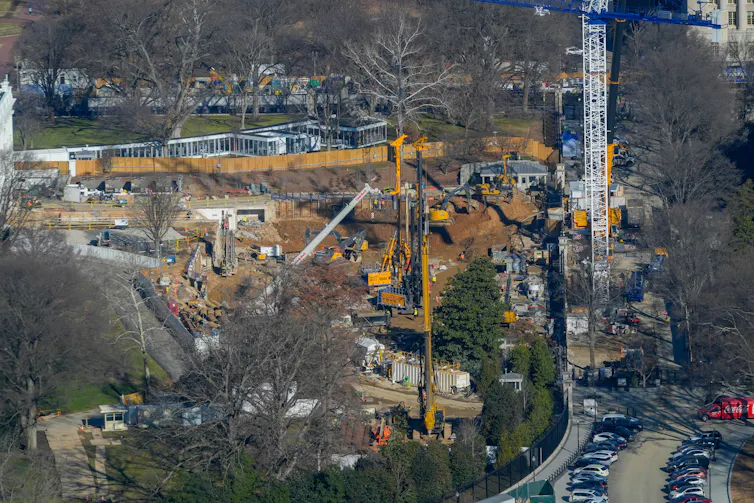
Trump has also literally bulldozed the White House East Wing.

(AP Photo/Pablo Martinez Monsivais)
American roots
Centuries of American history foreshadow Trump’s strategy of destruction. The precedents are complex for two reasons.
First, American personal and national interests have often mixed admirable aims with a more basic drive for wealth and power — combining genuine pursuits of democracy and civil liberties and ambitions for social welfare and community with less noble impulses.
Second, the scope and settings in which Trump-like behaviour appears have changed dramatically over more than three centuries — from a chain of Atlantic colonies to a continental nation and, ultimately, a global economic, military and cultural power. Yet across these shifting arenas, similar patterns of destructive and tragic outbursts have repeatedly surfaced.
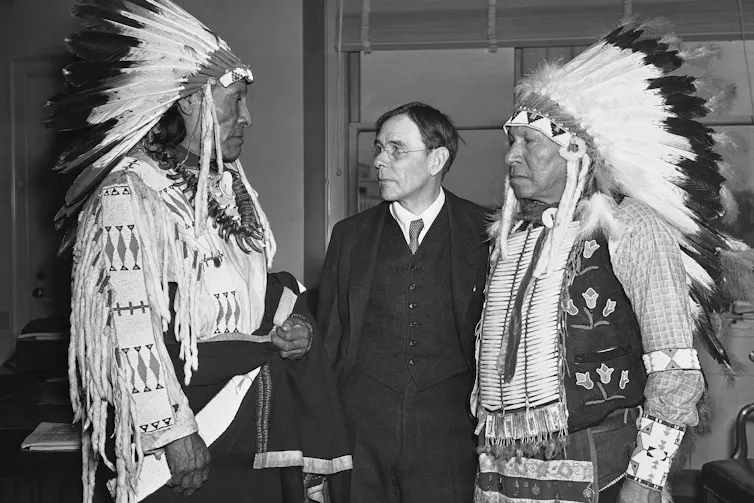
Among countless examples, the most profound involved the treatment of Indigenous populations. White colonial appetites for land and resources always paired negotiation and repression, with superior weaponry leading to episodes of genocidal annihilation when forced migrations and “reservations” were deemed insufficient.
The names of ruthless slaughters pockmark American history: the Apalachee Massacre (Florida, 1704), the Sand Creek Massacre (Colorado, 1864), the Wounded Knee Massacre (South Dakota,1890), among numerous others.
Estimates suggest that in 1492, five million Indigenous people lived in what would become American territory, declining to 300,000 by 1900.
While the histories of Canada, Mexico and broader Latin America are also replete with such tragedies, the evidence of deep and specifically American roots beneath Trump’s virulent destructive impulses is clear.
(AP Photo)
Slaves and free men
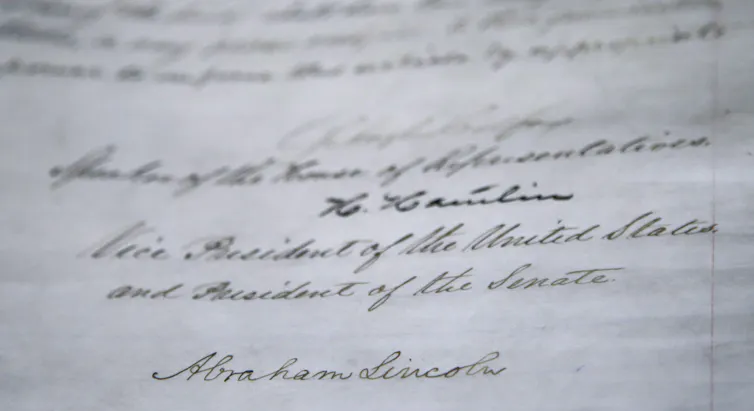
The history of Black Americans is another heinous example of the American capacity for carnage. The experiences of Black slaves and their descendents are soaked in blood.
Prior to the Civil War, estimates suggest the brutality of chattel labour meant life expectancy that was half that of white Americans (21 years versus 43). When freedom came, life remained perilous as violence supplemented Jim Crow segregation laws.
Black homes and businesses burned — the 1921 Tulsa massacre, for example, saw 35 square blocks of Black businesses and residential neighbourhoods destroyed.
Read more:
A forgotten coup in the American heartland echoes Trump
Shotguns and hanging ropes for lynchings also ended lives, stretching from the post-Reconstruction era of the 1880s to 1968.
Racialized people were the most common targets of an American appetite for total destruction — but not the only one. The U.S. Civil War remains one of the most catastrophic in world history, with Union and Confederate deaths now estimated at 698,000.

(AP Photo/Mark Humphrey)
Destruction abroad
American power in the 20th century saw the periodic unleashing of destructive impulses abroad, some within living memory. Examples include:
- Theodore Roosevelt’s attempt to crush rebellion in the newly acquired Philippines between 1899 and 1902; 120,000 U.S. forces were involved, with 4,300 American and 20,000 “insurrecto” deaths and the loss of as many as 200,000 civilian lives.
- The devastation produced by the Second World War’s “area bombing” campaigns, designed to sap enemy morale by targeting industrial and civilian sites. The campaign escalated into the 1945 “firebomb” assaults on cities like Dresden and Tokyo — and the use of atomic bombs on Hiroshima and Nagasaki.
- The ecological destruction produced by Agent Orange campaigns in Vietnam and the micro-level horror of the My Lai massacre in the 1960s.
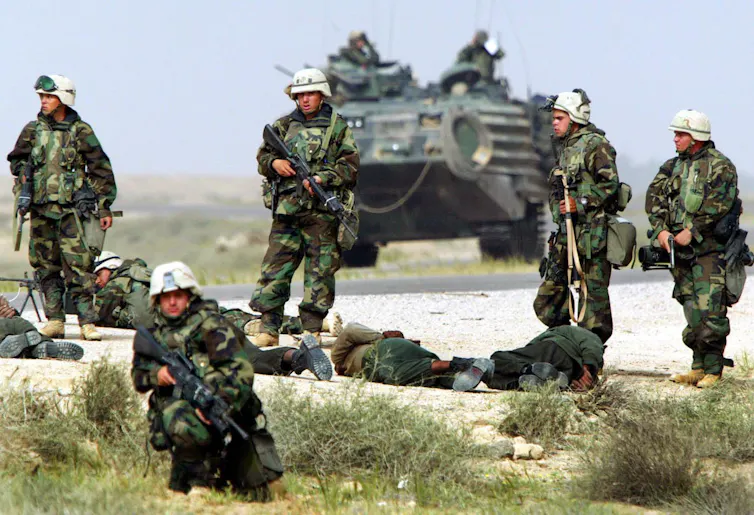
- The Iraq War’s casualty figures: 4,492 American service men were killed and 200,000 Iraqi civilians.

(AP Photo/Itsuo Inouye)
No restraints
American episodes of wanton destruction are part of a broader global history marked by the cruelties of many nations and groups.
At the same time, U.S. leaders and citizens have often been guided — if not fully constrained — by countervailing ideals: respect for human rights, adherence to the laws of war and a desire for the security and opportunity that peace provides.
But how strong are those restraints in 2026? And how vulnerable are hard-won ethical and political norms to Trump’s chilling rhetoric and actions, especially alongside Republican conduct in U.S. Congress and a Supreme Court that has weakened limits on presidential power?
Rising gas prices may prove the least of the consequences.


