






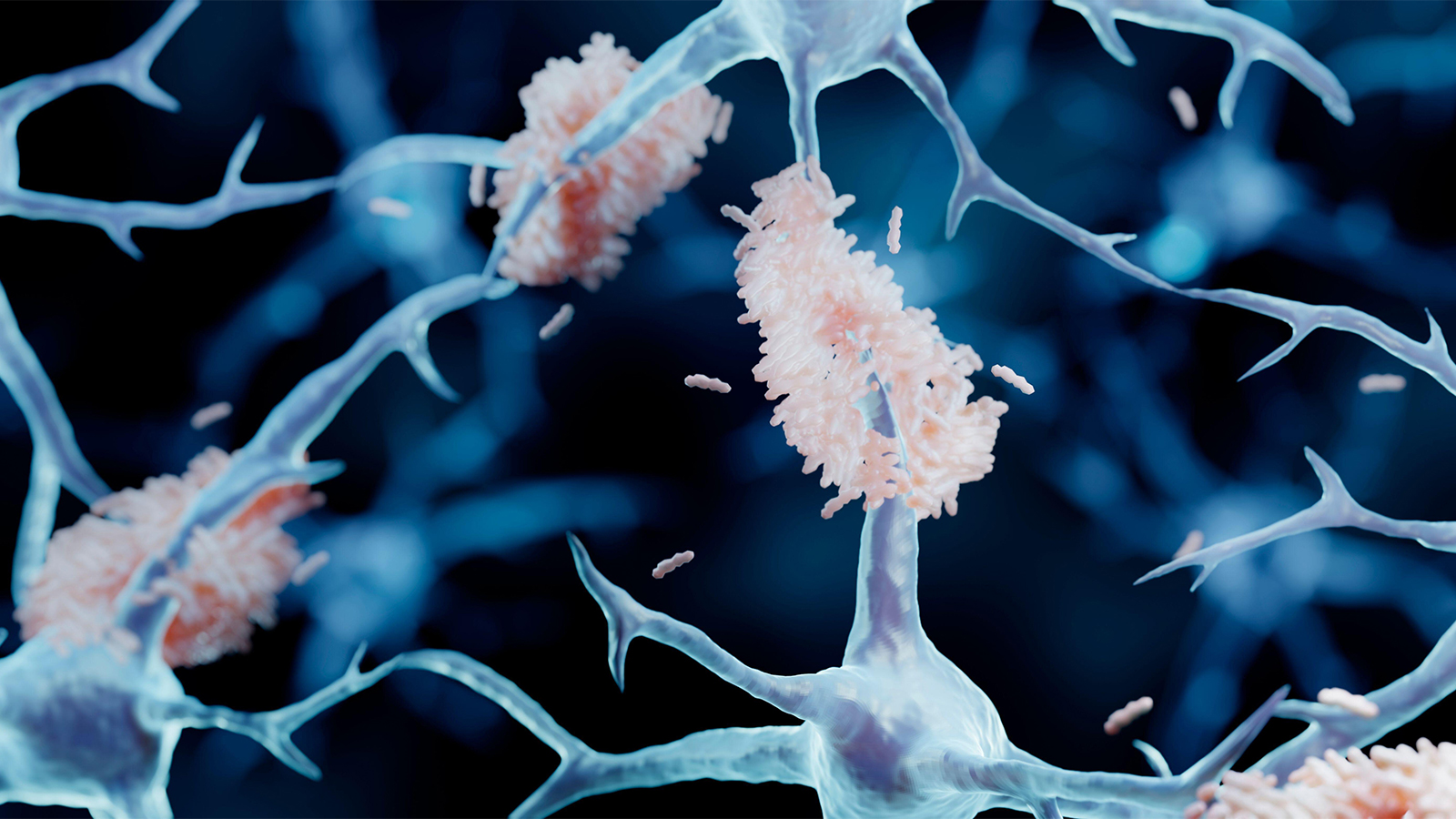
- Elevated plasma p-tau217 signaled cognitive decline and dementia risk in people with Down syndrome.
- High p-tau217 and GFAP levels predicted future amyloid buildup.
- Down syndrome-related Alzheimer’s disease is now considered a genetically determined form of Alzheimer’s.
Elevated plasma tau phosphorylated at threonine 217 (p-tau217) foreshadowed cognitive decline and progression to dementia in people with Down syndrome, data from the longitudinal Alzheimer’s Biomarker Consortium-Down Syndrome (ABC-DS) study showed.
High concentrations of p-tau217 and glial fibrillary acidic protein (GFAP) in blood were also linked to future amyloid accumulation, said Shorena Janelidze, PhD, of Lund University in Sweden, and colleagues.
Baseline p-tau217 was associated with subsequent changes in Down Syndrome Mental Status Examination (DS-MSE) scores (β -0.30, 95% CI -0.45 to -0.15 P=0.0001) and progression to dementia (HR 3.51, 95% CI 1.76-7.00, P=0.0004), Janelidze and co-authors wrote in Lancet Neurology.
Both baseline p-tau217 (HR 0.29, P=0.0003) and GFAP (HR 0.37, P=0.0003) were tied to changes in amyloid-PET. Baseline p-tau217 was also associated with changes in tau-PET (HR 0.42, P=0.0039).
Similar associations emerged between longitudinal p-tau217 or GFAP and changes in DS-MSE scores, tau-PET, and amyloid-PET.
“We showed that plasma p-tau217 accurately predicted decline in global cognition, progression to dementia, and increased tau burden in individuals with Down syndrome,” Janelidze said. “These findings support implementation of blood tests for p-tau217 in prognostic workup of Alzheimer’s disease in adults with Down syndrome in both clinical practice and drug trials,” she told MedPage Today.
“Our study suggests that plasma p-tau217 can be useful to screen people with Down syndrome in Alzheimer’s disease clinical trials,” she added. “Our results also indicate that this biomarker, in combination with GFAP, could potentially track disease progression and serve as surrogate endpoints in clinical trials.”
Down syndrome-related Alzheimer’s disease is now considered a genetically determined form of Alzheimer’s, noted Charlotte Teunissen, PhD, and Flora Duits, MD, PhD, both of Amsterdam UMC in the Netherlands.
“The APP gene lies on chromosome 21; hence, people with Down syndrome overexpress APP,” Teunissen and Duits wrote in an accompanying editorial.
“However, the age of dementia onset is highly variable, so the question is when (rather than if) people with Down syndrome will develop Alzheimer’s-related dementia,” they pointed out.
Previous studies have suggested that the diagnostic accuracy of plasma p-tau217 in people with Down syndrome might be as high as it is for sporadic Alzheimer’s or other forms of autosomal dominant Alzheimer’s disease, Teunissen and Duits observed.
“The use of plasma biomarkers for early and accurate diagnosis of Down syndrome-related Alzheimer’s disease could, therefore, facilitate the identification of patients in clinical trials and help in monitoring treatment efficacy, especially as diagnostic measures based on neuroimaging (such as amyloid beta-PET or tau-PET) are often avoided in individuals with intellectual disabilities,” they noted.
To determine whether blood biomarkers could predict future pathology and dementia in people with Down syndrome, Janelidze and co-authors studied 258 adults in the ABC-DS cohort who were recruited from seven university sites in the U.S. and U.K. between July 2016 and January 2019.
Participants were followed for 4.7 years. They had a mean age of 45; 53% were female and 96% were white.
Of the 258 participants, 195 were cognitively asymptomatic, 34 had mild cognitive impairment, 23 had dementia, and six had an undetermined cognitive status at baseline. All participants had cognitive data, but only 106 had amyloid-PET data and 89 had tau-PET data.
While other blood biomarkers like GFAP, neurofilament light, and total tau individually showed significant relationships with longitudinal changes in cognition and tau-PET, none of these associations were independent of the effects of p-tau217, Janelidze and colleagues noted. “That is, in the models combining the different plasma biomarkers, only p-tau217 remained a significant predictor of clinical progression and tau deposition,” they wrote.
Imaging results should be interpreted with caution as only a portion of ABC-DS participants had PET scans, the researchers acknowledged. “Nevertheless, this cohort represents one of the largest Down syndrome cohorts worldwide for which there are any longitudinal PET data,” they pointed out.
Plasma samples were analyzed with immunoassays and it’s unknown whether mass spectrometry-based approaches could improve biomarker performance, they added.
MedPage Today. She writes about brain aging, Alzheimeru2019s disease, dementia, MS, rare diseases, epilepsy, autism, headache, stroke, Parkinsonu2019s disease, ALS, concussion, CTE, sleep, pain, and more. Judy started her career with the Congressional watchdog agency GAO and has been a magazine reporter, academic text editor, and radio producer. She holds a BA in English from University of Detroit, MBA from Xavier University, and attended Columbia Radcliffe Publishing Course. Besides writing about neurology, sheu2019s reported on topics ranging from mental health to environmental contamination. Her work has been published in outlets as diverse as Business Week, Conde Nast’s Self, and AlterNet.”,”affiliation”:””,”credential”:””,”url_identifier”:”jg8109″,”avatar_url”:””,”avatar_alt_text”:”Judy George”,”twitter”:”https://twitter.com/MedPageNeuro”,”byline”:”Deputy Managing Editor, MedPage Today”,”full_name”:”Judy George”,”title”:”Deputy Managing Editor, MedPage Today, “,”url”:”https://www.medpagetoday.com/people/jg8109/judy-george”}]”>
Disclosures
This study was supported by the European Research Council and the NIH’s National Institute on Aging.
Janelidze reported no disclosures. Co-authors reported relationships with pharmaceutical companies, non-profit agencies, and other groups.
Duits reported research funding from ZonMW, Alzheimer Nederland, Stichting Steun Alzheimercentrum Amsterdam, and Davos Alzheimer Collaborative. Teunissen is supported by several groups; she reported relationships with multiple pharmaceutical companies and academic publishers.
Primary Source
Lancet Neurology
Source Reference: Janelidze S, et al “Prediction of amyloid and tau brain deposition and cognitive decline in people with Down syndrome using plasma biomarkers: a longitudinal cohort study” Lancet Neurol 2025; DOI: 10.1016/S1474-4422(25)00158-9.
Secondary Source
Lancet Neurology
Source Reference: Teunissen C, Duits F “Plasma biomarkers for diagnosis and prognosis in Down syndrome-related Alzheimer’s disease” Lancet Neurol 2025; DOI: 10.1016/S1474-4422(25)00203-0.


