







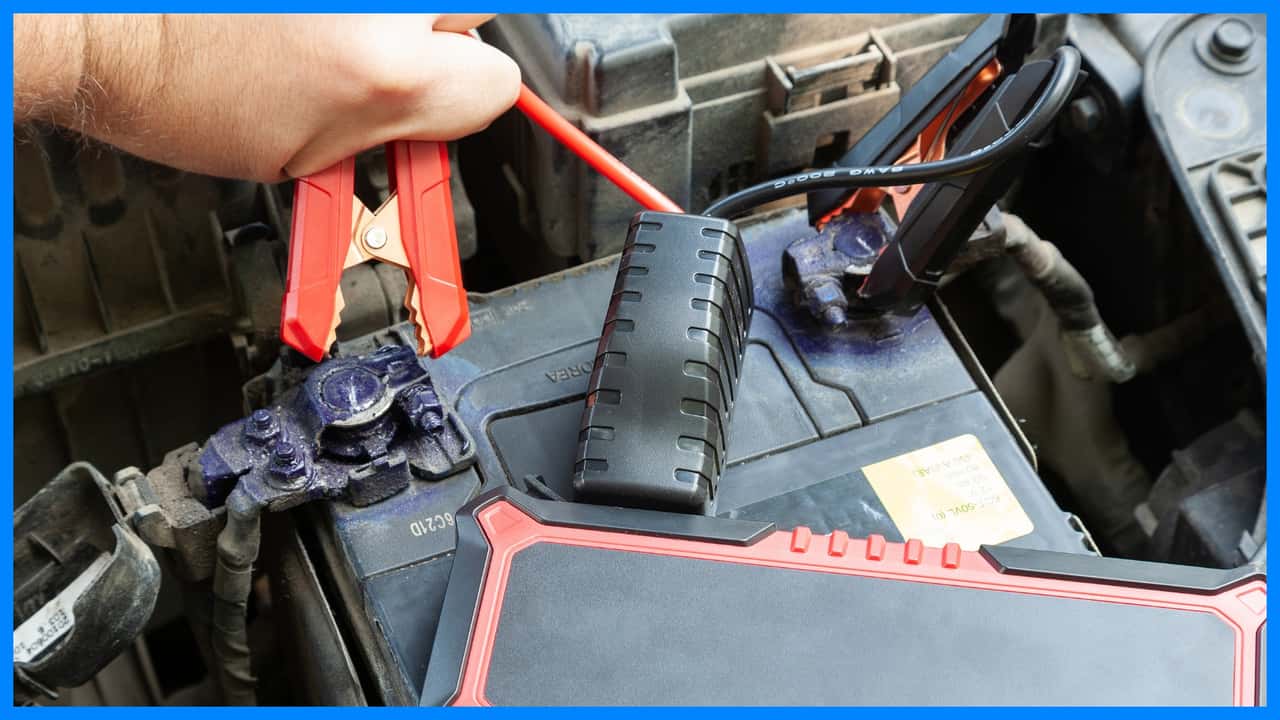
A dead car battery has a nasty habit of showing up when you need your car the most. Whatever the reason, hearing that dreaded click when you turn the key isn’t exactly how anyone wants to start their day. That’s where a portable jump starter can be a surprisingly useful thing to keep in the trunk.
Unlike traditional jumper cables, it doesn’t require another vehicle to give your battery a boost. It’s small enough to stash away, easy to carry, and can turn a potentially frustrating roadside wait into a problem you can handle yourself.
A Dead Battery Can Happen At The Worst Possible Time
Few car problems are as annoying as turning the key or pressing the start button and getting nothing but a click. Maybe you left the lights on, the battery is getting old, or the car simply sat unused for too long. Whatever the reason, a dead 12-volt battery can turn an otherwise perfectly healthy car into a very expensive-looking paperweight.
Traditionally, the solution was simple: find another vehicle and a set of jumper cables. But that assumes another car—and another helpful driver—is nearby. A portable jump starter changes that equation.
It’s essentially a battery pack with jumper leads that can provide the burst of electrical power needed to get a vehicle started without requiring a second car. AAA specifically identifies portable jump starters as an alternative to traditional jumper cables because they can supply the boost without another vehicle being involved. That’s a pretty compelling reason to keep one around.
You Don’t Need Another Car To Get Moving Again
This is probably the biggest advantage of a portable jump starter. Imagine you’re leaving work late at night and your car won’t start. Or you’re parked at a trailhead where there aren’t many other vehicles around. Maybe you’re traveling alone on a long road trip.
With ordinary jumper cables, you’re dependent on finding another car with a healthy battery. With a portable unit, the donor battery is sitting in your trunk. That can make the difference between getting back on the road in a few minutes and waiting for roadside assistance.
AAA’s 2026 guidance specifically describes portable jump starters as compact battery packs with jumper leads that can start a vehicle without another car, and notes that they can make particular sense for drivers who travel alone or drive remote routes.
They’re also generally easier to deal with than positioning two vehicles nose-to-nose in a parking lot. There are no second-car logistics, no asking strangers for help, and no need to find a vehicle whose battery and cables can reach yours.
They’re Useful For More Than Just Jump-Starting
Modern portable jump starters have also become surprisingly versatile. Depending on the model, the same little box can serve several roadside purposes.
Common features include:
- Jumper cables: The main event, obviously. The internal battery provides the electrical boost needed to start a vehicle with a weak 12-volt battery.
- USB charging: Many units can recharge a phone or other small electronic device when you’re away from an outlet.
- Built-in flashlight: Handy when you’re trying to find the battery terminals in the dark.
- Emergency lighting: Some models include flashing or signaling modes that can make a stranded vehicle more visible.
- Compact storage: Unlike a second vehicle, the jump starter can simply live with your emergency equipment until it’s needed.
Of course, features vary considerably between products. The important thing is to make sure the unit is rated appropriately for your vehicle and engine. AAA recommends considering the required cranking or peak-current capability and looking for safety features such as reverse-polarity and spark protection.
There Is One Big Catch: You Have To Take Care Of It



A jump starter is not magic. It’s a battery, which means it needs to have enough charge when you actually need it. That’s easy to forget. You might throw one into the trunk after buying it, let it sit there for two years, and then discover that the device itself is dead when your car battery decides to give up.
It’s also worth paying attention to where you store it. AAA notes that portable jump starters shouldn’t be stored in a hot car. Extreme temperatures aren’t exactly friendly to batteries, so keeping the device somewhere relatively cool and dry is important.
Check the manufacturer’s instructions for charging and storage, and periodically make sure the jump starter still has an adequate charge. A quick check before a long road trip is a lot easier than discovering the problem when you’re already stranded.
And remember that a jump starter is intended to start a vehicle, not fix the underlying battery problem. Jump starters are not battery maintainers or replacements. If your car repeatedly needs a jump, the battery or charging system should be tested.
Users Say You Don’t Appreciate One Until You Need It
Reddit has plenty of real-world experience with portable jump starters. One recurring reason people recommend them is simple: you don’t have to depend on another driver when your battery dies.
A February 2026 r/TwoXPreppers thread offered a pretty convincing real-world example. One user bought jump starters for the family, then used one when a friend’s car died in a grocery-store parking lot. It worked, and the friend decided to buy one, too.
Another recent thread in r/CarTalkUK had a similar experience. A first-time user was nervous about using a portable jump starter, but said it was easy to operate and got the car running normally.
But Reddit also highlights an important catch: not every jump starter is suitable for every vehicle. Discussions about larger engines and completely dead batteries repeatedly bring up the importance of choosing a unit with enough starting power.
There’s also a simple maintenance lesson here. Some owners recommend checking or topping off the jump starter periodically so it is not sitting in the trunk with a dead battery of its own. One recent r/VEDC discussion even raised concerns about using the device as a phone power bank and accidentally draining the emergency reserve.
It’s One Of Those Tools You Hope You Never Need
That’s ultimately what makes a portable jump starter such a good piece of emergency equipment. Most of the time, it will sit quietly in the cargo area and do absolutely nothing. That’s a good thing. But the one time your battery dies in an inconvenient place, having your own power source can save a huge amount of time and frustration.
It’s also worth remembering that jump-starting a car still isn’t something to treat casually. AAA recommends checking the owner’s manual first because vehicle-specific procedures can vary, particularly with newer vehicles and electrified powertrains. A damaged, leaking, or frozen battery shouldn’t simply be jump-started, either.
A portable jump starter won’t prevent a battery from failing. It won’t replace a roadside-assistance plan. And it certainly won’t repair a bad alternator or starter motor.
But as a relatively small emergency tool that can potentially get a stranded car running without anyone else’s help, it’s difficult to argue with the convenience. Sometimes the best piece of equipment in your car is the one you carry around for the problem you really hope never happens.
More From Motor101
We want your opinion!
What would you like to see on Motor1.com?
– The Motor1.com Team


