






Advertisement


What Mokwa Teaches Nigeria About Climate Communication
By Olanshile Ogunrinu
The people of Mokwa, Niger State, learnt a painful lesson on May 28, 2025. Torrential rainfall turned parts of the town into a disaster zone. Homes were submerged, livelihoods destroyed and lives lost. NEMA later reported that 151 bodies had been recovered, with more than 3,000 people displaced and hundreds of houses affected.
But Mokwa raises a question bigger than the flood itself: what happens between the warning and the action?
NEMA says warnings were issued before the disaster—through radio, television, social media, town criers, traditional rulers and religious leaders. Yet the tragedy exposed the limits of a warning that does not become local, timely and actionable. This is where Nigeria must begin to understand climate change differently. It is no longer only an environmental problem. It is also a crisis communication problem.
A warning sitting on an agency website is not enough. A technical forecast that people cannot understand is not enough. And a press statement issued after people have lost their homes is certainly not enough. The crisis is not merely that the rain is falling harder. It is that we have not built communication systems capable of moving people from knowing to acting.
Crisis communication in Nigeria must ensure that before, during and after a disaster, people know what is happening, what it means for them, what they should do, where they should go and whom they can trust. Nigeria has NEMA, State Emergency Management Agencies, NiMet, the Nigeria Hydrological Services Agency and local government structures. There are forecasts, flood outlooks and emergency centres. NEMA’s 2025 response to Mokwa included activating its National Emergency Operations Centre and coordinating with state and local actors. Yet the problem remains the last mile.
A farmer does not experience “hydrological uncertainty.” A trader worries about losing her shop. A family living beside a drainage channel wants to know whether it is safe to sleep in the house tonight. A motorist wants to know which road is passable. A parent wants to know whether the children should go to school. That is the difference between communicating information and communicating risk.
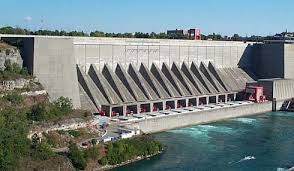
We also saw another danger: conflicting narratives. After the Mokwa flood, public discussion included claims about dam releases. The Federal Government later rejected the claim that Kainji or Jebba dams caused the flooding, attributing the disaster to intense rainfall and local drainage conditions. When competing explanations circulate during a crisis, trust becomes another casualty.
As a young climate‑change communication scholar, I have become convinced that Nigerians do not need more climate communication merely because they need more information. They need communication that makes sense of the information. A 2025 study of climate‑change editorials in The Guardian and The Punch found that environmental framing dominated coverage, while human‑interest framing was limited. The researchers argued that climate change must be made less abstract and more connected to people’s daily lives.
“Flood risk is expected to increase” is information.
“Your community may flood tonight; move important documents, medicines and children to the designated higher ground” is communication.
The difference is consequence.
Another Nigerian study found that environmental journalists combine conventional reporting with feature writing, visual storytelling and solution‑oriented journalism. Yet the environmental beat is still largely handled by general assignment reporters. Climate stories should not always begin with the atmosphere. They can begin with the fisherman, the displaced mother, the farmer, the student walking through floodwater. They can connect hazard to vulnerability—and vulnerability to action.
The messenger matters too. Sometimes it is the journalist. Sometimes the local radio presenter. Sometimes a religious leader, traditional ruler, community organiser or local government official. People listen differently when the messenger speaks their language and understands their reality.
From a PR practitioner’s standpoint, emergency agencies must prepare before the crisis by mapping stakeholders, identifying trusted local messengers, preparing holding statements, monitoring rumours and conducting communication simulations. They must activate early warnings properly, using SMS, radio, WhatsApp, social media, community meetings and town criers, and communicate in local languages where necessary. They must speak with one voice during the crisis, providing frequent, time‑stamped updates and acknowledging uncertainty honestly. And they must communicate after the crisis, explaining what happened, what failed, what worked and what will change. Communication cannot replace governance. If drainage is blocked, clear it. If people build in flood‑prone areas, enforce zoning laws. If evacuation centres are inadequate, fix them. Do not communicate resilience while refusing to build it.
Mokwa shows why these principles matter. There were forecasts, agencies, emergency structures, rescue teams and relief operations. NEMA worked with the Niger State Emergency Management Agency, local officials and community leaders. Yet the tragedy still happened. The lesson is not that warnings are useless. It is that warnings must be connected to capacity.
If a community is told to evacuate, where does it go? If it is told to leave immediately, who helps the elderly, children and persons with disabilities? If the road to safety is flooded, what is the alternative? These are communication questions because communication is inseparable from the ability to act on information.
Nigeria must stop treating communication as decoration around emergency management. Agencies and the media must invest in preparedness communication, train credible spokespeople, fund local messengers and establish systems for listening to communities—not merely broadcasting to them.
Because when the next warning comes, the question will not be whether government published it. It will be whether the woman in the flooded neighbourhood heard it, believed it, understood it and had somewhere safe to go.
In a warming Nigeria, the ability to communicate danger is becoming as important as the ability to respond to it. A government that cannot get the right message to citizens in time is not just facing a communication gap—it is facing a governance gap.
And sometimes, between a warning and a life lost, the distance is only one unanswered message.
Olanshile Ogunrinu is a PRNigeria Fellow


