


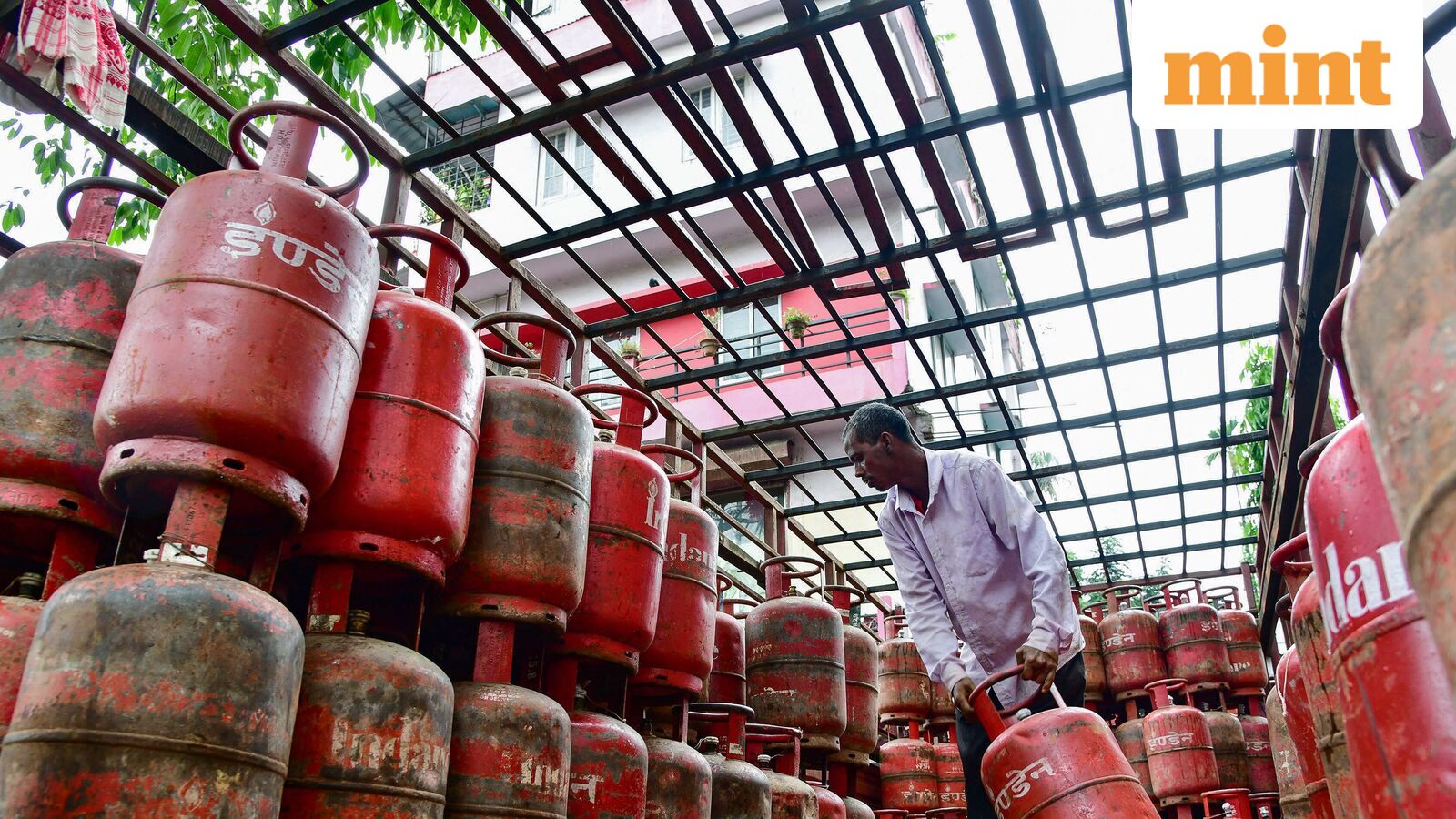
As US President Donald Trump is yet to make a final call on the tentative Iran deal to reopen the Strait of Hormuz, one of the key sticking points in negotiations with Tehran, the central government in India has asked state-run retailers to significantly increase liquefied petroleum gas (LPG) storage infrastructure.
The Centre has also asked fuel retailers to maintain sufficient reserves to ensure at least 30 days of demand, amid concerns over supply disruptions caused by the recent conflict in West Asia, PTI reported on Friday.
India working on its strategic reserves: Official
Sujata Sharma, joint secretary in the petroleum ministry, told reporters, “We are working on the strategic reserves. Oil marketing companies have been asked to work out (a plan) to have LPG reserves for a minimum of 30 days with them, and they are working on it.”
The government has asked state-run oil marketing companies (OMCs) such as Indian Oil Corp (IOC), Bharat Petroleum Corp Ltd (BPCL), and Hindustan Petroleum Corp Ltd (HPCL) to prepare plans for additional storage beyond regular commercial inventories.
India manages to source crude oil amid tensions
The development comes as the war in West Asia disrupted global energy supplies, including those to India. New Delhi’s 40 per cent of crude imports, 65 per cent of natural gas, and 90 per cent of LPG supplies, which came from countries in the Gulf region, were disrupted due to the three-month-long conflict.
While New Delhi has been able to source crude oil, a raw material used for making petrol and diesel, and natural gas, which is used to generate electricity, make fertiliser, and turn into compressed natural gas (CNG) to run automobiles as well as being piped to household kitchens for cooking, disruptions in LPG imports have forced authorities to regulate supplies to commercial consumers.
Sharma said India was also working to increase crude oil storage capacity.
India has sufficient stocks of petrol and diesel
The Centre noted that New Delhi has sufficient reserves of petrol, diesel, LPG, crude oil, and natural gas, adding that Indian refineries were operating at optimum levels and LPG production was at an all-time high of around 52,000 tonnes per day.
Sharma said, “No dry-out reported at any LPG distributorship,” and added, “abnormal sale is being observed at many petrol pumps.”
Petrol, diesel sales increase
The petroleum ministry official also noted that higher retail fuel sales were being partly driven by agricultural demand and by a shift in purchases from bulk buyers and private fuel retailers to state-run outlets due to the price difference.
Over 150 districts have recorded more than 30 per cent growth in petrol sales, with as many as 14 districts witnessing sales double, she added. Diesel sales rose more than 30 per cent in 156 districts, while six districts reported growth of over 100 per cent.
Sharma noted that sales by private fuel retailers have come down by 38 per cent for diesel, while state-run OMCs have seen bulk diesel sales decline by 29 per cent.
Although petrol and diesel sold at fuel stations operated by state-owned companies continue to be priced below cost, bulk consumers such as telecom towers are being billed at market rates. Private fuel retailers have also increased petrol and diesel prices more sharply than public sector companies.
IOC, BPCL, and HPCL, which together account for around 90 per cent of the market, have raised fuel prices by nearly ₹7.50 per litre since 15 May.
The government is monitoring the situation closely and has directed states and Union territories to set up special teams to prevent hoarding and black marketing. Consumers have also been advised against panic buying and urged to purchase fuel only through authorised outlets.
US-Iran peace deal
The US President on Friday said that he will be making a final determination regarding the Iran deal, possibly putting an end to uncertainty regarding the conflict and giving a breather to the global energy markets, which have been taking a hit since the Strait of Hormuz was shut days after the US and Israel attacked Iran.
In a Truth Social post, Trump wrote, “Iran must agree that they will never have a Nuclear Weapon or Bomb. The Hormuz Strait must be immediately open, no tolls, for unrestricted shipping traffic, in both directions. All water mines (bombs), if any, will be terminated (we have removed, through detonation, numerous such mines with our great underwater mine sweepers. Iran will complete the immediate removal and/or detonation of any mines that are left, which will not be many!”
However, it remains to be seen what decision Trump will make.
(with PTI inputs)
Key Takeaways
- India’s government is taking proactive measures to ensure LPG supply amid geopolitical tensions.
- The ongoing conflict in West Asia has disrupted global energy supplies, affecting India significantly.
- Panic buying has been discouraged as authorities work to stabilize fuel availability and pricing.
About the Author
Swati Gandhi
Swati Gandhi is a digital journalist with over four years of experience, specialising in international and geopolitical issues. Her work focuses on foreign policy, global power shifts, and the political and economic forces shaping international relations, with a particular emphasis on how global developments affect India. She approaches journalism with a strong belief in context-driven reporting, aiming to break down complex global events into clear, accessible narratives for a wide readership.
Previously, Swati has worked at Business Standard, where she covered a range of beats including national affairs, politics, and business. This diverse newsroom experience helped her build a strong grounding in reporting, while also strengthening her ability to work across both breaking news and in-depth explanatory stories. Covering multiple beats early in her career has helped her be informed about her current work, allowing her to connect domestic developments with wider international trends.
At Live Mint, she focuses on international and geopolitical issues through a business and economic lens, examining how global political developments, foreign policy decisions, and power shifts impact markets, industries, and India’s strategic and economic interests.
She holds a Bachelor’s degree in English (Honours) from the University of Delhi and a Master’s degree in Journalism and Mass Communication from Guru Gobind Singh Indraprastha University. Her academic training has shaped her emphasis on precision, analytical rigour, and clarity in writing. Her interests include global political economy and the intersection of geopolitics with business.
Outside work, Swati focuses on exploring her passion and love for food. From fancy cafes to street spots, Swati explores food like a true foodie.