



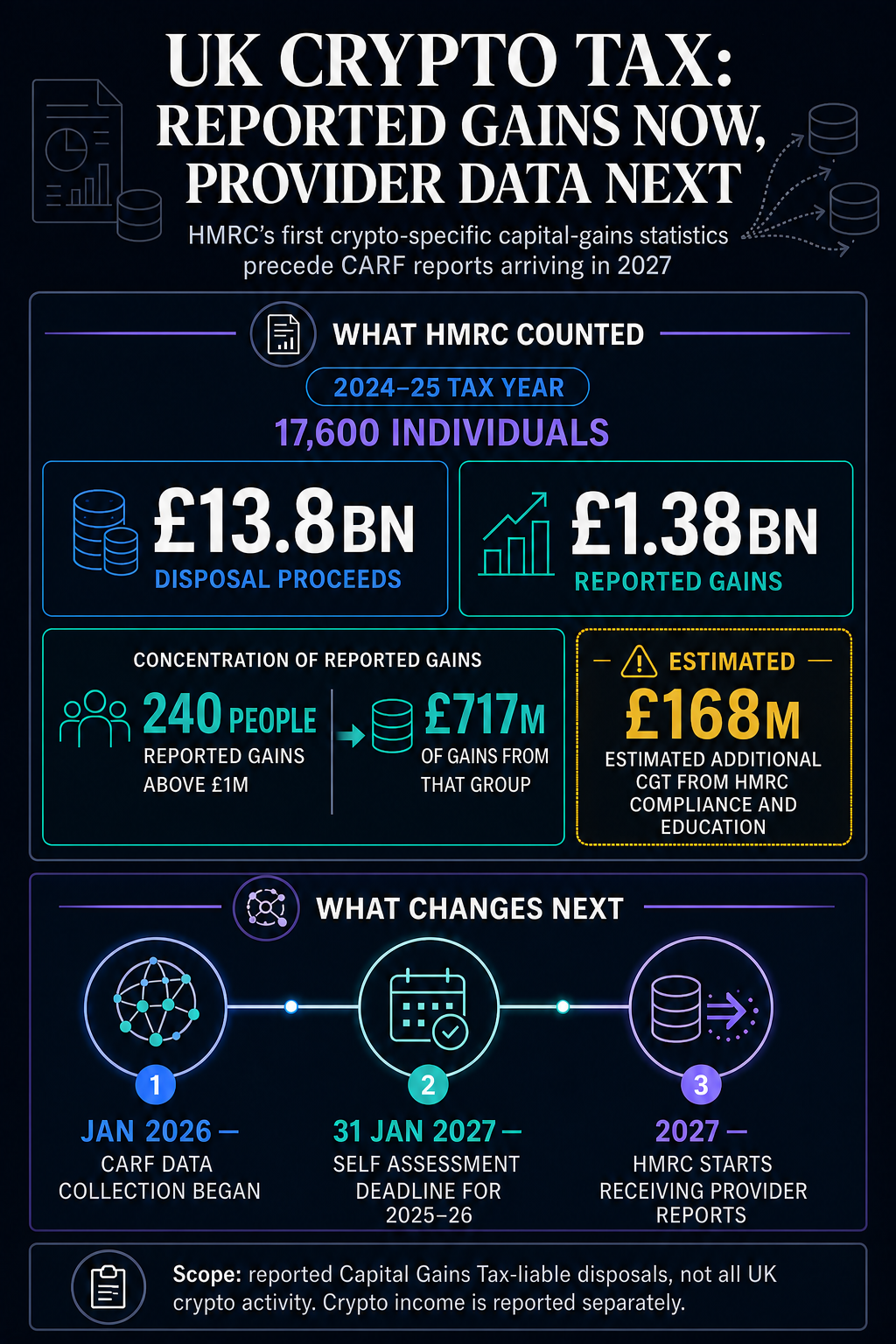
Its first crypto gains table covers 17,600 taxpayers, while CARF data will begin reaching the agency in 2027.


Senior Reporter CryptoSlate
- HMRC’s first crypto-specific tax figures show 17,600 people reported £1.38 billion of capital gains in 2024-2025.
- Just 240 investors accounted for £717 million, putting more than half of all declared gains in the hands of a tiny group.
- From 2027, provider-level reporting under CARF will give HMRC a second data source to compare against what taxpayers declare themselves.
HMRC has disclosed £1.38 billion in reported UK crypto gains, with just 240 investors accounting for more than half.
The figures mark the first time HM Revenue & Customs has published crypto-specific Capital Gains Tax data, giving the agency a formal baseline before new reporting rules begin supplying it with information directly from crypto providers.
For the 2024 to 2025 tax year, 17,600 individuals reported £13.8 billion of cryptoasset disposal proceeds and £1.38 billion of gains. Of that total, 240 people who each reported more than £1 million in gains accounted for £717 million.
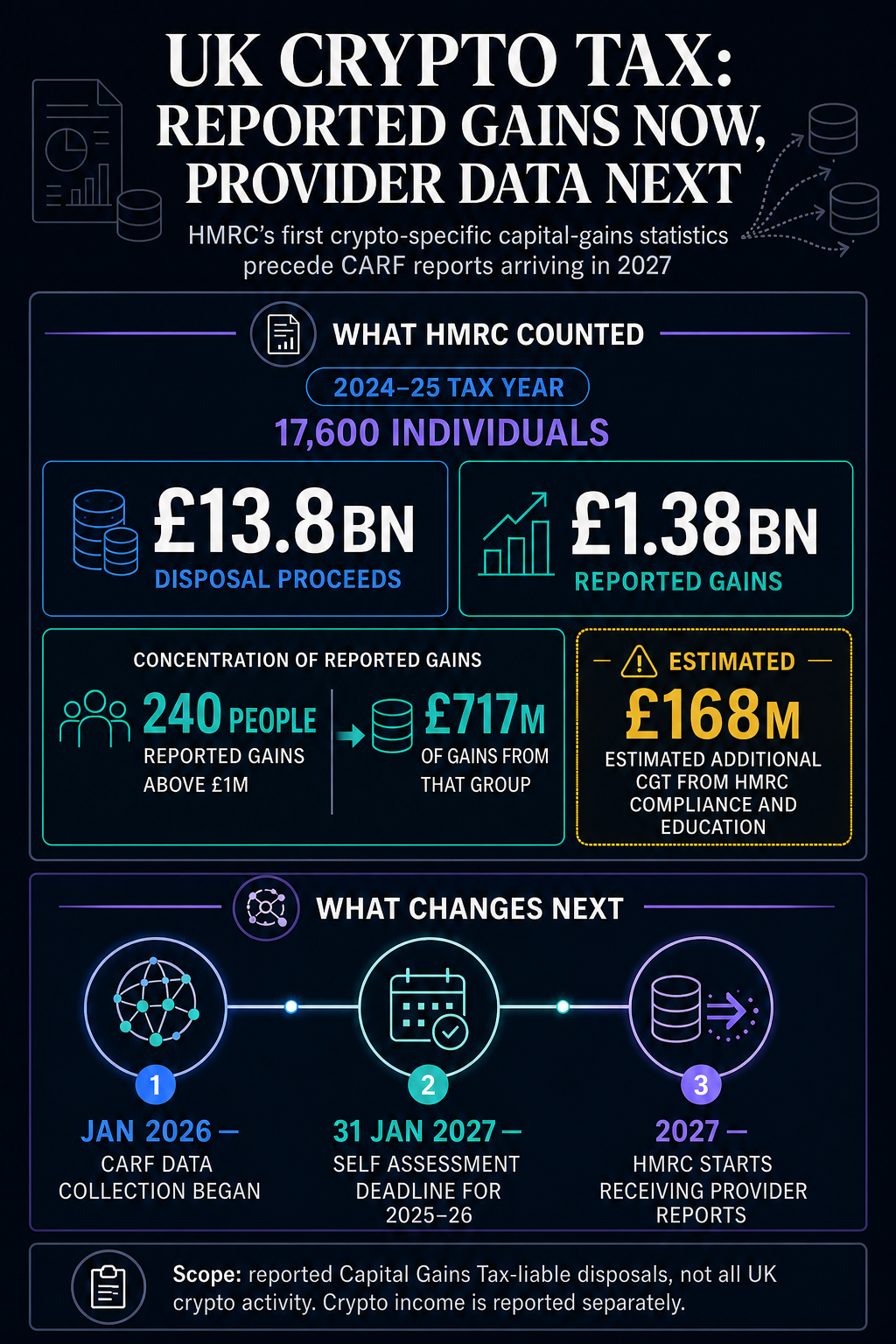

The data comes from a dedicated crypto section added to Self Assessment returns. It therefore captures declared Capital Gains Tax-liable disposals rather than every crypto transaction in Britain and cannot show how much activity went unreported.
HMRC is building a second data trail
That limitation is set to narrow as the UK implements the OECD’s Cryptoasset Reporting Framework.
Crypto businesses covered by CARF began collecting customer and transaction information in January 2026, while HMRC expects to start receiving provider reports in 2027.
The change will give the tax authority a separate dataset alongside taxpayers’ own declarations, increasing its ability to identify discrepancies between reported gains and activity recorded by crypto platforms.
The reporting timetable does not delay existing tax obligations. Crypto owners with reportable gains or income for the 2025 to 2026 tax year must still file their Self Assessment return and pay tax due by Jan. 31, 2027.
HMRC separately estimated that its crypto compliance and education work generated £168 million of additional Capital Gains Tax during 2024 to 2025.
The capital-gains figures also exclude some other crypto-related tax liabilities, including income from employment, mining, staking and lending, which can fall under Income Tax rules instead.
The new statistics therefore provide HMRC with a declared baseline before standardized third-party reporting begins. From 2027, the agency will increasingly be able to compare what crypto investors say they earned with what platforms say they did.
Editorial credits
Follow the signal
Curated intelligence, delivered your way.
Never miss a market-moving update.
- Daily briefingTop stories & analysis
- Market movesKey charts & data
- Policy updatesWhat to watch
- Weekly deep diveLong-form insights