





Latest
Features, Interviews, Long Reads


US quantum dot researcher UbiQD has signed a multi-year supply agreement with US solar manufacturer First Solar to supply its fluorescent quantum dot technology for use in the latter’s thin-film bifacial PV panels.
Quantum dots are tiny spheres of semiconductor material that could dramatically improve the conversion efficiency of solar cells as they can generate multiple bound electrons per incoming photon, compared to conventional solar cells that can typically produce one bound electron per photon.
This article requires Premium SubscriptionBasic (FREE) Subscription
Unlock unlimited access for 12 whole months of distinctive global analysis
Photovoltaics International is now included.
Already a subscriber? Sign In
- Regular insight and analysis of the industry’s biggest developments
- In-depth interviews with the industry’s leading figures
- Unlimited digital access to the PV Tech Power journal catalogue
- Unlimited digital access to the Photovoltaics International journal catalogue
- Access to more than 1,000 technical papers
- Discounts on Solar Media’s portfolio of events, in-person and virtual
Or continue reading this article for free
Already a subscriber? Sign In
A report from the National Renewable Energy Laboratory (NREL) in the US suggested that the use of this technology could effectively double the theoretical efficiency limit of solar cells, and UbiQD’s own research echoes this, suggesting that quantum dots can more than double the efficiency of bifacial cells for specific wavelengths and colours of light. These efficiency improvements are particularly significant now as many cells in the research and development phase are approaching their upper limits of theoretical efficiency.
“This is a turning point for the quantum dot industry with this first high volume QD supply agreement outside of display,” said Hunter McDaniel, founder and CEO of UbiQD. The news follows the signing of a research agreement between the companies two years ago, UbiQD noted that, should the supply agreement yield results, it could produce over 100 metric tons of quantum dots per year to further the technology.
“This partnership showcases how US innovation and manufacturing can deliver differentiated performance especially at a time when making breakthroughs in efficiency and materials is more vital than ever,” continued McDaniel, highlighting the value of locating manufacturing capacity in the US at this time.
Earlier this year, the US passed more than 50GW of annual module manufacturing capacity, but its production of components and materials further up the supply chain, such as wafers and silicon, has been more lacking. With president Trump rolling back all manner of federal support for US solar projects, from manufacturing to deployment, ensuring a robust domestic supply chain of materials could be essential for the long-term health of the US solar sector.
San Francisco Bay Area, USA
PV Tech has been running an annual PV CellTech Conference since 2016. PV CellTech USA, on 7-8 October 2025 is our third PV CellTech conference dedicated to the U.S. manufacturing sector. The events in 2023 and 2024 were a sell out success and 2025 will once again gather the key stakeholders from PV manufacturing, equipment/materials, policy-making and strategy, capital equipment investment and all interested downstream channels and third-party entities. The goal is simple: to map out PV manufacturing in the U.S. out to 2030 and beyond.
Returning for its 12th edition, Solar and Storage Finance USA Summit remains the annual event where decision-makers at the forefront of solar and storage projects across the United States and capital converge. Featuring the most active solar and storage transactors, join us for a packed two-days of deal-making, learning and networking.
PV Tech has been running PV ModuleTech Conferences since 2017. PV ModuleTech USA, on 16-17 June 2026, will be our fifth PV ModulelTech conference dedicated to the U.S. utility scale solar sector. The event will gather the key stakeholders from solar developers, solar asset owners and investors, PV manufacturing, policy-making and and all interested downstream channels and third-party entities. The goal is simple: to map out the PV module supply channels to the U.S. out to 2027 and beyond.
Read Next
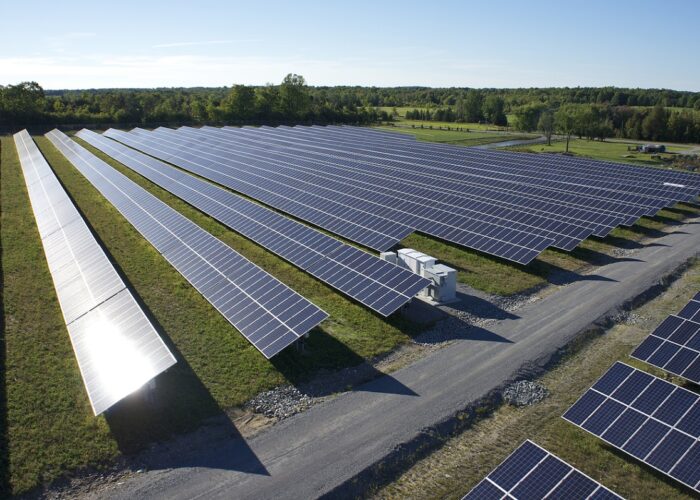

US renewables developer Invenergy has launched commercial operations of 250MW Fairbanks Solar Energy Center in Sullivan County, Indiana.
A report published by the US Department of Energy (DOE) this week claims that the previous government’s support for renewable energy could cause blackouts to “increase by 100 times” by 2030.
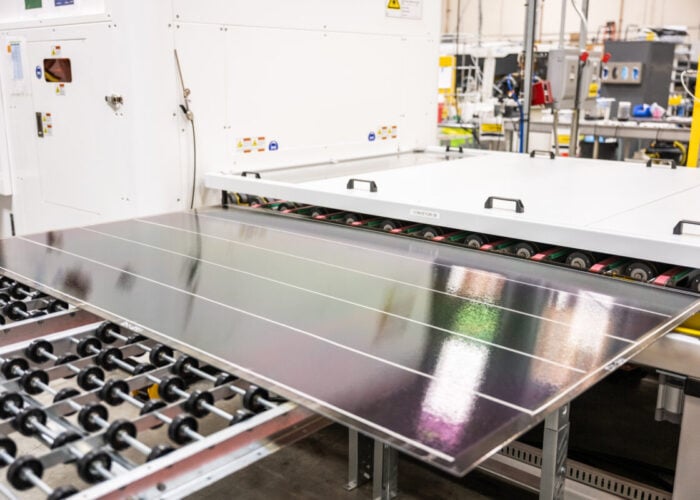
Caelux has finished the first sale of its perovskite glass, which will be paired with a silicon module developed by a ‘reputable manufacturer’.

PV Talk: Jon Previtali of VDE Americas explains the hard science behind managing hail risk, one of the costliest sources of damage to PV projects.
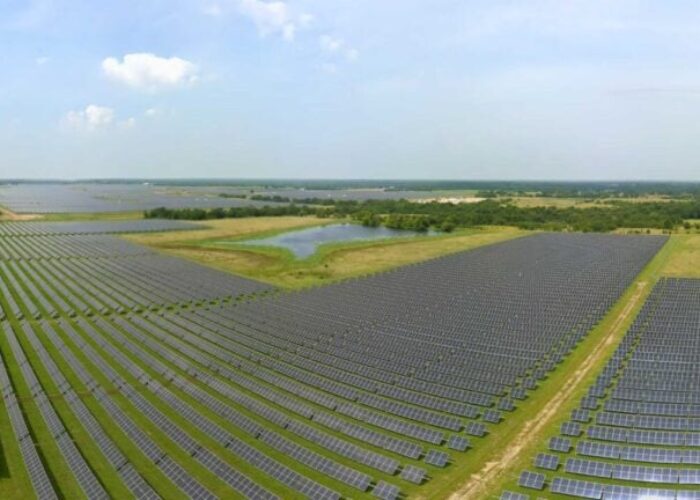
Donald Trump has issued an executive order to tighten restrictions on renewable energy tax credits just days after signing his “One, Big Beautiful Bill” act into law, which significantly cut federal support for renewables.
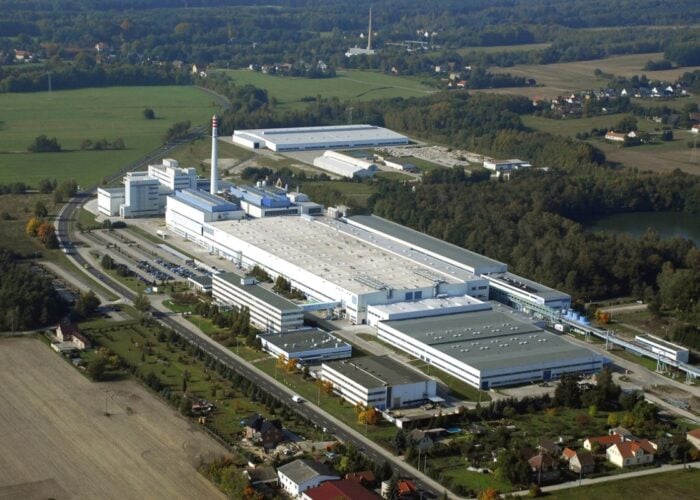
German solar glass manufacturer Glasmanufaktur Brandenburg (GMB) has filed for insolvency after posting monthly losses of €900,000 this year.
Subscribe to Newsletter
Most Read
Upcoming Events
Media Partners, Solar Media Events