

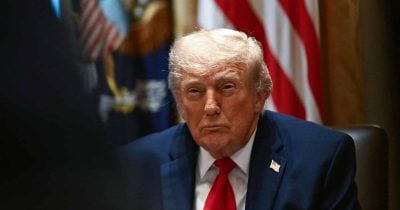
President Trump wants you to know the economy is doing just fine. During a White House Small Business Week event in early May 2026, he described the ongoing US military conflict with Iran as a “mini war” and insisted the American economy is “booming now” despite it. He also stated plainly that he does not consider financial implications for Americans when making decisions about Iran.
What the markets actually did
When US military operations against Iran kicked off in late February 2026, Bitcoin dropped 7% almost immediately. It partially recovered afterward, but the damage to leveraged traders was already done.
Crypto market liquidations hit roughly $350 million in a single day during the height of the initial tensions.
The sanctions angle and frozen crypto
US authorities have frozen portions of Iran’s estimated $7.7 billion in cryptocurrency holdings as part of sanctions enforcement. That number alone tells you something important about how nation-states have been using digital assets to move money outside traditional financial rails.
For the broader crypto ecosystem, this puts pressure on exchanges, DeFi protocols, and custodians to ensure they’re not inadvertently facilitating transactions with sanctioned wallets. Any platform that gets caught on the wrong side of an OFAC enforcement action faces existential consequences.
Why this matters for investors
The administration has explicitly said it isn’t weighing economic consequences when making military decisions. When the person controlling the world’s largest military says economic impact isn’t a factor in their calculus, it means the market is flying blind on escalation risk.
Trump projected at the Small Business Week event that gas prices would decline as military operations wind down.
The freezing of $7.7 billion in Iranian crypto holdings creates a regulatory overhang that investors should watch carefully. Institutional investors weighing crypto allocations will factor this kind of regulatory risk into their models, potentially slowing the pace of adoption at precisely the moment the market could use more institutional liquidity to absorb geopolitical shocks.
Disclosure: This article was edited by Editorial Team. For more information on how we create and review content, see our Editorial Policy.
