





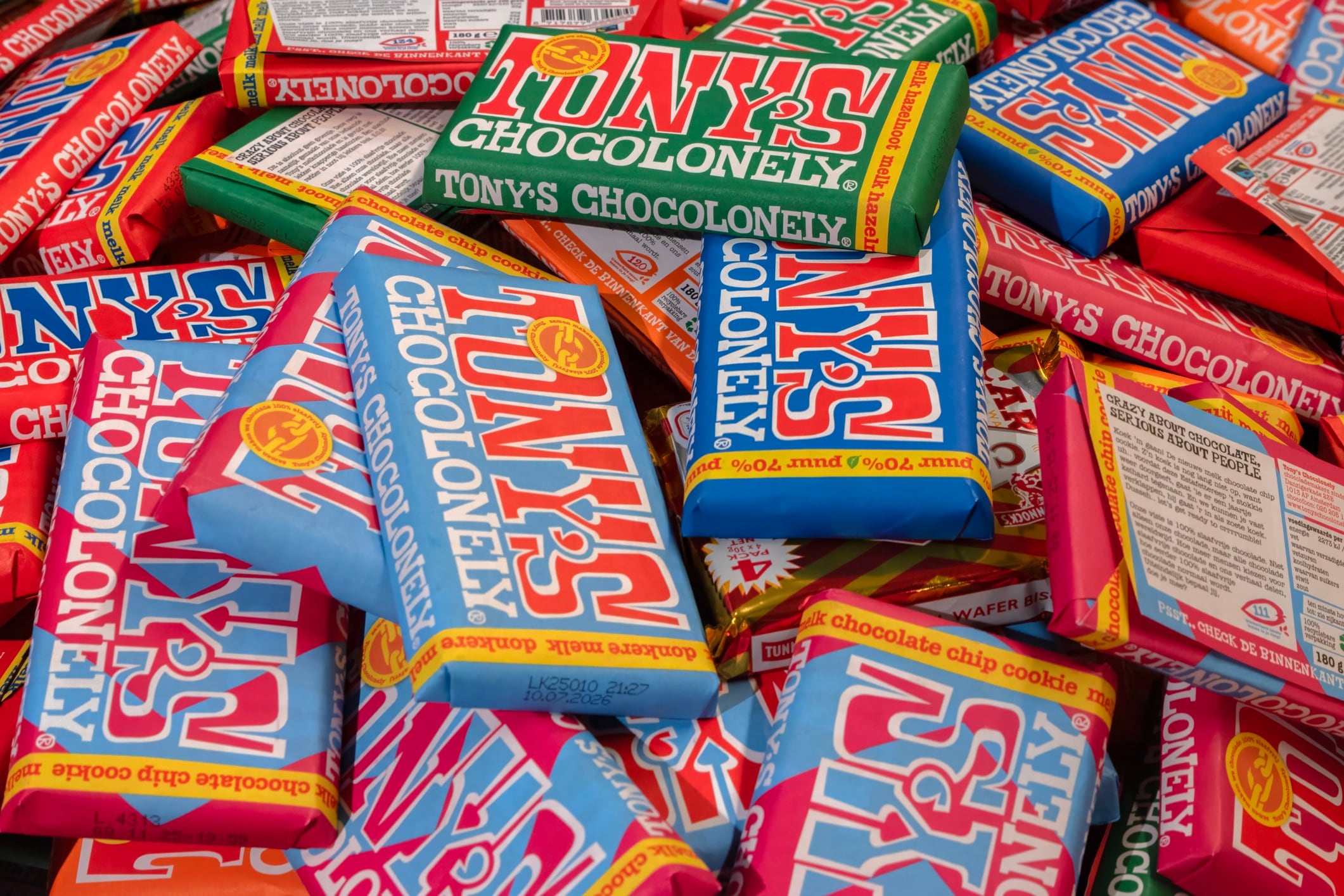
Tony’s Chocolonely growth and mission – summary
- Tony’s Chocolonely surpassed €240m revenue and 20% growth in 2025
- Brand proves mission-led chocolate can compete with global confectionery giants
- Premium products use bold flavours and uneven bars to signal inequality
- Collaborations and influencers drive awareness, trust, and trial at scale
- Commercial success funds systemic change efforts to end cocoa exploitation
Founded in 2005, Tony’s Chocolonely is just 20-years old – it turns 21 in November.
Yet, despite its relatively young age, it’s managed to climb the confectionery charts to become one of the biggest names in the industry, hitting revenues of over €240m in 2025 alone.
What’s more, it’s going toe to toe with long-established brands like Mars, Inc., Mondelēz International, and Ferrero Group in major markets, including the US and UK. And with an enviable growth rate of 20%, its success is set to continue.
But while that’s all great news for the brand, known for flavours like Dark Milk Pretzel Toffee, it’s far from its primary focus. That, as anyone who knows Tony’s will tell you, is to eliminate child exploitation and slavery in the chocolate industry.

Where it all began
Tony’s Chocolonely’s story began back in 2003, when Dutch journalist Teun van de Keuken came across an article revealing that forced labour and illegal child labour were widespread in the cocoa industry.
He said he “couldn’t believe this wasn’t front-page news”, so planned a documentary to get the word out.
His first thought was to sue Big Choco for using illegal forms of labour in their supply chains. But, as Tony’s head of marketing Nicola Matthews puts it, “big companies also have big lawyers”, so figured they wouldn’t get very far.
He then thought of a Dutch law called ‘fencing’. This basically means that if you purchase a product you know was made illegally, you’re also responsible for that crime. So he sat down in front of a camera, ate several chocolate bars he believed to be made using illegal forms of labour, and called the police on himself. The case was dismissed as it was ruled impossible to prove with 100% certainty that the bars had been made with child labour.
Finally, Van de Keuken decided he had no option but to make his own chocolate bar – one completely free of exploitation.
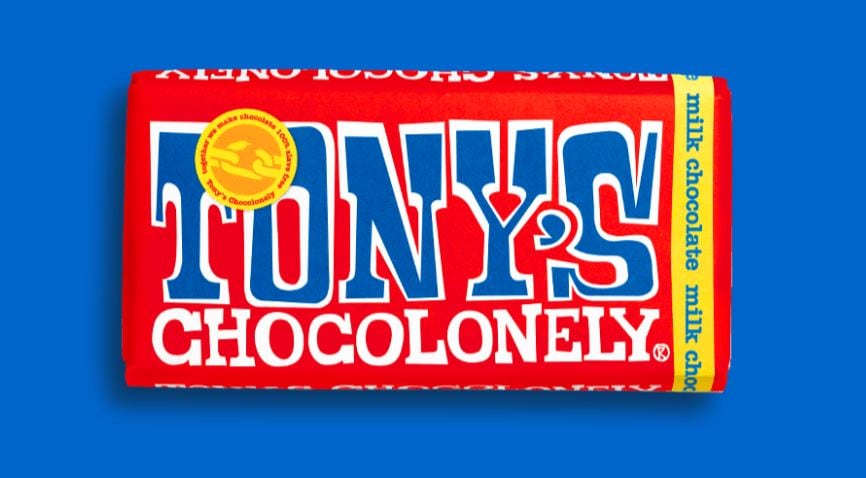
He started by making 5,000 Fairtrade, traceable, milk chocolate bars, wrapped in bright red packaging. And he called it Tony’s Chocolonely, because Tony (an English way of saying Teun) felt lonely in his fight to end forced labour and illegal child labour in the cocoa industry.
Tony’s Chocolonely was born.

Building success
“Our mission is to end exploitation in cocoa,” says Tony’s Chocolonely’s Matthews. “And the only way to make system change sticks is to prove that a mission‑led model can win in the mainstream market.”
In other words, Tony’s can only do good if consumers want to buy the product.
But this doesn’t phase them. As Matthews says, they’ve “never seen activism and commercial growth as opposing forces”. And it shows.
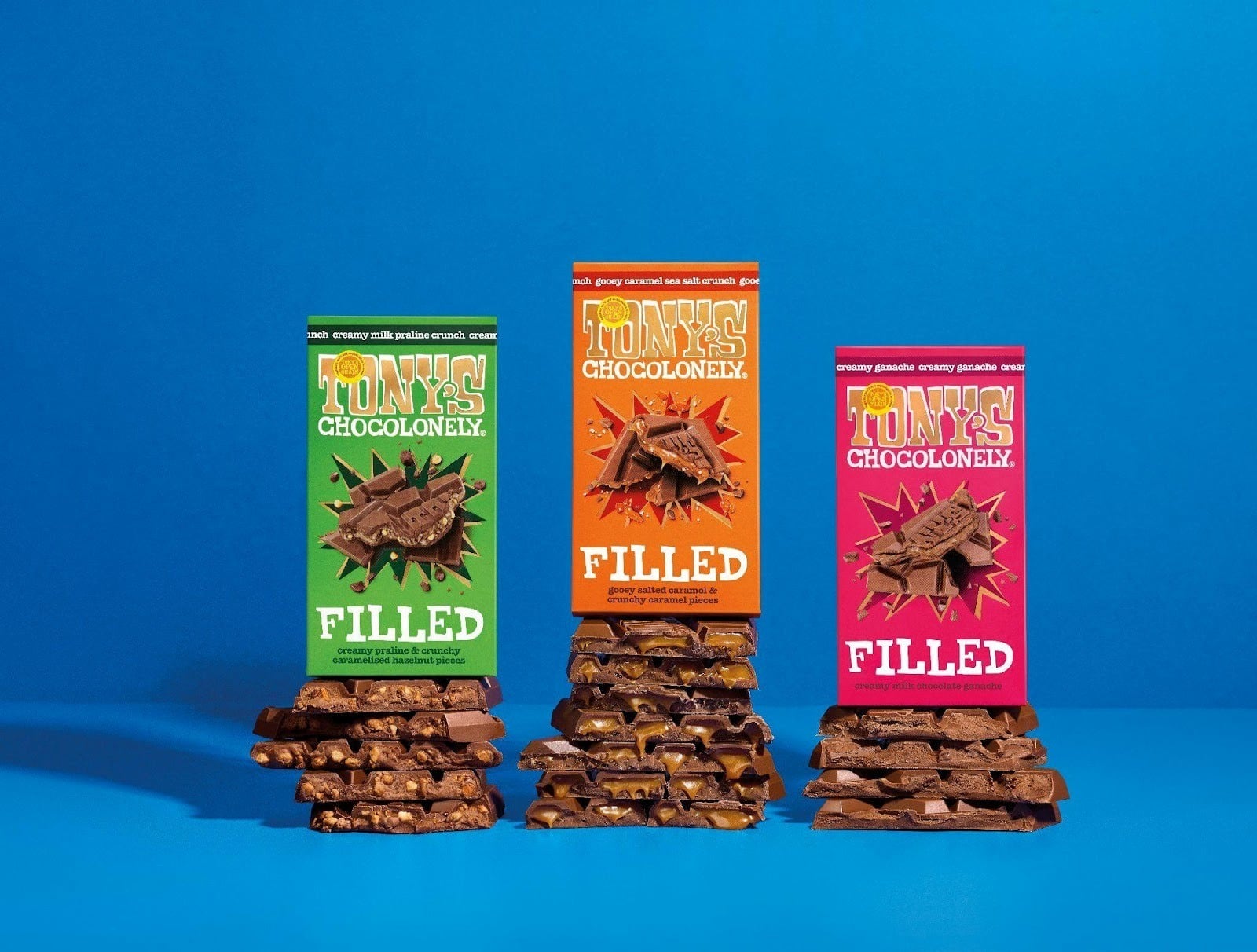
Tony’s leans towards the premium end of the confectionery aisle, with unique flavour combinations and eye‑catching packaging.
“If the product doesn’t compete on taste, texture and relevance, the mission falls flat,” says Matthews. “By treating great chocolate as the entry point, Tony’s aims to reach consumers who may never have actively sought out an ethical brand, but are happy to stay once they’ve tried it.”
And it still gets its core message across, through the uneven-chocolate design, created to represent the inequality embedded in the cocoa value chain, where profits are split unevenly and farmers are systematically paid too little for their work.
Strategic collaboration
Collaboration has been one of Tony’s most effective growth engines. By teaming up with partners who share its values, and have real cultural pull, the brand has been able to reach new audiences, build credibility and have fun along the way.
Take the recent Ben & Jerry’s mash-up. The creation of the Chocolate Love A-Fair bar brought together two of the most outspoken activist brands in the business, promoting equality in cocoa and selling millions of bars in the process.
“It proved that ethics and indulgence can coexist in a way shoppers feel good about,” says Matthews.
But it’s not just about brand partnerships. Tony’s is meeting consumers where they are, and that means working with the most powerful marketers around today – influencers.
Influencers, says Matthews, act as genuine collaborators and brand champions, helping introduce Tony’s to new audiences in ways that feel human rather than promotional.
“When those people publicly back Tony’s, it creates belief first. Then audiences are far more willing to come to our feeds to learn more, go deeper into the mission, and engage with the brand directly.”
Creators are powerful because they understand their communities far better than brands ever could. They know how to translate a serious mission into content that feels entertaining, relevant and shareable across platforms and subcultures.
Crucially, Tony’s builds long‑term relationships with what it calls ‘Serious Friends’ – creators who genuinely believe in the mission. That connection has helped Tony’s feel less like a brand and more like someone its customers are rooting for.

Tony’s Chocolonely’s future
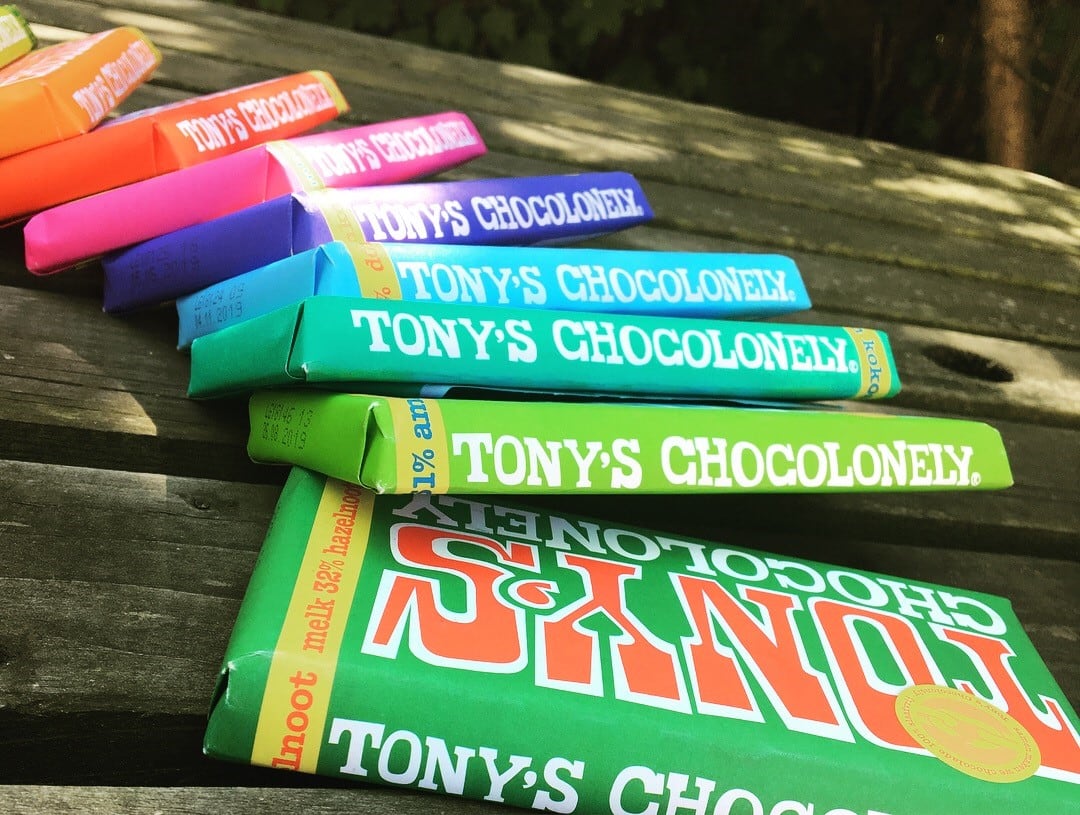
As Tony’s heads into its third decade, its focus remains the same – to prove the chocolate industry can work differently.
By combining great products, bold storytelling and genuine partnerships, Tony’s has built a brand that people buy, believe in and advocate for.
While the mission to end exploitation in cocoa is far from over, the Dutch chocolate maker’s trajectory shows meaningful change is possible. And as Tony’s Chocolonely’s Matthews says, they’ll “continue to punch above their weight” to make it happen.


