




Tinubunomics and the Arithmetic of Hunger: A Reply from the Street, Not Abuja
By Baba El-Yakubu
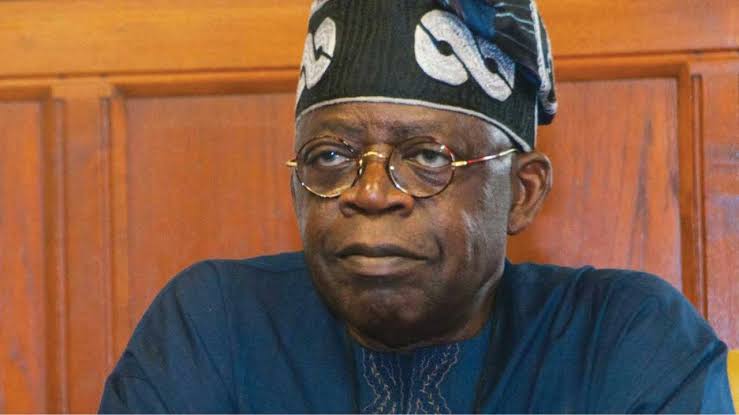
Tanimu Yakubu’s essay, this week, on President Tinubu’s economic reform is elegant, polished, and technically correct in the same way a perfectly drawn map is correct—except that it leads nowhere people actually live. It lectures Nigerians on the distinction between revenue, cash, financing, federation accounts, revaluation effects, and audit logic. All true. All accurate. All irrelevant to a father whose salary can no longer buy Garri, milk, and rent in the same month. Let me be clear from the outset: no Nigerian is asking for manna from heaven. Nobody voted in 2023 expecting instant abundance or Scandinavian living standards by Tuesday, 30th May 2025. What Nigerian masses expected—what they were promised—was relief, direction, and a fighting chance at survival. What they got instead is a masterclass in macroeconomic grammar delivered to people whose babies are crying from hunger, whose youth are hopeless and whose elderly are dying from lack of common drugs.
At his inauguration on 29 May 2023, President Bola Ahmed Tinubu did not speak in IMF footnotes or budget-office caveats. He spoke plainly and boldly. Nigerians remember three core promises: (i) “Subsidy is gone” — presented not as an academic exercise, but as a moral necessity whose savings would be redirected to improve lives. (ii) Security, jobs, and prosperity — the restoration of hope through productive enterprise. (iii) Shared sacrifice, shared future — a compact between government and citizens that pain would be purposeful, temporary, and fairly distributed.
The president did not say: “Please endure hunger while we re-price the public balance sheet.” He did not say: “Your children may go to bed hungry, but rest assured, the retained revenue logic is sound.” He certainly did not say: “Macroeconomic credibility is more important than microeconomic survival.” Yet that is precisely how Tinubunomics has been implemented.
Tanimu Yakubu argues that critics suffer from “arithmetic illusion.” Fair enough. But there is a more dangerous illusion at work: the belief that Nigerians experience the economy as a spreadsheet. Abuja debates: Revenue vs cash, Financing vs income, Federation receipts vs FGN retained revenue. We on the streets debate: Food vs hunger, Transport fare vs job, Rent vs eviction, School fees vs dropout. While technocrats insist that “subsidy savings do not produce idle cash,” Nigerians are asking a simpler question: If subsidy removal did not create money to cushion suffering, why was it removed before cushioning existed? That is not ignorance. That is common sense.
Yes, Tinubunomics operates under constraints. Nigerians understand constraints; they live inside them daily. What they do not understand—and will not forgive—are wasted opportunities. Let me cite three examples: (i) President Tinubu removed subsidy without the necessary shock absorbers. A reform economist would tell you that sequencing matters. Tinubunomics chose speed over safety. Transport costs exploded. Food prices followed. Wages stood still. Palliatives arrived late, thin, or not at all. (ii) We experience exchange rates floating without any domestic protection. The naira was liberalized before domestic productivity was strengthened. The result? Imported inflation, crushed purchasing power, and businesses collapsing faster than credibility is supposedly being rebuilt. (iii) Today, we are having shared sacrifice that is not shared. The masses were told to tighten belts that no longer have holes. Meanwhile: Governance costs remain obscene, Political privileges remain untouched, Convoys grow longer as queues grow longer too—at free food sharing points. As someone said, sacrifice preached without example is not leadership; it is sermonizing from comfort.
We are not anti-economics. We are anti-contempt. Nobody disputes the difference between borrowing and income. As the South Korean economist and academic, Ha-Joon Chang beautifully put it, “economics is common sense made difficult”. This simply means that the core economic ideas such as scarcity, incentives and opportunity cost choices are real, intuitive and understandable. What I find despicable is the tone-deafness of being told that our suffering is a misunderstanding of public finance. When a man earning ₦70,000 a month spends ₦30,000 on transport alone, he does not need “audit logic.” He needs a life that works. When a mother skips meals so her children can eat, she is not rejecting fiscal discipline. She is asking whether government remembers her existence. How do you explain to a farmer in Bichi who spent heavily on fertilizer, pesticide, and irrigation – at prices inflated by subsidy removal and naira devaluation – that such government actions would not produce extra cash to cushion his suffering or make his maize affordable to his neighbors?
Tanimu Yakubu says: “Tinubunomics was never a promise of instant abundance.” True. But it was a promise of direction, fairness, and relief. What Nigerians see instead is a governing class living in Abuja, ruling themselves, applauding policy coherence while the rest of the country slides into quiet desperation. The masses are not interested in whether debt increased due to exchange-rate revaluation. They are interested in why everything increased except their income. They are not impressed by semantic precision. They are exhausted by material suffering. When candidate Tinubu was campaigning for presidency, he was advertised as the master strategist, the Jagaban of Nigeria who will scale-up the Lagos State prosperity model to the entire country. Now, two years later, instead of Lekki, we are having Ajegunle – that economic underbelly of Lagos where crime, poverty and economic deprivations are the order of the day.
Let me share with Mr. Yakubu the only arithmetic that matters. If: People work harder but eat less; parents earn salaries but cannot raise families; unemployed graduates roam while economic jargons are debated; then no amount of correct accounting can rescue a wrong outcome.
Tinubunomics may satisfy economists. But economies exist to serve people, not to lecture them. Until policy speaks first to survival – food, shelter, transport, dignity – every explanation will sound like arrogance, and every reform will feel like punishment. And that, not “theatrical arithmetic,” is the real illusion. As English economic journalist, Timothy Douglas Harford, beautifully put it, “in the end economics is about people… And economic growth is about a better life for individuals – more choice, less fear, less toil and hardship.” It seems Tanimu Yakubu and his ilk have Abuja-understanding of economics – that is about jargons and numbers and not about the people.
Baba El-Yakubu
Professor of Chemical Engineering, Ahmadu Bello University, Email: [email protected]


