In
the online trading industry, few words are used more often, and understood less
consistently, than “fairness.”
A
trader who has lost money may feel that fairness means being reimbursed. A
broker facing an allegation may feel that fairness means being protected from
reputational damage when the facts support its position. A regulator may define
fairness by reference to licensing rules, capital requirements, reporting
obligations, or enforcement standards. A court may define it by legal
liability.
At
the Financial Commission, fairness means something different: a transparent,
structured, evidence-based process that gives both sides the opportunity to be
heard.
That
distinction matters. It is also where much of the misunderstanding about the
role of our dispute resolution forum begins.
We are not
here to take sides
One
of the most common misconceptions I hear from FX/CFD brokers about the
Financial Commission is that we exist to “protect traders” in a one-sided
sense. Another misconception, usually from the other side of the table, is that
because our members are brokerages, we must exist to blindly protect brokers,
stamping membership certificates to offer credibility.
Both
assumptions miss the point.
The
Financial Commission was created as an independent external dispute resolution
forum for cases where traders and broker members cannot resolve a complaint
directly. We are not a government regulator, and we do not pretend to be one.
We do not replace national regulatory authorities, courts, or law enforcement.
We also do not act as an insurance policy against normal trading losses.
Our
role is narrower, but very important: to provide a fair, efficient, and
informed process for reviewing disputes in the Forex and CFD industry.
That
process protects traders because it gives them access to an independent channel
outside the broker’s internal complaint desk, oftentimes helping to educate
novice traders in risk management, bonus policies and alleviate anxiety over
delayed money withdrawals. It protects brokers because it ensures that
complaints are reviewed according to evidence and rules, rather than emotion,
social media pressure, or assumptions about how markets work, and more
importantly according to the current evolution of trader behaviors, both good
and ill intentioned that have an impact on revenue and public credibility.
In
other words, our role is not to decide who is more sympathetic. Our role is to
determine what happened, what can be proven, which rules apply, and whether a
remedy is justified.
Fairness is a
methodology, not a slogan
In
retail trading, disputes often begin with frustration. A withdrawal is delayed.
A position is closed. The price looks wrong. A bonus term is misunderstood. A
platform event is interpreted as manipulation. A trader sees an outcome that
feels unfair and naturally wants someone independent to look at it.
But
a feeling of unfairness and a finding of unfair conduct are not the same thing.
This
is why methodology matters.
Before
a case can move forward, a trader must first give the broker an opportunity to
resolve the issue through its internal dispute resolution process. This step is
sometimes overlooked by people who think dispute resolution should begin
immediately with a third party. In practice, it is essential. Many disputes are
resolved faster when both sides communicate clearly, exchange information, and
identify whether the issue was caused by a misunderstanding, a documentation
gap, a technical error, or a genuine failure in service.
If
the matter remains unresolved, the Financial Commission reviews the complaint
within a defined framework. Jurisdiction matters. Evidence matters. Timing
matters. The broker’s terms and conditions matter. Trading logs, pricing data,
communication records, platform history, withdrawal records, and risk
disclosures all matter.
That
may sound procedural. It is. But procedure is what turns a dispute from a
shouting match into a reviewable case.
The
methodology of fairness requires discipline. It requires asking the same
questions even when one side is louder, more emotional, or more commercially
powerful than the other. It requires understanding how trading actually works,
including execution, liquidity, volatility, leverage, margin, order types,
platform settings, and client agreements. It also requires acknowledging that
not every poor outcome is misconduct, and not every broker explanation is
sufficient.
Protecting
traders means giving them a real voice
The
Forex and CFD industry is global, fast-moving, and complex. Traders often
interact with brokers across borders, in different languages, under different
regulatory regimes, and with products that can be difficult to understand even
for experienced market participants.
For
a retail trader, this can feel intimidating. When a problem arises, the trader
may not know whom to contact, what evidence to provide, how to frame the
complaint, or whether the broker’s response is reasonable.
This
is where external dispute resolution provides real value.
A
trader who files a complaint with the Financial Commission receives access to a
process that is free for clients of member firms and designed to examine the
matter independently. The trader is not required to have the resources of a
large institution. The complaint is not dismissed simply because the trader
lacks legal sophistication. The trader has a channel to present facts,
documents, and concerns in a structured way.
That
is protection.
But
meaningful protection does not mean automatic compensation. It means the
trader’s complaint is taken seriously, reviewed professionally, and measured
against the available evidence.
When
a trader is right, a fair process should recognize that. When a trader is
wrong, outside the rules, or unable to support the claim, a fair process must
also be willing to say so.
Fairness
loses its meaning if it only moves in one direction.
Protecting
brokers is also part of market integrity
Broker’s
decision makers are often surprised when I say that the Financial Commission
also protects their business. They should not be.
A
market cannot be fair if legitimate firms have no protection against unfounded
allegations. In today’s environment, a complaint can become public within
minutes. A trader can post screenshots, accusations, edited timelines, or
incomplete facts on forums and social media long before a broker has had a
chance to investigate or respond.
This
does not mean the trader is acting in bad faith. Often, the trader is simply
upset and looking for help. But from the broker’s perspective, the reputational
impact can be immediate and significant.
A
neutral dispute resolution process gives brokers a proper forum to respond. It
allows them to submit records, explain technical details, clarify contractual
terms, and show whether their actions were consistent with their obligations.
This is especially important in an industry where many disputes involve
execution quality, pricing, slippage, bonus terms, withdrawals, chargebacks,
account verification, and risk controls — areas where the facts are not always
visible to the client at first glance.
Protecting
brokers from unfair claims is not anti-trader. It is pro-fairness.
If
good brokers are not given a credible way to defend themselves, the industry
becomes more vulnerable to rumor, reputational attacks, and complaint
inflation. That does not help traders. It makes the market less transparent and
less trustworthy.
Why neutral
outcomes are often misunderstood
One
reason FC is sometimes misunderstood is that neutrality can be disappointing.
If
a trader expects FC to act as an advocate, a decision in favor of the broker
may feel like betrayal. If a broker expects membership to shield it from
scrutiny, a decision in favor of the trader may feel like punishment. If the
public expects every complaint to produce a dramatic finding, a case closed for
lack of jurisdiction or insufficient evidence may seem unsatisfying.
But
neutral dispute resolution is not designed to satisfy every expectation. It is
designed to produce reasoned outcomes.
Some
complaints fall outside our jurisdiction. Some are better directed to a
regulator, court, bank, payment provider, or law enforcement agency. Some
involve non-member firms. Some relate to trading losses that are part of the
risks the client accepted. Some involve clear broker errors. Some reveal
communication failures that could have been avoided. Some expose deeper process
weaknesses.
Each
category requires a different response.
That
is why a transparent methodology is more important than a headline result. The
question is not, “Did the trader win?” or “Did the broker win?” The better
question is, “Was the complaint reviewed properly, independently, and
consistently?”
The industry needs more fairness infrastructure, not less
The
Forex industry has matured significantly over the past decade, but its
challenges have not disappeared. Cross-border onboarding, fragmented
regulation, digital marketing, high market volatility, and the growth of online
communities have all changed the way disputes arise and spread.
In
this environment, fairness cannot be left to vague promises. It needs
infrastructure.
Internal
broker procedures are part of that infrastructure. Regulation is part of it.
Courts and law enforcement are part of it. Education is part of it. Independent
external dispute resolution is also part of it.
The
Financial Commission occupies a practical space within this ecosystem. We do
not claim to solve every problem in the industry. We do not claim to regulate
every broker. We do not claim that every complaint belongs before us. What we
do claim is that when a complaint falls within our framework, it deserves a
professional process that respects both the trader’s right to be heard and the
broker’s right to respond.
That
is the balance many people miss.
Fairness
is not softness. It is not public relations. It is not automatic reimbursement.
It is not broker protectionism. It is not trader advocacy detached from facts.
Fairness is a method
It
is the discipline of asking the right questions, applying the same standards,
reviewing the available evidence, and reaching a decision that can be
explained.
For
traders, this means they are not alone when a legitimate dispute arises. For
brokers, it means they are not left defenseless against every accusation. For
the industry, it means a stronger foundation for trust.
And
in a market where trust is difficult to build and easy to lose, that
methodology is not optional. It is essential.
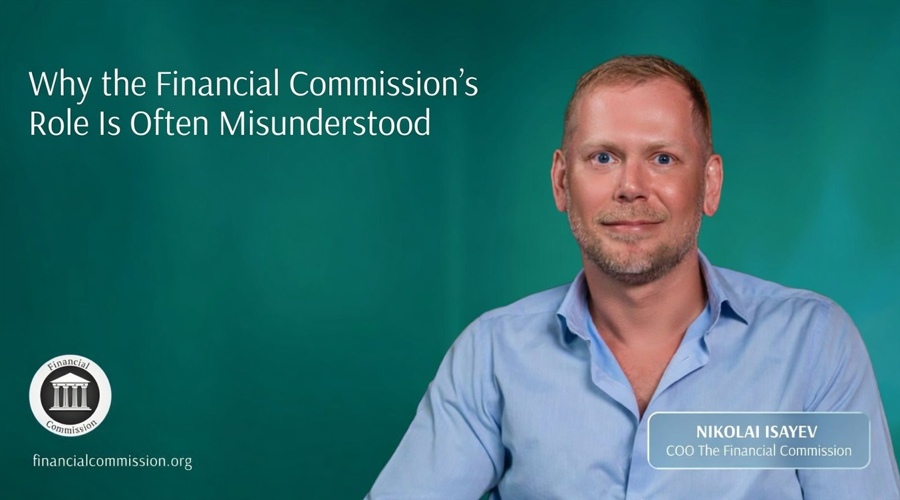
The article was written by Nikolai Isayev, Chief Operating Officer, Financial Commission.
In
the online trading industry, few words are used more often, and understood less
consistently, than “fairness.”
A
trader who has lost money may feel that fairness means being reimbursed. A
broker facing an allegation may feel that fairness means being protected from
reputational damage when the facts support its position. A regulator may define
fairness by reference to licensing rules, capital requirements, reporting
obligations, or enforcement standards. A court may define it by legal
liability.
At
the Financial Commission, fairness means something different: a transparent,
structured, evidence-based process that gives both sides the opportunity to be
heard.
That
distinction matters. It is also where much of the misunderstanding about the
role of our dispute resolution forum begins.
We are not
here to take sides
One
of the most common misconceptions I hear from FX/CFD brokers about the
Financial Commission is that we exist to “protect traders” in a one-sided
sense. Another misconception, usually from the other side of the table, is that
because our members are brokerages, we must exist to blindly protect brokers,
stamping membership certificates to offer credibility.
Both
assumptions miss the point.
The
Financial Commission was created as an independent external dispute resolution
forum for cases where traders and broker members cannot resolve a complaint
directly. We are not a government regulator, and we do not pretend to be one.
We do not replace national regulatory authorities, courts, or law enforcement.
We also do not act as an insurance policy against normal trading losses.
Our
role is narrower, but very important: to provide a fair, efficient, and
informed process for reviewing disputes in the Forex and CFD industry.
That
process protects traders because it gives them access to an independent channel
outside the broker’s internal complaint desk, oftentimes helping to educate
novice traders in risk management, bonus policies and alleviate anxiety over
delayed money withdrawals. It protects brokers because it ensures that
complaints are reviewed according to evidence and rules, rather than emotion,
social media pressure, or assumptions about how markets work, and more
importantly according to the current evolution of trader behaviors, both good
and ill intentioned that have an impact on revenue and public credibility.
In
other words, our role is not to decide who is more sympathetic. Our role is to
determine what happened, what can be proven, which rules apply, and whether a
remedy is justified.
Fairness is a
methodology, not a slogan
In
retail trading, disputes often begin with frustration. A withdrawal is delayed.
A position is closed. The price looks wrong. A bonus term is misunderstood. A
platform event is interpreted as manipulation. A trader sees an outcome that
feels unfair and naturally wants someone independent to look at it.
But
a feeling of unfairness and a finding of unfair conduct are not the same thing.
This
is why methodology matters.
Before
a case can move forward, a trader must first give the broker an opportunity to
resolve the issue through its internal dispute resolution process. This step is
sometimes overlooked by people who think dispute resolution should begin
immediately with a third party. In practice, it is essential. Many disputes are
resolved faster when both sides communicate clearly, exchange information, and
identify whether the issue was caused by a misunderstanding, a documentation
gap, a technical error, or a genuine failure in service.
If
the matter remains unresolved, the Financial Commission reviews the complaint
within a defined framework. Jurisdiction matters. Evidence matters. Timing
matters. The broker’s terms and conditions matter. Trading logs, pricing data,
communication records, platform history, withdrawal records, and risk
disclosures all matter.
That
may sound procedural. It is. But procedure is what turns a dispute from a
shouting match into a reviewable case.
The
methodology of fairness requires discipline. It requires asking the same
questions even when one side is louder, more emotional, or more commercially
powerful than the other. It requires understanding how trading actually works,
including execution, liquidity, volatility, leverage, margin, order types,
platform settings, and client agreements. It also requires acknowledging that
not every poor outcome is misconduct, and not every broker explanation is
sufficient.
Protecting
traders means giving them a real voice
The
Forex and CFD industry is global, fast-moving, and complex. Traders often
interact with brokers across borders, in different languages, under different
regulatory regimes, and with products that can be difficult to understand even
for experienced market participants.
For
a retail trader, this can feel intimidating. When a problem arises, the trader
may not know whom to contact, what evidence to provide, how to frame the
complaint, or whether the broker’s response is reasonable.
This
is where external dispute resolution provides real value.
A
trader who files a complaint with the Financial Commission receives access to a
process that is free for clients of member firms and designed to examine the
matter independently. The trader is not required to have the resources of a
large institution. The complaint is not dismissed simply because the trader
lacks legal sophistication. The trader has a channel to present facts,
documents, and concerns in a structured way.
That
is protection.
But
meaningful protection does not mean automatic compensation. It means the
trader’s complaint is taken seriously, reviewed professionally, and measured
against the available evidence.
When
a trader is right, a fair process should recognize that. When a trader is
wrong, outside the rules, or unable to support the claim, a fair process must
also be willing to say so.
Fairness
loses its meaning if it only moves in one direction.
Protecting
brokers is also part of market integrity
Broker’s
decision makers are often surprised when I say that the Financial Commission
also protects their business. They should not be.
A
market cannot be fair if legitimate firms have no protection against unfounded
allegations. In today’s environment, a complaint can become public within
minutes. A trader can post screenshots, accusations, edited timelines, or
incomplete facts on forums and social media long before a broker has had a
chance to investigate or respond.
This
does not mean the trader is acting in bad faith. Often, the trader is simply
upset and looking for help. But from the broker’s perspective, the reputational
impact can be immediate and significant.
A
neutral dispute resolution process gives brokers a proper forum to respond. It
allows them to submit records, explain technical details, clarify contractual
terms, and show whether their actions were consistent with their obligations.
This is especially important in an industry where many disputes involve
execution quality, pricing, slippage, bonus terms, withdrawals, chargebacks,
account verification, and risk controls — areas where the facts are not always
visible to the client at first glance.
Protecting
brokers from unfair claims is not anti-trader. It is pro-fairness.
If
good brokers are not given a credible way to defend themselves, the industry
becomes more vulnerable to rumor, reputational attacks, and complaint
inflation. That does not help traders. It makes the market less transparent and
less trustworthy.
Why neutral
outcomes are often misunderstood
One
reason FC is sometimes misunderstood is that neutrality can be disappointing.
If
a trader expects FC to act as an advocate, a decision in favor of the broker
may feel like betrayal. If a broker expects membership to shield it from
scrutiny, a decision in favor of the trader may feel like punishment. If the
public expects every complaint to produce a dramatic finding, a case closed for
lack of jurisdiction or insufficient evidence may seem unsatisfying.
But
neutral dispute resolution is not designed to satisfy every expectation. It is
designed to produce reasoned outcomes.
Some
complaints fall outside our jurisdiction. Some are better directed to a
regulator, court, bank, payment provider, or law enforcement agency. Some
involve non-member firms. Some relate to trading losses that are part of the
risks the client accepted. Some involve clear broker errors. Some reveal
communication failures that could have been avoided. Some expose deeper process
weaknesses.
Each
category requires a different response.
That
is why a transparent methodology is more important than a headline result. The
question is not, “Did the trader win?” or “Did the broker win?” The better
question is, “Was the complaint reviewed properly, independently, and
consistently?”
The industry needs more fairness infrastructure, not less
The
Forex industry has matured significantly over the past decade, but its
challenges have not disappeared. Cross-border onboarding, fragmented
regulation, digital marketing, high market volatility, and the growth of online
communities have all changed the way disputes arise and spread.
In
this environment, fairness cannot be left to vague promises. It needs
infrastructure.
Internal
broker procedures are part of that infrastructure. Regulation is part of it.
Courts and law enforcement are part of it. Education is part of it. Independent
external dispute resolution is also part of it.
The
Financial Commission occupies a practical space within this ecosystem. We do
not claim to solve every problem in the industry. We do not claim to regulate
every broker. We do not claim that every complaint belongs before us. What we
do claim is that when a complaint falls within our framework, it deserves a
professional process that respects both the trader’s right to be heard and the
broker’s right to respond.
That
is the balance many people miss.
Fairness
is not softness. It is not public relations. It is not automatic reimbursement.
It is not broker protectionism. It is not trader advocacy detached from facts.
Fairness is a method
It
is the discipline of asking the right questions, applying the same standards,
reviewing the available evidence, and reaching a decision that can be
explained.
For
traders, this means they are not alone when a legitimate dispute arises. For
brokers, it means they are not left defenseless against every accusation. For
the industry, it means a stronger foundation for trust.
And
in a market where trust is difficult to build and easy to lose, that
methodology is not optional. It is essential.
The article was written by Nikolai Isayev, Chief Operating Officer, Financial Commission.