





By many measures, Americans are growing less religious: Since 2007, for example, the percentage of people who pray daily has dropped, while the “unaffiliated” have grown to 29%. But those numbers can distract from just how much faith still matters in American public life – much more so than in Western Europe, despite its similar religious roots.
About two-thirds of Americans consider religion “somewhat” or “very” important, compared with 56% in Italy, 40% in Spain and 36% in Germany. While about two-thirds of American Christians pray every day, only 18% of European Christians do so.
Why such a stark divide? One reason, some scholars have argued, is the United States’ tradition of separating church and state, also called “disestablishment.” In other words, Americans’ freedom of religion helped faith to thrive in ways that the state-sponsored churches did not.
As my research into the history of philanthropy shows, disestablishment was not just a cornerstone of American democracy. It was also an engine for the extraordinary growth of philanthropy, which played an important role in fueling American churches’ growth and innovation.
Money from members
Prior to the American Revolution, most colonies sponsored particular churches and collected taxes to support them. New England governments tended to support Congregationalist churches, which grew out of Puritan traditions, while many Southern colonies supported the Church of England.
The First Amendment of the U.S. Constitution prohibits the government from establishing religion. The Supreme Court did not decide that that amendment applies to state governments until the 20th century. Within a few decades of independence, though, states’ support for established churches had disappeared. The last to disestablish was Massachusetts, which ended support for Congregational churches in 1833.

Michael Carter/Flickr via Wikimedia Commons, CC BY-SA
After Christian churches were stripped of state funding, churches had to find new revenue sources. Ministers’ and teachers’ salaries had to be paid, church buildings constructed and maintained, and colleges and other religious institutions supported. The funding for all that had to come from voluntary contributions from members – meaning that ministers were turned into fundraisers, and believers into donors.
Donors weren’t just giving money to be charitable. They were getting services and community in return, which helped keep them emotionally and socially invested – and helped religion thrive. Members essentially became stakeholders of their denominations. In the 21st century, those networks of donors and services have included everything from schools and radio stations to children’s activities.
New generations
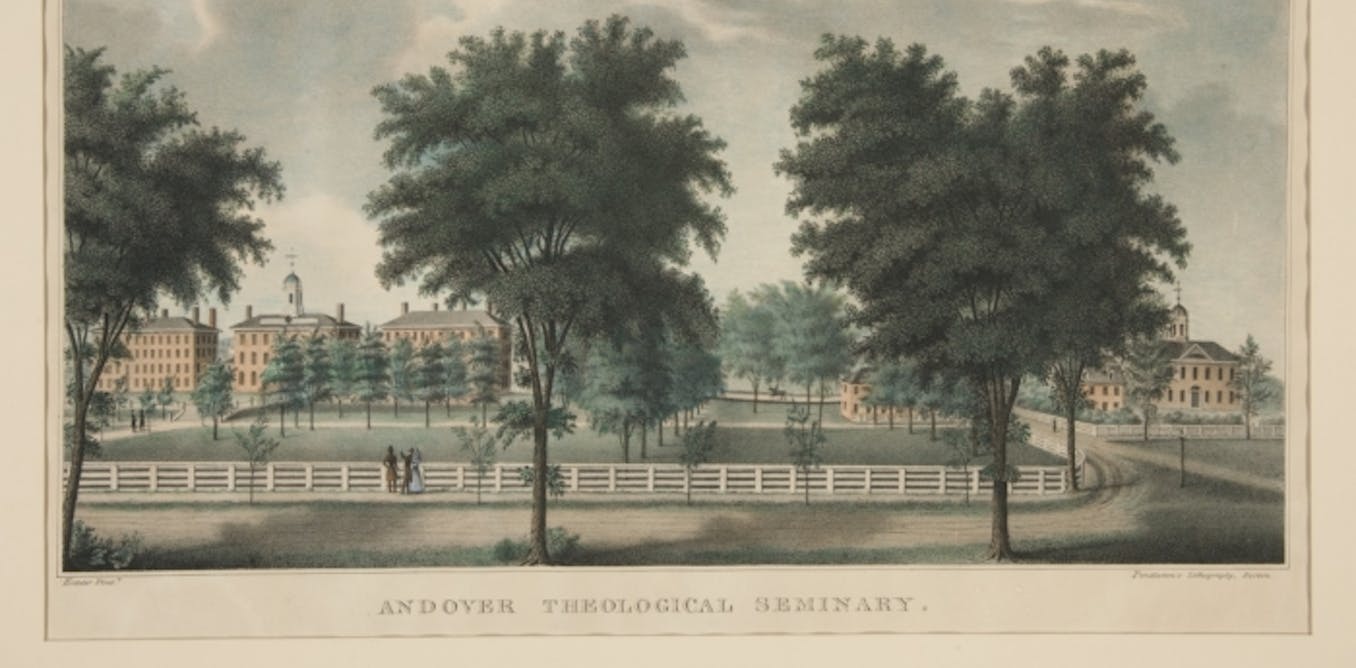
Religious colleges are a major example of this dynamic. On the eve of the Civil War, the country had 207 religious colleges, accounting for nearly 60% of all colleges and universities. Most had been founded after independence. Forty-nine were Presbyterian, 34 Methodist, 25 Baptist, 21 Congregational, 14 Catholic and 11 Episcopalian. The remaining 53 were founded by smaller religious groups, such as the Lutheran and Universalist churches.
Colleges took on a central role in many churches’ religious life. They trained ministers and teachers for the denominations that funded them.
Some American denominations built K-12 schools as well, which reached far more students than colleges could. The Presbyterian Church, for example, did not just build universities, such as Austin College in Texas and Lafayette College in Pennsylvania, but also established 59 academies in 20 states and numerous primary schools. These schools admitted and trained Presbyterians who, as adults, became the rank and file of their congregations – and, as alumni, donated to their alma maters.

Centre College Photos via Wikimedia Commons
Scholarship programs
Building and maintaining colleges is expensive.
And in the 19th century these American colleges could not necessarily rely on students paying the full cost of attendance: Many students were too poor to do so. In 1806, only six out of the 39 graduating students at Dartmouth College had paid their fees in full.
Lack of funding pushed many colleges into bankruptcy and closing. In fact, 68 of the 109 Presbyterian colleges established between 1794 and 1904 had shut down by 1940.
Colleges developed a new fundraising strategy: offering donors “scholarship certificates,” which were essentially tuition waivers that could be used by family and friends. They came with price tags, from a few hundred to a few thousand dollars.
Selling “scholarship certificates” mobilized believers who wanted to support their denomination. The fundraising campaign to create Southern Methodist University in Dallas in the early 1900s, for example, involved more than 29,000 donors from across Texas. SMU’s first bursar acknowledged that the university had largely been built by “poor people” who had submitted small donations. The university committed itself to admitting 50 students each year, free of charge, who would be nominated by the church’s 50 presiding elders in Texas.
Colleges thereby became instrumental in maintaining and growing the memberships of the denominations they served. More broadly, they played an important role upholding the religious diversity of American society.


