

Advertisement

Tax Ombud Pledges Faster Dispute Resolution to Protect Businesses, Boost Revenue Compliance
The Office of the Tax Ombud has reaffirmed its commitment to remaining a critical tool for protecting businesses and improving tax compliance across Nigeria.
It promises to resolve taxpayer complaints within 14 days as part of efforts to reduce friction in revenue collection and deepen trust in the economy.
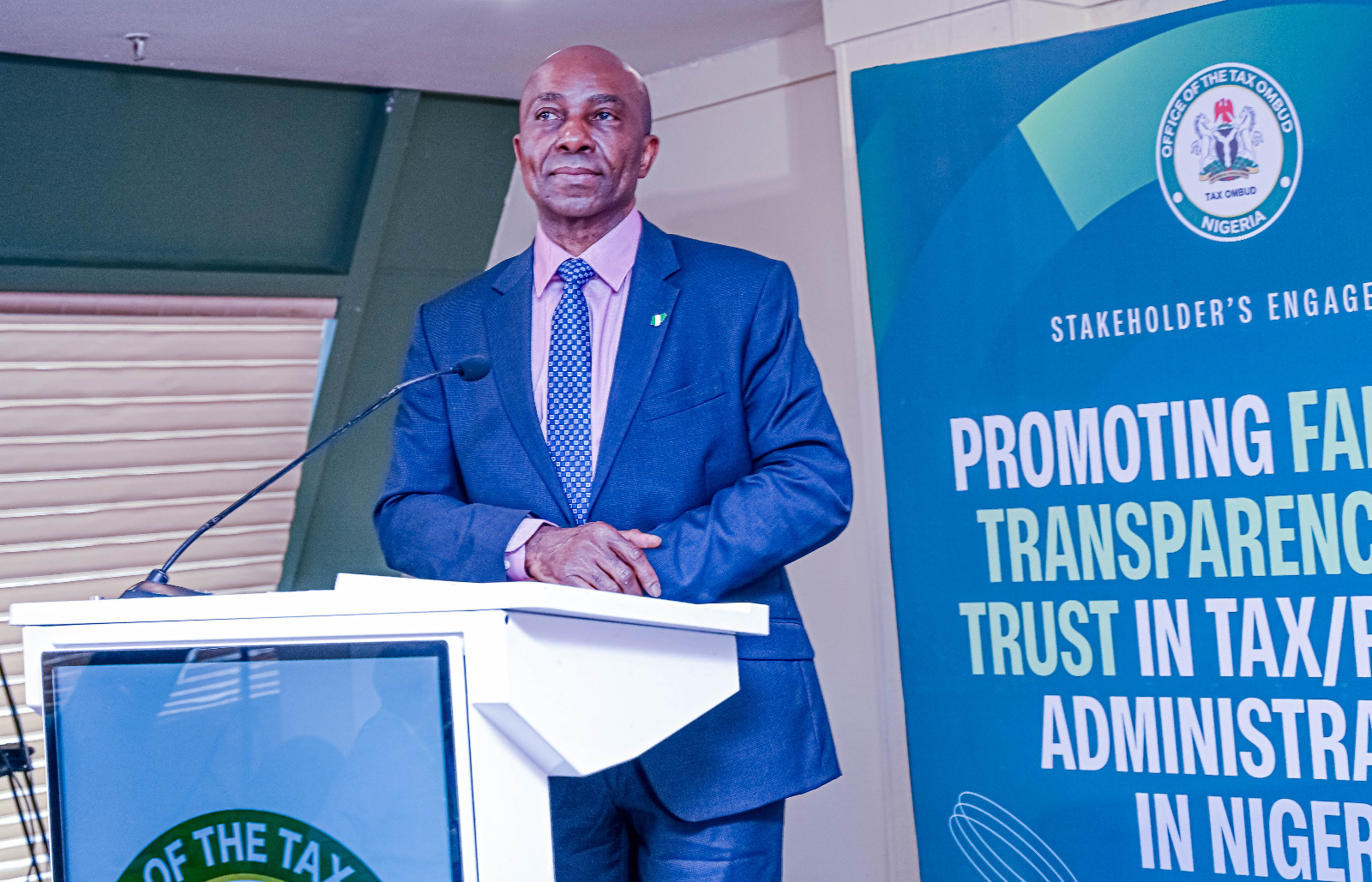
The commitment was made on Thursday at a stakeholder forum in Abuja themed “Promoting Fairness, Transparency, and Trust in Tax and Revenue Administration in Nigeria.”
The Tax Ombud and Chief Executive, Dr. John C. Nwabueze, said the institution was created to ensure that revenue drive does not come at the expense of fairness to taxpayers.
“Tax administration is not simply about collecting revenue; it is about building a system where taxpayers understand their obligations, feel fairly treated, and trust the institutions responsible,” Dr. Nwabueze said.
“We are here to bridge gaps, protect rights, and ensure that the power to collect is matched by a commitment to fairness and accountability.”
He said Nigeria is the third African country to adopt the tax ombud model, a move aligned with global best practices.
The Office, he noted, will handle operational, procedural and administrative complaints, not disputes over tax assessments, which remain with the Tax Appeal Tribunal.
Crucially for businesses, he disclosed that complaints will be resolved within 14 days, with a possible 7-day extension.
Unresolved cases he noted can be escalated to the National Assembly. The Office also plans to expand to all 36 states and LGAs to bring redress closer to taxpayers.
Dr. Nwabueze added that the Office would soon launch a Taxpayer Bill of Rights and Obligations Charter and deepen digital innovation to make complaints and mediation faster and more accessible. The service, he stressed, is free and impartial.
The Minister of Finance and Coordinating Minister of the Economy, Mr. Taiwo Oyedele, who was represented by Mr. Olufemi Olarinde described the Tax Ombud as “a bridge between taxpayers and revenue authorities” needed to support systemic reforms and digital innovation.
Business groups said a fair and predictable tax system is essential to protect investments and widen the tax net without killing SMEs.
Representing Manufacturing Association of Nigeria (MAN) and the Nigerian Association of Chambers of Commerce, Industry, Mines, and Agriculture (NACCIMA) at a panel, private sector leaders argued that uncertainty and poor dispute resolution were major reasons many businesses remained in the informal sector.
The Director-General of the Nigerian Shippers’ Council, Ms. Vivian Chimizia Azubuike, stressed that fairness was especially critical for maritime SMEs.
She called for “institutionalised consultation before the issuance of new tax circulars” to avoid shocks to businesses.
From the export sector, Dr. Olufemi Ayinla Nurudeen Babalola of NEPZA said the Ombud’s role in protecting investors in free zones would help improve Nigeria’s investment climate.
Mr. Emmanuel Sunday Inyang of the Corporate Affairs Commission (CAC) said efficient business registration and inter-agency collaboration were also vital to bringing more businesses into the formal tax net.
Hassan Usman of the FCT-IRS added that transparency and accessible services were key to building confidence.
