



Advertisement


Tax Ombud and the Case for a Fairer Revenue System
By Zekeri Idakwo Laruba
For years, taxation in Nigeria was largely experienced as a one-way conversation. Government agencies demanded payment, taxpayers were expected to comply, and disputes could easily become prolonged battles in which the individual or business often felt that the state held all the cards. The emphasis was heavily tilted towards collection and enforcement, with less visible attention to the taxpayer’s experience. The emergence of the Office of the Tax Ombud is beginning to change that narrative by introducing a different philosophy: government can demand taxes while still listening to, protecting and fairly treating the people who pay them.
That shift could prove critical as Nigeria intensifies efforts to raise domestic revenue. The International Monetary Fund estimates that Nigeria’s tax revenue is on track to reach 15.0 per cent of GDP in 2025 and 15.7 per cent in 2026, although the country’s medium-term ambition is to move towards the regional target of 20 per cent.
The numbers underline the scale of the challenge. Nigeria needs more revenue to finance development, but achieving that objective sustainably will require more than expanding the tax base or strengthening enforcement. It will require a tax system in which compliance is supported by confidence, predictability and fairness.
This is where the Tax Ombud becomes important. Established under Part VI of the Joint Revenue Board of Nigeria (Establishment) Act, 2025, the Office is empowered to review and resolve complaints relating to taxes, levies, regulatory fees and charges, customs duties and excise matters.
It operates as an independent and impartial arbiter, with responsibilities that include complaint resolution, systemic investigations, taxpayer education and recommendations for administrative or policy improvements. In practical terms, it creates a bridge between the revenue authorities and taxpayers who believe they have been treated unfairly, subjected to administrative delays or denied proper redress.
The significance of that role becomes clearer when viewed against Nigeria’s wider tax reform agenda. The government is seeking to modernise tax administration, broaden compliance and increase the contribution of domestic revenue to national development.
The IMF has noted that the recently enacted tax reforms are intended to modernise the system, broaden the tax base, improve compliance and strengthen enforcement, while digital tracking of government revenues is expected to support a sustained improvement in the tax-to-GDP ratio. But enforcement without trust can produce resistance, while trust without enforcement can undermine revenue collection. The real objective, therefore, should be a system that combines both.
Recent engagements involving the Tax Ombud illustrate this emerging approach. During a visit to the Kaduna State Government, Governor Uba Sani pledged support for the Office and stressed the importance of a fair, efficient and transparent tax system to the state’s economic competitiveness and investment prospects.
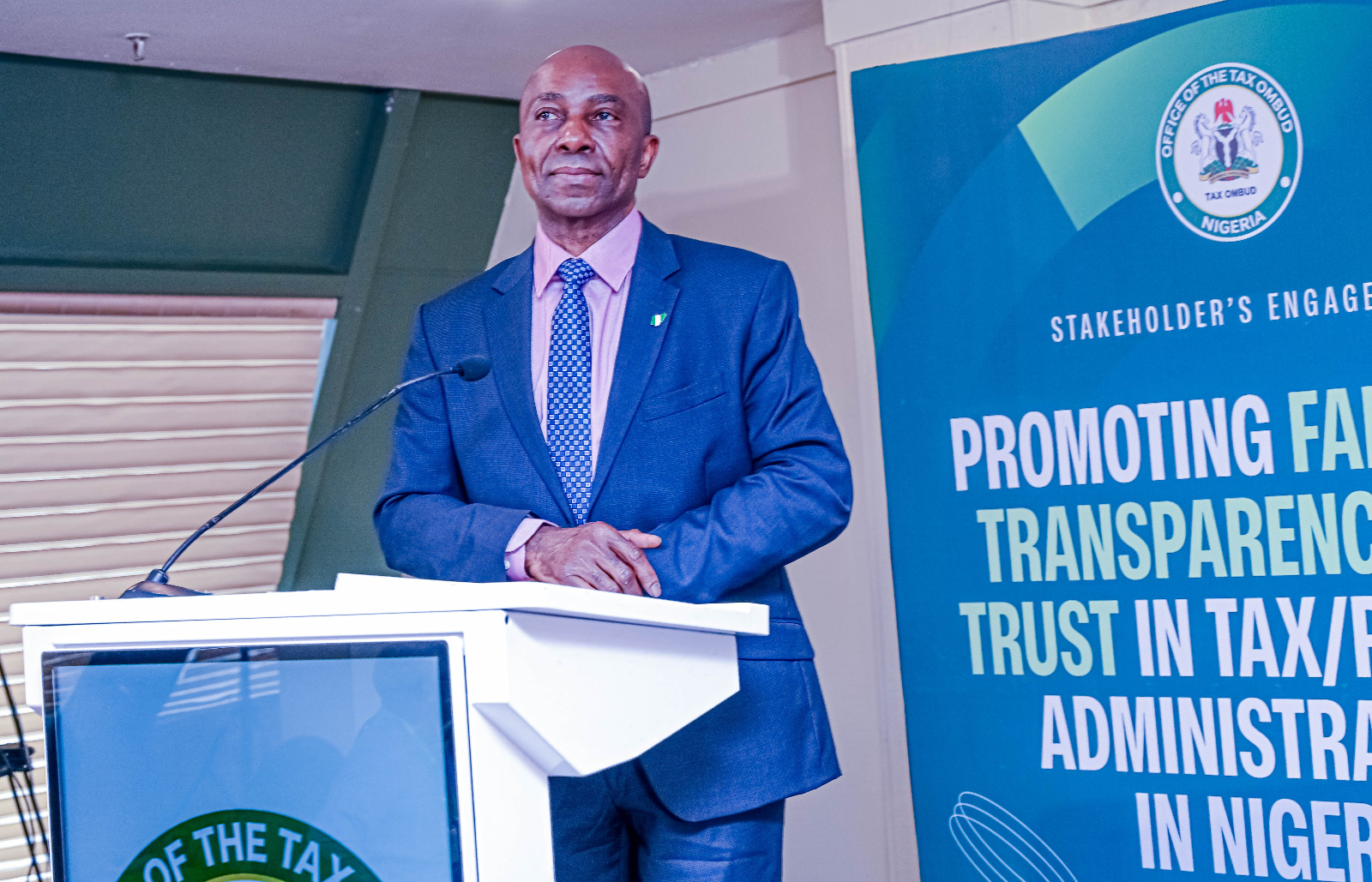
The Tax Ombud, Dr John Nwabueze, in turn, emphasised that tax compliance and taxpayer rights must go hand in hand if Nigeria is to achieve the increased tax-to-GDP growth it needs. The point is significant: a taxpayer who understands the rules, trusts the process and has access to redress is more likely to see compliance as a civic obligation rather than an imposed burden.
The Kaduna engagement also raises an important economic question. States need stronger internally generated revenue to finance infrastructure and public services, but aggressive revenue mobilisation can become counterproductive when businesses perceive the tax environment as arbitrary or unpredictable.
For investors, the issue is not simply how much tax they will pay; it is whether the rules are clear, consistently applied and subject to fair review when disagreements arise. This is why the Tax Ombud’s emphasis on dispute resolution could become an important component of Nigeria’s investment and business climate.
The same logic is evident in the proposed collaboration between the Tax Ombud and the Oil and Gas Free Zones Authority (OGFZA). OGFZA regulates activities within Nigeria’s oil and gas free zones, where the government has deployed incentives, tax exemptions and customs concessions to attract investment.
During his engagement with the Authority, Nwabueze proposed cooperation in areas including taxpayer complaint resolution, clarification of tax incentives, review of systemic complaints, transparency and accountability. OGFZA Managing Director, Alhaji Usman Bamanga Jada, welcomed the collaboration, stressing that investors in the zones have benefited from incentives deliberately introduced to encourage sustainable foreign direct investment, infrastructure development and job creation.
That collaboration demonstrates why tax administration should be viewed as part of the investment ecosystem. An investor may be attracted by an incentive, but uncertainty over its application can quickly undermine that attraction. A transparent mechanism for resolving disputes can reduce friction, limit unnecessary litigation and give businesses greater confidence to operate and invest. The Tax Ombud itself describes its mediation and administrative review functions as a less adversarial alternative to prolonged litigation, while its services are available to individuals and corporate taxpayers without charge.
There is also a broader cultural change taking place. At a stakeholder engagement in July, Olufemi Olarinde, speaking on behalf of the Minister of Finance and Coordinating Minister of the Economy, described taxation as a “covenant between the government and the governed,” emphasising that what is demanded from citizens must be fair and that what is collected should be used wisely. That framing captures perhaps the most important transformation in Nigeria’s tax conversation: taxation is not merely an exercise in taking money from citizens; it is part of the relationship between citizens, businesses and the state.
For the Tax Ombud, however, expectations must be matched by performance. The institution cannot become merely another government office where complaints are submitted and forgotten. Its credibility will ultimately depend on how quickly and independently it handles legitimate grievances, how seriously revenue authorities respond to its recommendations and whether recurring complaints lead to changes in the system itself. Its recently launched digital call centre and case-management platform is a step in that direction, designed to make taxpayer engagement more accessible and accelerate complaint resolution.
Nigeria’s tax reform therefore presents an opportunity to redefine the relationship between government and taxpayers. The old perception of taxation as simply “pay because government says so” is increasingly inadequate for a modern economy. The emerging model should be “pay because it is your obligation, but know that your rights are protected and your complaints can be fairly heard.”
That is not softness in revenue administration. It is smarter administration.
If Nigeria succeeds in building a tax system where enforcement is firm, administration is transparent, disputes are fairly resolved and taxpayers understand both their obligations and rights, higher compliance may become less dependent on coercion. And that could be the real contribution of the Tax Ombud to Nigeria’s revenue revolution: not simply helping taxpayers complain, but helping build the trust required for more Nigerians and businesses to comply willingly.