




Advertisement


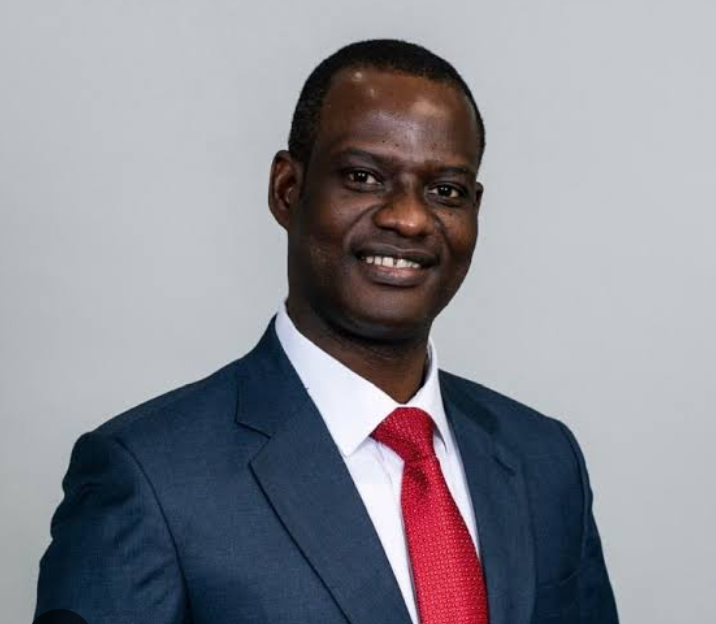
Taiwo Oyedele: The Minister Behind Nigeria’s Tax Revolution
By Zekeri Idakwo Laruba
Nigeria’s economic future has long been constrained by a paradox: immense revenue potential coexisting with chronically low tax collection. For decades, governments struggled to widen the tax base without overburdening businesses and citizens. Complex tax laws, multiple taxation, weak compliance, and an overreliance on oil revenues undermined fiscal sustainability, leaving public finances vulnerable to global economic shocks.
Against this backdrop, Taiwo Oyedele has emerged as one of the most influential figures shaping Nigeria’s fiscal future. Renowned for his expertise in taxation, public finance, and economic policy, Oyedele has become the driving force behind an ambitious programme aimed at simplifying the country’s tax system, expanding government revenue, improving the ease of doing business, and promoting inclusive economic growth.
His journey from the private sector to the centre of national economic policymaking reflects a career built on technical competence, strategic thinking, and an unwavering commitment to reform.
Before assuming public office, Oyedele had already earned a formidable reputation in Africa’s tax and fiscal policy landscape. As Africa Tax Leader at PwC, he advised governments, multinational corporations, development institutions, and private businesses on tax policy, fiscal sustainability, investment incentives, and revenue mobilisation.
His expertise extended beyond boardrooms. He became a respected public intellectual, frequently analysing fiscal issues, advocating policy reforms, and proposing practical solutions to Nigeria’s longstanding tax challenges. His writings and public engagements consistently emphasised that taxation should not merely be a tool for revenue generation but an instrument for economic development, investment promotion, and social equity.
His reputation for combining technical knowledge with pragmatic policy recommendations made him a natural choice to spearhead Nigeria’s tax reform agenda.
Recognizinng the urgent need to modernize Nigeria’s fiscal architecture, President Bola Ahmed Tinubu appointed Oyedele to lead the Presidential Committee on Fiscal Policy and Tax Reforms.
Nigeria’s tax system had become increasingly fragmented. Businesses often faced overlapping taxes from federal, state, and local governments, while compliance procedures remained cumbersome. Despite Africa’s largest economy, Nigeria’s tax-to-GDP ratio ranked among the lowest globally, limiting the government’s capacity to finance infrastructure, healthcare, education, and social services.
Rather than proposing piecemeal adjustments, Oyedele championed a comprehensive overhaul.
The committee consulted extensively with state governments, organised private sector groups, tax professionals, manufacturers, labour unions, development partners, and civil society organisations. This inclusive approach helped build consensus around reforms designed to create a simpler, fairer, and more efficient tax regime.
Central to Oyedele’s vision is the belief that economic growth and tax compliance are mutually reinforcing rather than contradictory.
He has consistently argued that governments should first stimulate productivity, support businesses, and encourage investment before seeking higher tax revenues.
This philosophy marked a departure from previous approaches that relied heavily on introducing new taxes or increasing existing rates.
Instead, his reform agenda focuses on simplifying tax laws, eliminating nuisance taxes, harmonising revenue collection, strengthening digital administration, expanding the tax net, and improving voluntary compliance.
The objective is clear: make paying taxes easier while ensuring that more individuals and businesses participate in the formal economy.
One of the defining features of Oyedele’s reforms has been the effort to consolidate multiple taxes into a more coherent framework.
For years, investors complained that Nigeria’s complex tax environment discouraged investment and increased the cost of doing business. Manufacturers, particularly small and medium-sized enterprises, often encountered overlapping levies imposed by different tiers of government.
Under Oyedele’s leadership, reforms sought to reduce duplication, clarify tax obligations, and improve coordination among revenue authorities.
The anticipated benefits extend beyond increased government revenue. A more transparent tax system is expected to enhance investor confidence, improve Nigeria’s competitiveness, reduce compliance costs, and encourage business expansion.
Perhaps the most distinctive element of Oyedele’s philosophy is his insistence that tax reforms should not disproportionately affect low-income earners.
Rather than advocating indiscriminate taxation, he has consistently supported targeted measures that protect vulnerable households while ensuring that wealthier individuals and profitable corporations contribute their fair share.
This balanced approach has helped shape reforms that seek to improve equity without undermining economic productivity.
For millions of Nigerians facing inflationary pressures and rising living costs, this principle has become one of the most closely watched aspects of the country’s evolving fiscal reforms.
Nigeria’s persistent fiscal deficits underscore the need for sustainable domestic revenue generation.
However, Oyedele has repeatedly cautioned against viewing taxation solely as an instrument for closing budget gaps.
Instead, he argues that government should broaden the tax base by formalising economic activities, improving compliance through technology, reducing leakages, and strengthening institutional efficiency.
This philosophy reflects international best practices, where efficient tax administration, not excessively high tax rates, often produces stronger and more sustainable revenue outcomes.
From Reformer to Finance Minister
Oyedele’s appointment as Minister of Finance and Coordinating Minister of the Economy in April 2026, marked a significant turning point in Nigeria’s economic reform journey.
Unlike many predecessors whose backgrounds were primarily political, he entered office with decades of practical experience in taxation, fiscal policy, and public finance.
His elevation signalled the administration’s determination to place technical expertise at the centre of economic governance.
As minister, he now bears responsibility not only for implementing tax reforms but also for coordinating broader fiscal policy, managing public finances, supporting macroeconomic stability, strengthening investor confidence, and promoting sustainable economic growth.
Despite broad support for reform, Oyedele faces considerable challenges. Inflation remains elevated, public debt continues to rise, and exchange-rate volatility poses risks to fiscal planning. Businesses are demanding policy stability, while citizens expect reforms to translate into improved living standards and better public services.
There is also the perennial challenge of implementation. Nigeria has historically produced well-designed policy documents that faltered during execution because of institutional weaknesses, political resistance, and inadequate coordination across different levels of government.
For Oyedele, success will ultimately depend less on the elegance of reform proposals than on their practical implementation and measurable outcomes.
History often remembers reformers not for the policies they propose but for the institutions they strengthen and the transformations they leave behind.
Taiwo Oyedele’s greatest contribution may ultimately lie in changing how Nigerians perceive taxation—not as an arbitrary burden but as a cornerstone of national development, fiscal responsibility, and shared prosperity.
If his reforms achieve their intended objectives, Nigeria could witness a more transparent tax system, improved revenue mobilisation, stronger investor confidence, enhanced public service delivery, and a more resilient economy less dependent on oil revenues.
For a nation seeking sustainable economic growth amid global uncertainty, such a transformation would represent more than tax reform. It would constitute a fundamental restructuring of the relationship between government, businesses, and citizens.
Whether this ambitious vision is fully realised will depend on political will, institutional discipline, and sustained public trust. Yet one thing is increasingly clear: Taiwo Oyedele has positioned himself at the forefront of Nigeria’s fiscal transformation. His work is shaping not only the country’s tax system but also the broader trajectory of its economic future.