







By
Gabe Whisnant is a Breaking News Editor at Newsweek based in North Carolina. Prior to joining Newsweek in 2023, he directed daily publications in North and South Carolina. As an executive editor, Gabe led award-winning coverage of Charleston church shooter Dylan Roof’s capture in 2015, along with coverage of the Alex Murdaugh double murder trial. He is a graduate of the University of North Carolina-Wilmington. You can get in touch with Gabe by emailing g.whisnant@newsweek.com. Find him on Twitter @GabeWhisnant.
Gabe Whisnant
and
Amanda M. Castro is a Newsweek Live Blog Editor based in New York. Her focus is reporting on U.S. politics, breaking news, consumer topics, and entertainment. She specializes in delivering in-depth news and live blog reporting and has experience covering U.S. presidential debates, awards shows, and more. Amanda joined Newsweek in 2024 from the The U.S. Sun and is a graduate of the University of New Haven.
You can get in touch with Amanda by emailing a.castro@newsweek.com.
Languages: English, Spanish
Breaking News Editor
🎙️ Voice is AI-generated. Inconsistencies may occur.
The Supreme Court ruled unanimously on Thursday that an Atlanta family whose home was mistakenly raided by the FBI in 2017 can move forward with their lawsuit.
The decision stems from a pre-dawn incident in which an FBI SWAT team broke down the family’s front door, deployed a flashbang grenade, and pointed weapons at Trina Martin, her then-boyfriend Toi Cliatt, and her 7-year-old son, only to realize moments later they had entered the wrong house.
Why It Matters
The ruling is significant in the broader debate over law enforcement accountability, particularly concerning mistaken raids. Public interest groups had urged the justices to reverse the lower court decision, arguing it set a dangerous precedent that would make it nearly impossible for victims of wrongful police actions to seek justice. The case also raises questions about sovereign immunity and the limits of the Federal Tort Claims Act, which governs lawsuits against the government.
What To Know
In October 2017, FBI SWAT officers entered Martin’s Atlanta home in a search operation. Armed agents used flashbang grenades and pointed guns at Martin, Cliatt, and her young son before realizing they were in the wrong location. The intended target, gang suspect Joseph Riley, lived nearby.
Martin and Cliatt sought damages, claiming the FBI raid caused trauma and property damage. Their lawsuit faced significant hurdles, as the U.S. government is typically protected from such claims under sovereign immunity. However, they argued that the Federal Tort Claims Act allows lawsuits for certain wrongful acts committed by federal law enforcement officers.
The 11th U.S. Circuit Court of Appeals ruled against the plaintiffs, citing the Supremacy Clause, which prioritizes federal law over state law. This decision effectively blocked their lawsuit, prompting them to appeal to the Supreme Court.
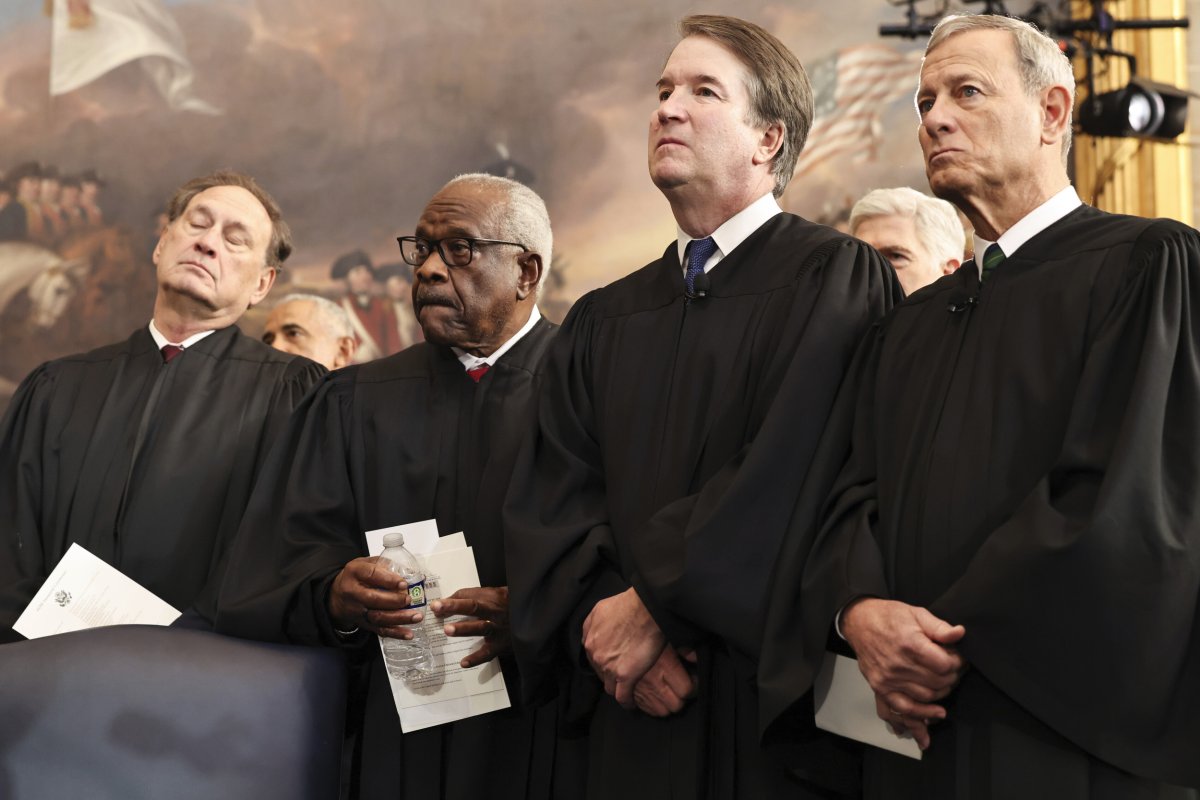
The High Court ruled that the federal law refers back to state legal standards, meaning the Supremacy Clause does not apply. In writing the unanimous opinion, Justice Neil Gorsuch stated that the case should proceed in lower courts.

Associated Press
What People Are Saying
Attorney Patrick Jaicomo, who represents the plaintiffs, said in a statement: “We look forward to continuing this fight with the Martins in the Eleventh Circuit and making it easier for everyday people to hold the government accountable for its mistaken and intentional violations of individual rights.”
Justice Neil Gorsuch in the unanimous decision: “We readily acknowledge that different lower courts have taken different views of the discretionary function exception. We acknowledge, too, that important questions surround whether and under what circumstances that exception may ever foreclose a suit like this one.”
Gorsuch added: “It is work enough for the day to answer the questions we took this case to resolve, clear away the two faulty assumptions on which that court has relied in the past and redirect it to the proper inquiry.”
What Happens Next
With the Supreme Court’s decision, the lawsuit will be returned to the lower courts, where Martin and Cliatt can pursue their claims. The federal government is expected to fight the case aggressively, citing national security concerns and law enforcement protocols. The case could set a precedent for similar lawsuits against federal agencies if successful.
Update 6/12/25, 12:50 p.m. ET: This article was updated with additional information.


fairness meter
Click On Meter To Rate This Article
Top stories
About the writer
Gabe Whisnant is a Breaking News Editor at Newsweek based in North Carolina. Prior to joining Newsweek in 2023, he directed daily publications in North and South Carolina. As an executive editor, Gabe led award-winning coverage of Charleston church shooter Dylan Roof’s capture in 2015, along with coverage of the Alex Murdaugh double murder trial. He is a graduate of the University of North Carolina-Wilmington. You can get in touch with Gabe by emailing g.whisnant@newsweek.com. Find him on Twitter @GabeWhisnant.
Gabe Whisnant
and
Amanda M. Castro is a Newsweek Live Blog Editor based in New York. Her focus is reporting on U.S. politics, breaking news, consumer topics, and entertainment. She specializes in delivering in-depth news and live blog reporting and has experience covering U.S. presidential debates, awards shows, and more. Amanda joined Newsweek in 2024 from the The U.S. Sun and is a graduate of the University of New Haven.
You can get in touch with Amanda by emailing a.castro@newsweek.com.
Languages: English, Spanish
Gabe Whisnant is a Breaking News Editor at Newsweek based in North Carolina. Prior to joining Newsweek in 2023, he …
Read more


