

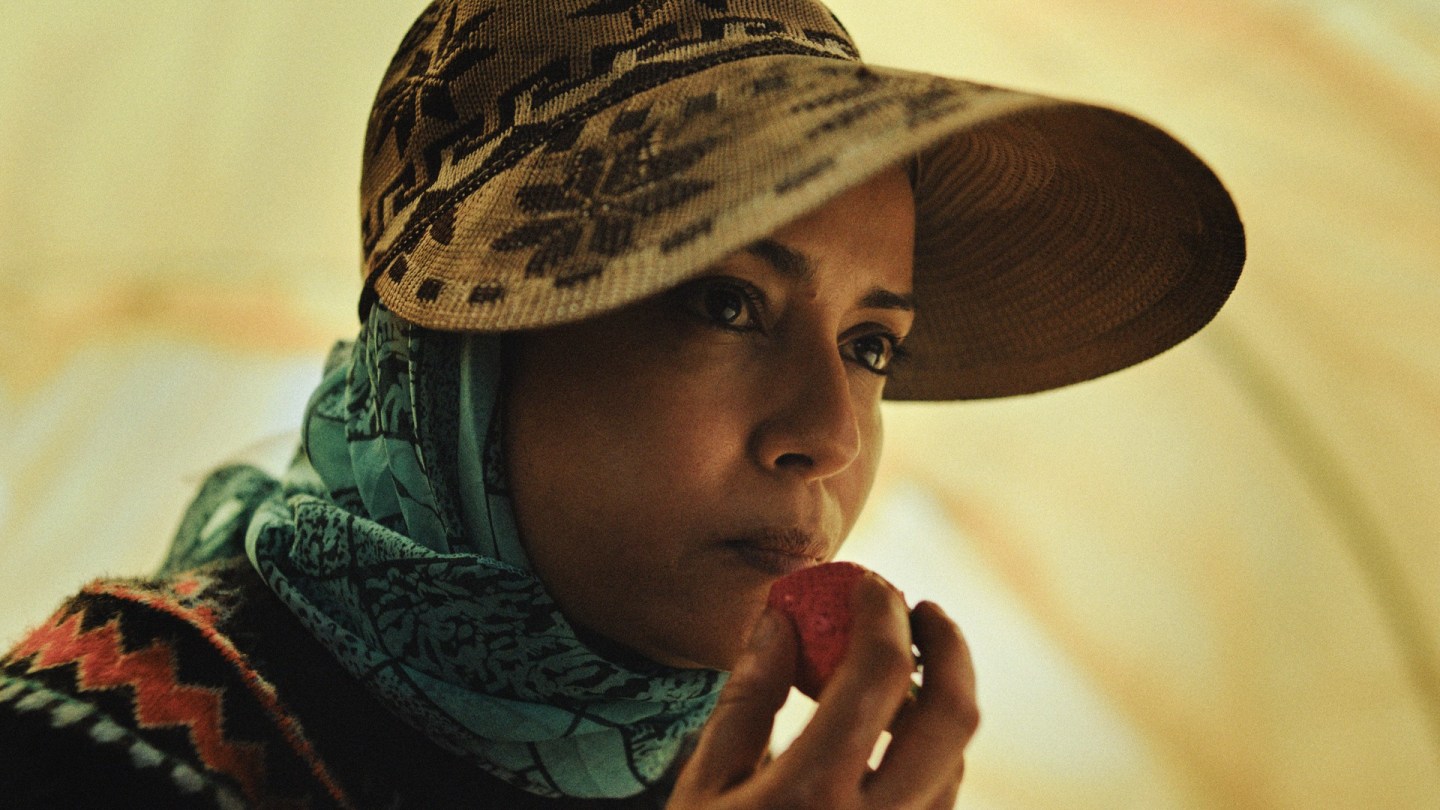
Promises of “the sweetest” turn into nightmares in Paris-based Moroccan auteur Laïla Marrakchi‘s new film Strawberries, whose original title, La más dulce, hints at just that hoped-for sweetness. The story is inspired by real-life cases of Moroccan women who travel to Spain for seasonal fruit-picking work. Their plan: to earn money with hard work in hot weather, which they can bring back to their families back home to improve their lives. Their reality: living conditions that leave a lot to be desired, less money than promised, modern-day exploitation and slavery, and even sexual harassment and prostitution.
Lucky Number is handling international sales for the title, which will world premiere in Cannes’ Un Certain Regard program on xxx.
Marrakchi, known for such features as Marock and Rock the Casbah and such TV series as French spy thriller The Bureau and Damien Chazelle’s The Eddy, co-wrote the script with Delphine Agut. Nisrin Erradi (Everybody Loves Touda, Adam), Hajar Graigaa, Hind Braik, Fatima Attif, Larbi Mohammed Ajbar and Itsaso Arana feature in the cast. The film was produced by Juliette Schrameck (Coward, Sentimental Value, The Worst Person in the World) via her production banner Lumen, along with Morocco’s Mont Fleuri Production, Spain’s Fasten Films and Belgium’s Mirage Films.
Marrakchi talked to THR about Strawberries, why she just had to make a film about Moroccan women working in Spanish fields to make their invisible heroism seen, and the echoes of #MeToo and neocolonialism of their experience.
What inspired you to make this film about a social and socio-economic issue that I didn’t have any real insight into before seeing Strawberries?
The first time I heard about this story was through a friend of mine who’s a journalist, specializing in problems related to migration. She wrote an article for The New York Times about these women. So, I went with her to Andalusia, and I discovered this crazy world and met some of the Moroccan women. I was really moved by these women who decide to leave Morocco and leave their families behind for money to have a better life in Morocco.
I was moved by these strong women. It’s difficult to leave any country for another country, even for three months or four months for work. And I was really impressed by them. After the three days that I spent with my friend, I decided to do more research and make a film about this situation.
We see horrible things, from bad living conditions and a lack of health support and these women not getting paid what they were promised, all the way to abuse and prostitution. Did you also hear from women who had better experiences?
I met lots of women working in the strawberry fields who had the experience of bad conditions and [abuse], but there were also some who went to Spain, had a good experience and went back to Morocco with money. They had the opportunity to have a better life in Morocco.
So, there are many stories, and they depend on the experience. My film tells this story, about the problems of harassment, of prostitution, and I try to show how difficult the work is and the conditions are. These women go there for a good reason, because they want to follow a dream, but then there is the reality of the work that no Spanish people want to do.

‘Strawberries’
Courtesy of Lucky Number
What can you tell us about the trial we see in the film? Is that based on any specific legal case?
There have been several trials, in which the workers, the pickers, tried to speak out about what’s happened in the greenhouses and in the fincas. But there is no good resolution, because people are afraid to speak out, and they step back because they [face] too much pressure, and this is a huge, huge industry.
For these Moroccan women, it’s difficult to speak up and speak out, because they can lose everything in Spain and in their [home] country. What I show in my film is really not simple at all. Speaking out is a privilege.
It’s a sad form of new colonialism. These women are coming from a background where this is the first time they leave Morocco. They have never traveled. They don’t have a higher education. Most of them come from the countryside. And it’s complicated when you don’t speak the language, when you don’t have the education, when you don’t have anything and you decide to leave your country to have a better life.
I am glad you mentioned the topic of language. I really felt the women’s struggles because I could neither understand them, nor the Spanish speakers without the subtitles. And I also felt how difficult it was for them to translate the different cultural and religious challenges they are confronted with…
Yes, it’s also a film about how your voice is sometimes [muted] or stolen. The translation can be tricky, because your words can be transformed, and you don’t have weapons to defend yourself, because they don’t have the education and the language [skills]. So, this is also a film about the relationship now between the Western world and the [Global] South. It’s about the racism and a lot of layers of other layers.
I enjoyed, but was surprised by, scenes where the women are joking and laughing together, which shows how they have a shared communal experience. Tell me a bit about why these scenes were key for you to include?
I love those. It’s really important to humanize these women. We live in the Western world and sometimes don’t realize that these people can love, can be funny and can be women [just like everybody else]. The big challenge of this film was for me not to make it all miserable. For me, it was really important to show these women, as real heroines and show the empowerment of these women. But they can also be cruel to each other. It’s not black and white.
Tell me how you chose the titles, “The Sweetest,” or Strawberries in English?
It’s like a tagline, a slogan. And I like the idea of playing with these two things – the thing that is very sweet is also hard at the same time. The dream of having a better life comes with the difficulty of the hard work.
Strawberries will give the world a chance to see your wonderful cast of actresses, who are known in Morocco but people elsewhere may still get to discover. How did you think about or approach featuring some of the Moroccan women you met in the film?
We used real pickers as extras in the film.
Is there anything else you would like to share?
I want to show these women who are often not visible. Through this film, I want to make them visible as strong women. It’s like an homage to these women, because they are so strong and amazing. They are like a rock. I was so impressed by the Moroccan women I met.
