




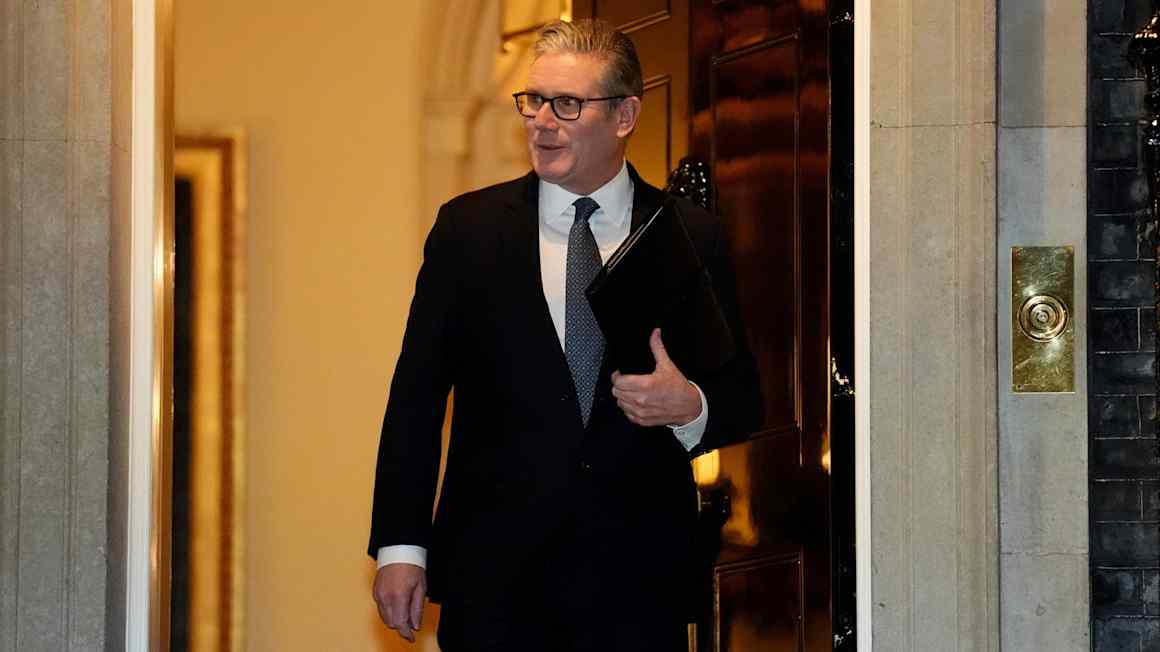
Sir Keir Starmer on Monday insisted he was “not prepared to walk away” after he survived the most serious challenge yet to his leadership, even as fresh tensions emerged between the embattled UK prime minister and one of his leading rivals.
Starmer’s authority was badly damaged after Anas Sarwar, Labour’s leader in Scotland, called on him to resign less than two years after winning power, saying there had been “too many mistakes”.
The prime minister’s allies claimed that Sarwar’s move was co-ordinated with health secretary Wes Streeting, who is seen as a contender for the Labour leadership if and when Starmer leaves office.
“You don’t have to be a rocket scientist to wonder whether Wes knew about and encouraged him to make a move,” said one MP close to Starmer.
Streeting’s team hit back, criticising Starmer’s Downing Street operation for trying to implicate the health secretary even after he had voiced some support for the prime minister.
“We did not ask Anas to do this, he did not co-ordinate with Anas on this, Anas is the leader of the Scottish Labour party, he is his own man, and Wes has the highest respect for him,” said a spokesperson for Streeting.


On Monday evening Starmer pleaded for more time to deliver “change” for the country as he addressed the parliamentary Labour party at its weekly meeting.
Saying he had won every fight he had been in, Starmer told Labour MPs: “After having fought so hard for the chance to change our country, I’m not prepared to walk away from my mandate and my responsibility to my country.”
He described the battle with the rightwing populist party Reform UK as the “fight of our lives, the fight of our times”.
One person at the meeting of Labour MPs said that overall there was strong support for Starmer, although a few hostile questions were posed by a handful of backbenchers.
Another person said: “There won’t be a leadership bid any time soon, that felt like a genuine wall of backing for the PM.”
The crisis engulfing the prime minister began at the end of January, with the US release of documents showing Lord Peter Mandelson passed confidential UK government information to the sex offender Jeffrey Epstein in the wake of the 2007 financial crisis.
The revelations, which also included bank statements appearing to show Epstein sending money to Mandelson years earlier, intensified questions over his appointment to the role of UK ambassador to the US by Starmer.
Tim Allan, Starmer’s director of communications, stepped down on Monday, the latest senior aide to quit. Number 10 chief of staff Morgan McSweeney resigned a day earlier, saying he took full responsibility for advising the prime minister to appoint Mandelson as envoy to the US.
It emerged on Monday evening that cabinet secretary Sir Chris Wormald is negotiating his departure from the government after only 14 months in the role, according to officials.
Wormald’s expected exit, first reported by the Guardian, is part of a wider reset at the top of Starmer’s government, said one person familiar with the matter.
Earlier Sarwar, who fears major losses in May in elections to the Scottish parliament, said the public were “crying out for a competent government”.
The pound fell against the euro and government borrowing costs rose as traders bet on an increased chance of Starmer leaving office.
But the entire cabinet subsequently issued public proclamations of loyalty to the prime minister, calming financial markets.
Streeting’s declaration of support was among the most tepid from the cabinet. He told Sky News that Starmer “doesn’t need to resign” but admitted the atmosphere in Westminster was “febrile”.
Once a close ally of Mandelson, Streeting on Monday sought to put distance between himself and the former ambassador by releasing dozens of messages they have exchanged since August 2024.
Streeting said he had “nothing to hide” about his relationship with Mandelson, with one message showing the health secretary saying he could be “toast” at the next general election in his Ilford North constituency after Labour lost a safe council seat at a local poll last year.
The messages also suggested Streeting was pushing for Starmer to take a much tougher stance on Israel last year, by arguing there were moral and political reasons to take a leadership role in condemning the state’s actions in the Palestinian territories.
One Starmer ally said anger was growing among some cabinet ministers about Streeting’s perceived disloyalty.
The briefing war has echoes of a battle that erupted between Streeting and Number 10 in November, when Starmer’s aides briefed the prime minister would fight any challenger to his leadership, and that the health secretary was collecting signatures for his bid. Streeting denied the claim and criticised Number 10 officials at the time.
Streeting, who comes from the right wing of the Labour party, is seen as the leading rival to former deputy prime minister Angela Rayner, who would count on support from the left in a fight to succeed Starmer.


Starmer is set to attend the Munich Security Conference this weekend, foreign secretary Yvette Cooper confirmed.
He is likely to try and build on Cooper’s narrative that his leadership is needed “not just at home but on the global stage”.
But many Labour MPs believe Starmer is now treading water before a coup de grace from his colleagues, either after the imminent parliamentary by-election in Gorton and Denton in Greater Manchester, or after polls in May in Scotland, Wales and parts of England.