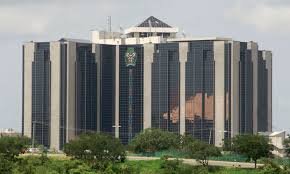




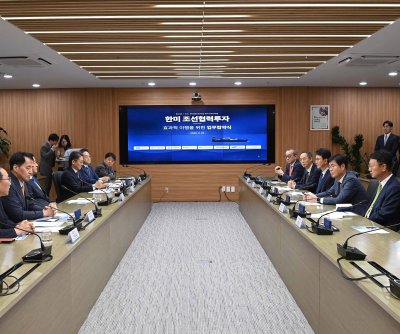
South Korean Deputy Prime Minister and Minister of Finance and Economy Koo Yun Cheol and representatives of government agencies, policy-finance institutions and major shipbuilders attend a signing ceremony for a Korea-U.S. shipbuilding cooperation investment agreement at the Export-Import Bank of Korea in Seoul on Thursday. Photo from the Ministry of Trade, Industry and Resources, used under KOGL Type 1.
June 25 (Asia Today) — South Korea launched a policy-finance framework Thursday to support $150 billion in shipbuilding cooperation with the United States, seeking to share early-stage investment risks with domestic companies expanding into the U.S. market.
The Korea-U.S. Strategic Investment Corporation, four state-backed financial institutions and three major South Korean shipbuilders signed a memorandum of understanding at the Export-Import Bank of Korea headquarters in Seoul.
The agreement is the first institutional step toward implementing the $150 billion shipbuilding cooperation package included in a bilateral strategic investment memorandum signed in November 2025.
The participating financial institutions are the Export-Import Bank of Korea, Korea Development Bank, Korea Trade Insurance Corp. and Korea Ocean Business Corp.
The three shipbuilders are HD Hyundai Heavy Industries, Samsung Heavy Industries and Hanwha Ocean.
Under the agreement, the participants will establish a Korea-U.S. Shipbuilding Cooperation Investment Council to identify U.S. investment projects, coordinate policy financing and jointly monitor their implementation.
The Export-Import Bank of Korea will serve as the council’s secretariat, coordinating communication among the institutions and overseeing the progress of individual projects.
South Korean Deputy Prime Minister and Minister of Finance and Economy Koo Yun Cheol said shipbuilding cooperation is one of the two main pillars of strategic investment between South Korea and the United States.
Koo urged the investment corporation and policy lenders to develop financing measures that can provide companies with sufficient funding when it is needed.
“The government and policy-finance institutions must actively seek ways to share the risks and uncertainty of initial investments that individual companies cannot bear alone,” Koo said.
He said the initiative should help South Korean shipbuilders support the rebuilding of the U.S. shipbuilding industry while creating new contracts and markets across South Korea’s domestic shipbuilding supply chain.
The benefits should extend beyond large shipbuilders to small and midsize shipyards and marine equipment suppliers, he said.
“We must create a path for small and midsize shipbuilders and equipment suppliers to participate together as Team Korea,” Koo said.
The government plans to use the council to develop financing for investments in U.S. shipyards, naval vessel construction, maintenance, repair and overhaul services and commercial shipbuilding.
The policy-finance structure is intended to help companies manage the large capital requirements and financial risks associated with entering the U.S. market.
Financial Services Commission Vice Chairman Kwon Dae-young described the initiative as an opportunity for South Korea’s shipbuilding industry to demonstrate its capabilities in the global market.
“We will actively support the necessary financing through close cooperation among the newly established Korea-U.S. Strategic Investment Corporation, policy-finance institutions and private financial companies,” Kwon said.
Park Dong-il, deputy minister for industrial policy at the Ministry of Trade, Industry and Resources, said the Make American Shipbuilding Great Again initiative, or MASGA, represents the first strategic overseas expansion project in the history of South Korea’s shipbuilding industry.
Park said encouraging signs were emerging in the United States, including potential orders for South Korean companies.
He called on policy lenders to coordinate closely so shipbuilders can enter the U.S. market without delays.
“The signing ceremony is expected to provide initial momentum for the MASGA project and create a new opportunity for South Korea’s shipbuilding industry to advance,” Park said.
Shipbuilding companies also pledged to identify commercially viable projects with government financial support.
HD Hyundai Heavy Industries CEO Lee Sang-kyun said producing tangible results from the bilateral cooperation was the most important objective.
“This cooperation should develop into a system that simultaneously supports the growth of South Korea’s shipbuilding industry and the rebuilding of the U.S. shipbuilding base,” Lee said.
South Korean shipbuilders will identify investment opportunities that offer profitability and can be carried out effectively using their advanced technology, he said.
Lee also urged the government to prepare a broad range of support measures to help create a turning point in bilateral shipbuilding cooperation.
The government said it will use the agreement to begin full cooperation among the investment corporation, policy-finance institutions and shipbuilders.
It also plans to expand the Team Korea framework so small and midsize shipyards and marine equipment suppliers can participate in projects entering the U.S. market.
— Reported by Asia Today; translated by UPI
© Asia Today. Unauthorized reproduction or redistribution prohibited.
Original Korean report: https://www.asiatoday.co.kr/kn/view.php?key=20260625010008910