



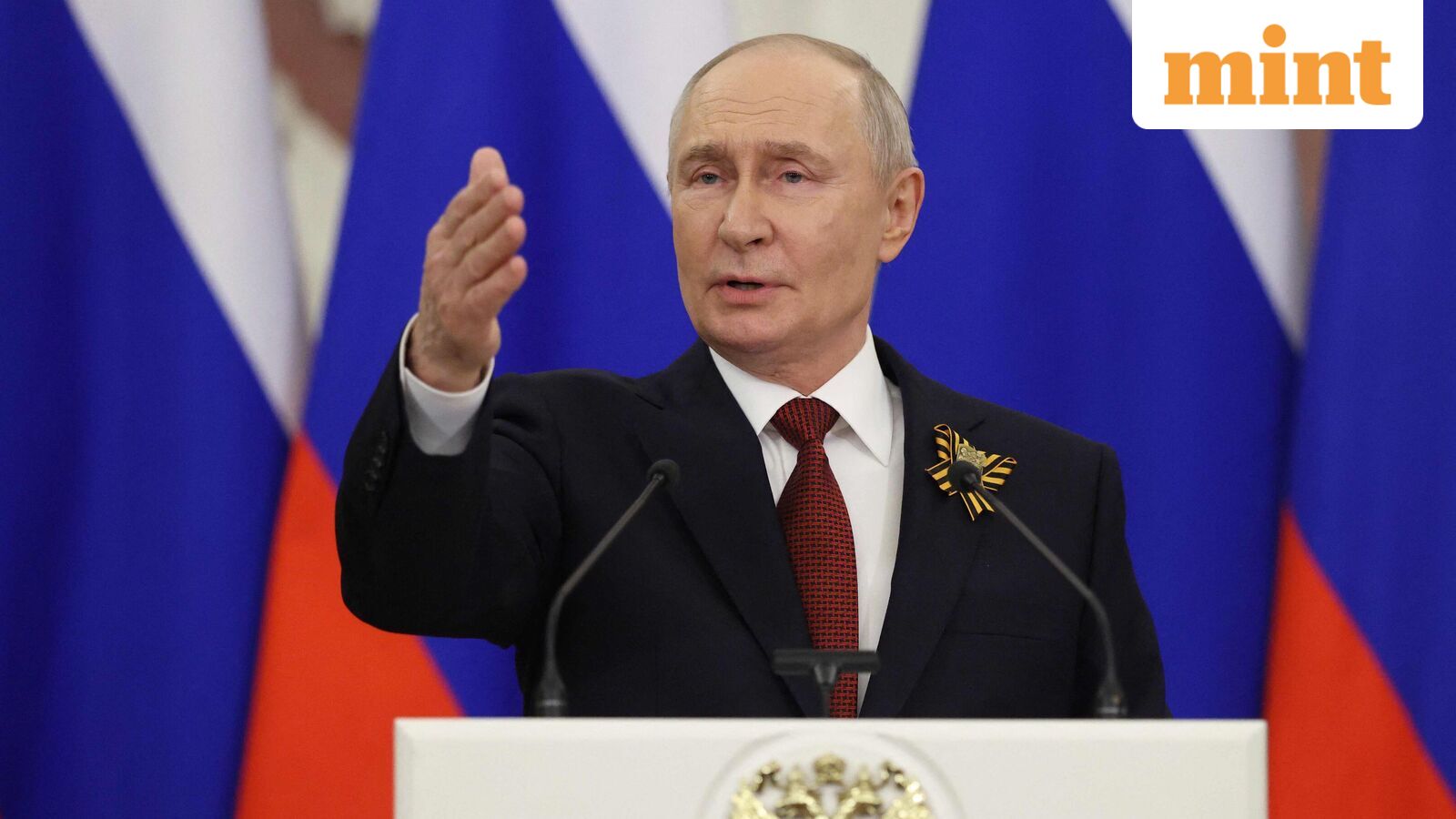
The Kremlin on Saturday (local time) announced that Russian President Vladimir Putin will meet Chinese leader Xi Jinping on his two-day trip to Beijing next week.


The Kremlin on Saturday (local time) announced that Russian President Vladimir Putin will meet Chinese leader Xi Jinping during his two-day trip to Beijing next week.
The two leaders will discuss bilateral relations, economic cooperation, and “key international and regional issues,” CBS News reported, citing the Kremlin.
Earlier on Thursday, Kremlin spokesperson Dmitry Peskov said that Putin’s visit to China would take place very soon and that preparations for the trip had already been completed, Reuters reported.
Here’s what to expect from the upcoming meeting
Putin’s trip to Beijing is scheduled for May 19–20, and the visit will coincide with the 25th anniversary of the 2001 Sino-Russian Treaty of Friendship, the Russian government said. The Kremlin also stated that, following the meeting, the two sides are expected to sign a joint statement “at the highest level,” along with several bilateral intergovernmental, interdepartmental, and other documents.
Russia-China relations
Bilateral ties between Moscow and Beijing have strengthened in recent years, especially since Russia launched its full-scale invasion of Ukraine in early 2022 — a move that left Moscow increasingly isolated on the global stage and heavily reliant on Beijing for trade amid expanding Western sanctions.
The two leaders have met at least 40 times over the past several years. In 2022, Putin and Xi signed a “no limits” strategic partnership less than three weeks before Russia launched its war in Ukraine.
The last meeting between the two leaders took place in September 2025, when Putin visited China and was welcomed by Xi, who referred to him as an “old friend.” The Russian leader also addressed Xi as a “dear friend.”
Putin is also scheduled to visit China for the Asia-Pacific Economic Cooperation (APEC) summit in the city of Shenzhen in November.
The announcement of Putin’s visit came nearly a day after US President Donald Trump concluded his trip to China, marking the first visit by an American president to the country in nearly a decade.
US president visits China
During his two-day visit to Beijing, Trump discussed trade and the US-Iran war with his Chinese counterpart. While the two leaders described their meetings as “historic” and “landmark,” Trump’s visit to Beijing concluded without any agreements being announced.
The US president highlighted the success of his visit, saying Chinese officials had opened the door to new areas of cooperation with Washington. According to media reports, although the meetings featured warm exchanges between the two leaders, no concrete agreements have yet materialised. Wendy Cutler, a former negotiator in the Office of the US Trade Representative, told CBS News that “so far, it doesn’t seem like Trump and his team have a lot to show for the visit.”
Over the past three days, the two leaders held multiple rounds of talks on a wide range of international issues, including the US-Iran conflict and trade tensions between their countries. The discussions concluded on Friday with a private meeting at Zhongnanhai, the tightly secured leadership compound in Beijing where China’s top officials live and work.
Trump said Xi had pledged not to supply military equipment to Iran after US intelligence reports claimed Beijing was planning to send missiles to the Islamic Republic. The US president also said that his Chinese counterpart agreed that the Strait of Hormuz should remain open, adding that Xi had offered to help keep the strategic waterway operational. Trump claimed the route had effectively been shut down by Iran’s Islamic Revolutionary Guard Corps (IRGC) since the war began in late February.
Trump also invited the Chinese leader, along with his wife, to Washington for a visit on September 24.
About the Author
Swati Gandhi
Swati Gandhi is a digital journalist with over four years of experience, specialising in international and geopolitical issues. Her work focuses on foreign policy, global power shifts, and the political and economic forces shaping international relations, with a particular emphasis on how global developments affect India. She approaches journalism with a strong belief in context-driven reporting, aiming to break down complex global events into clear, accessible narratives for a wide readership.
Previously, Swati has worked at Business Standard, where she covered a range of beats including national affairs, politics, and business. This diverse newsroom experience helped her build a strong grounding in reporting, while also strengthening her ability to work across both breaking news and in-depth explanatory stories. Covering multiple beats early in her career has helped her be informed about her current work, allowing her to connect domestic developments with wider international trends.
At Live Mint, she focuses on international and geopolitical issues through a business and economic lens, examining how global political developments, foreign policy decisions, and power shifts impact markets, industries, and India’s strategic and economic interests.
She holds a Bachelor’s degree in English (Honours) from the University of Delhi and a Master’s degree in Journalism and Mass Communication from Guru Gobind Singh Indraprastha University. Her academic training has shaped her emphasis on precision, analytical rigour, and clarity in writing. Her interests include global political economy and the intersection of geopolitics with business.
Outside work, Swati focuses on exploring her passion and love for food. From fancy cafes to street spots, Swati explores food like a true foodie.