







Infrastructure company Kalpataru Projects Director Amit Uplenchwar said the company expects around 15% revenue growth in the financial year 2026-27 (FY27) as it expands into overseas infrastructure opportunities and new EPC segments.
The company, which reported over 22% consolidated revenue growth in FY26, is targeting growth in transmission and distribution, buildings and factories, oil and gas, industrials and urban infrastructure. “If we are able to grow at 15% next year… we should be crossing ₹30,000 crore,” Uplenchwar said.
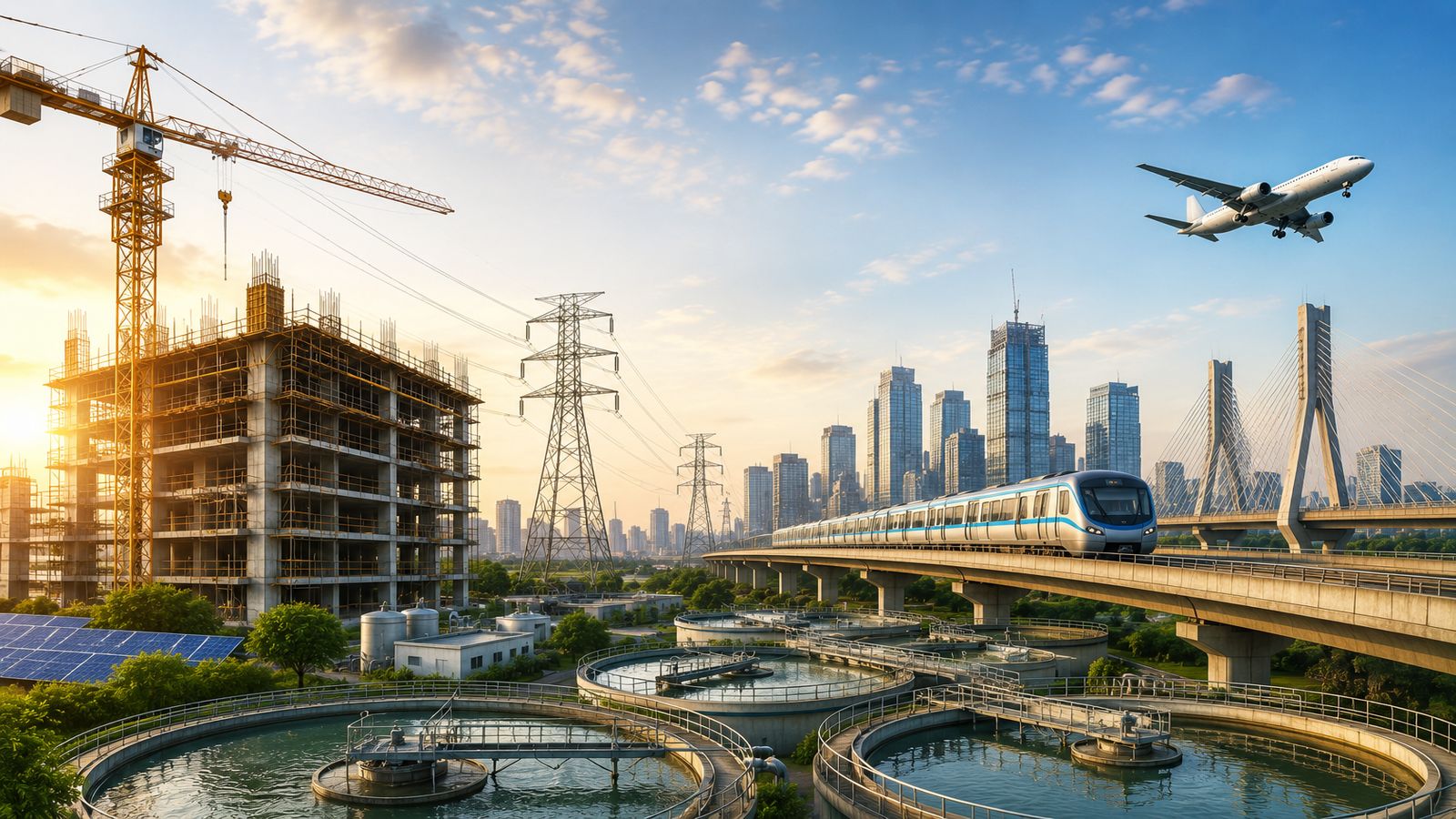
Uplenchwar said the company is building capabilities in battery storage, hydrogen and nuclear EPC projects while exploring overseas opportunities in desalination plants, sewage treatment plants, airport projects and metro infrastructure.
He also sees opportunities in reconstruction projects in economies near Europe. Uplenchwar said water projects overseas could start showing green shoots this year after collections improve in India. The company expects ₹1,600–1,800 crore in pending collections from the water business to be recovered by the end of the first half of FY27.
The company is targeting margin improvement of 75–80 basis points in FY27 after gains made over the last two financial years. He added that disruptions in West Asia have not affected execution or margins despite supply chain delays impacting around ₹200–300 crore of revenue in the January-March 2026 quarter of FY26.
He also said transformer shortages in the broader T&D market are unlikely to impact its focus on high-voltage projects such as 765 KV and HVDC lines.
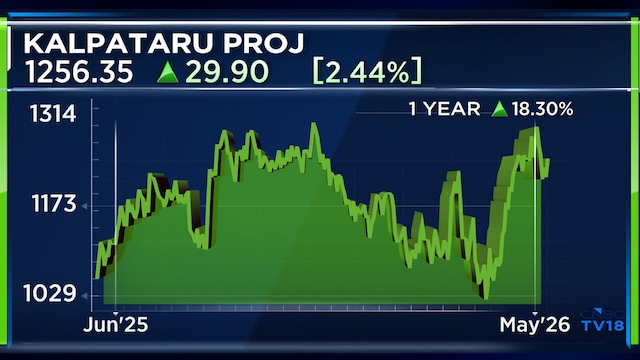

Kalpataru Projects, which has a market capitalisation of ₹21,474.65 crore, has seen its shares rise more than 18% over the past year.
This is an edited transcript of the interview.Q: FY26 saw strong 20%-plus growth in terms of revenues. You’ve given a guidance of 15% for FY27. Apart from West Asia concerns, are there any concerns in terms of the revenue risk that comes in? Also, what are the segments maybe that are going to do well for the company in terms of the opportunity that lies ahead? Any new segments maybe that you are looking at?
A: We said that we’ll do in excess of 20% last year, and we’re quite happy. At a consolidated level, we did cross 22% in terms of revenue growth. The last five-year CAGR for us on revenue has been around 16%, and we are cautious when we say we’ll do 15% next year because there’s a lot of disruption, not just in the West Asia. Also, there’s an impact of that in India. And for us to scale responsibly means we also need to add management bandwidth, so that our balance sheet is not impaired in any way whatsoever, and our margins are not compromised.
So if we are able to grow at 15% next year, at a scale where we already are, and if you look at our ₹22,000 crore number where we closed last year, we should be crossing ₹30,000 crore, and that’s what we look at.
Also Read | Welspun Enterprises expects 15-20% revenue growth backed by ₹20,000 crore order book
Instead of looking at newer places, we are building capability in several new areas like battery storage, hydrogen, and the nuclear sector from an EPC standpoint. But what we want to do is take some of our other businesses overseas, like water. We are seeing a massive opportunity in West Asia, be it desalination plants or STPs, etc. We want to take our urban infra division overseas.
We are seeing a lot of opportunity in reconstruction works in some of the developed economies close to Europe. Plus, we are seeing Metro projects coming up. Airport projects are also areas that we are tracking overseas.
So far as our business units are concerned, transmission and distribution business, our building and factories division, industrials business, oil and gas, and urban infra are areas which we see growing and contributing to this 15%, we are going to be cautious on our railway business in terms of growth, and hopefully water starts to show green shoots in terms of EPC business overseas this year.
Q: West Asia is around 8–9% of your order book as of now in terms of geography. So just to get it clear, one, is there any impact in terms of margins that one could see coming in in Q1FY27 because of the West Asia issues? What are your contracts like? Are they fixed or variable over there? Is there a possibility of pass-through? And has the work now restarted in West Asia? Was there any concern on that front?
A: To start with your last question first, we’ve not had any stoppage of work in West Asia on the 8–9% order book that we have, so construction goes on. Yes, there have been safety concerns where maybe for a day or two we stopped work, but there was no stoppage of work as such. So, there was no hit in terms of our margins.
Yes, there were certain supply chain issues, which caused deliveries to be postponed last year, and hence, you see a little drop in our Q4 revenue growth. That was primarily because we lost ₹200–300 crores of revenue due to supply chain issues. But I don’t see any margin dent whatsoever in that 8% order book because of these disruptions going forward.
Q: What about overall margins for FY27 as well? You said you’re focusing on T&D, building and factories, and oil and gas. All of that is doing well, that’s where the trend is. So that has better margins. So, does that lead to more room for margin improvement from here on?
A: So most certainly. We are thinking of doing at least 75 basis points (bps) of margin improvement going forward this year. This is already coming at the back of a significant margin improvement in the last two financial years. So, getting our margin up by 75 to 80 bps in the current financial year will be a good achievement for us at the KPI level.
Q: There is a lot of word going around that there is a transformer shortage. Anything on the ground that you could help us understand about the current situation?
A: So, yes, there is, in general, in the T&D space, a situation where across all suppliers, their factories are booked out for the next two to three years because of the sheer surge in the number of orders that are coming. But from our perspective, we are looking at the high end of the T&D segment, which is the 765 KV or the 800 KV HVDC lines.
Also Read | Govt imposes export tax on petrol for first time as West Asia war keeps oil prices high
And in that, of course, the transformers are either procured by the client or by us, being both government and private sector projects, and there are strategic alliances that they have. So, I don’t see that as a challenge for us, per se. But yes, smaller-rated transformers could be a problem, but that’s not the segment that we are looking at — 200 KV, etc., in India. So, I’m not overtly worried.
For the full interview, watch the accompanying video

Q: What is the current situation in terms of that? The collections we’ve spoken about in the past as well. You did touch upon it a bit. But by when do you see this maybe completely going off, with the collections coming in as well? First half of FY27 — is that expected?
A: So what we hear is that close to the end of H1, we still have ₹1,600–1,800 crore to collect, because of which we’ve also had no growth in our water business last year. Otherwise, we would have had even more revenue growth. We were very cautious that we will not pursue growth in the water business at the cost of denting our balance sheet.
But there have been collections in the last quarter of last year and also in April this year. So, we are hoping that by the end of H1, we should have our monies collected, and throughout the full year, most certainly. Then we start looking at water projects more outside of India, rather than just looking at India as a market, as we did over the last couple of years.


