

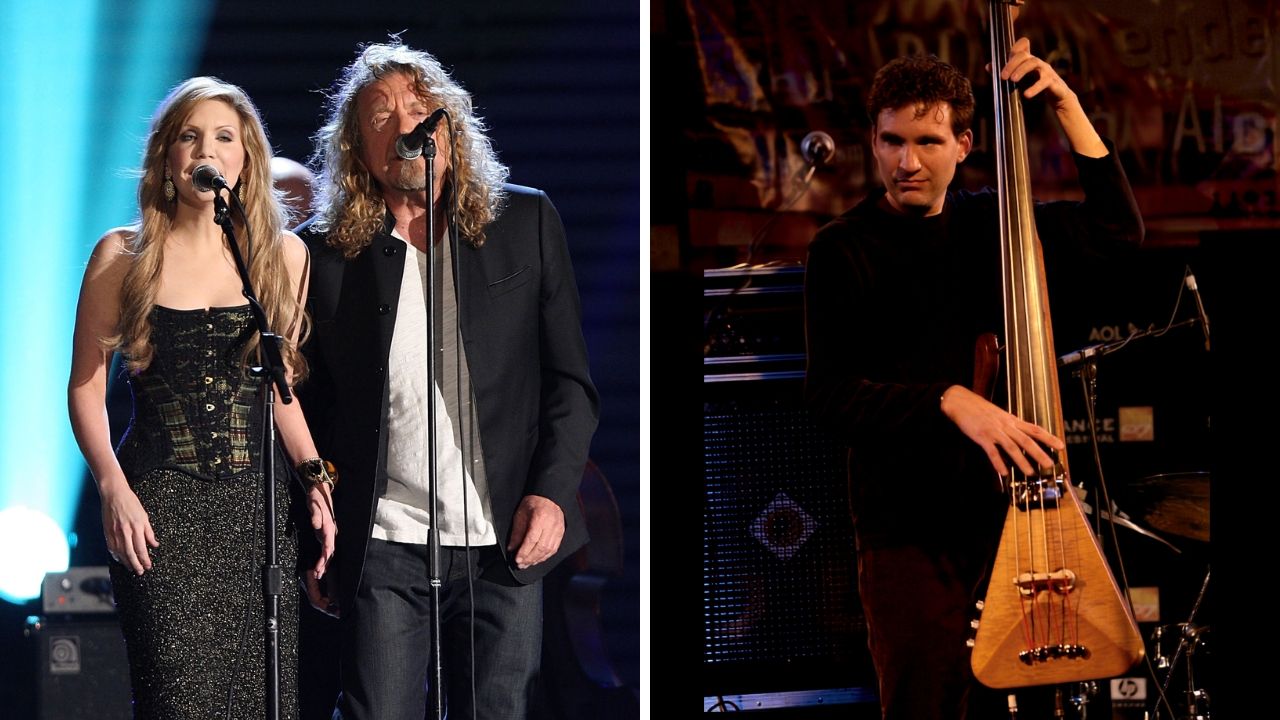

Since emerging alongside singer-songwriter Lyle Lovett in the 1990s, Viktor Krauss has forged a formidable reputation as a modern-day session player on both the electric and acoustic bass.
His intuitive bass work can be heard on Bill Frisell’s Gone, Just Like A Train and James Taylor’s American Standard, while his talent pool as a gifted multi-instrumentalist has been tapped by Alison Krauss in support of her collaborative work with Led Zeppelin frontman Robert Plant.
“Stuart Duncan and I became the utility players in that band,” says Krauss. “I played electric guitar, acoustic guitar, six-string Danelectro bass, tic-tac bass, keyboards – whatever was needed. Stuart was doing the same thing with banjo, mandolin, fiddle, and a whole range of instruments. It was a lot of fun.”
High points of his career are many, but working alongside Plant ranks among the highest. “The thing that struck me most is that he’s exactly the person you’d hope he’d be. He’s incredibly smart, gracious, and makes eye contact with everyone. Nobody feels left out of the conversation when he’s around.
“Every now and then I’d see footage of Led Zeppelin from 1973 and suddenly remember, ‘Oh right – he actually lived all of that.’”
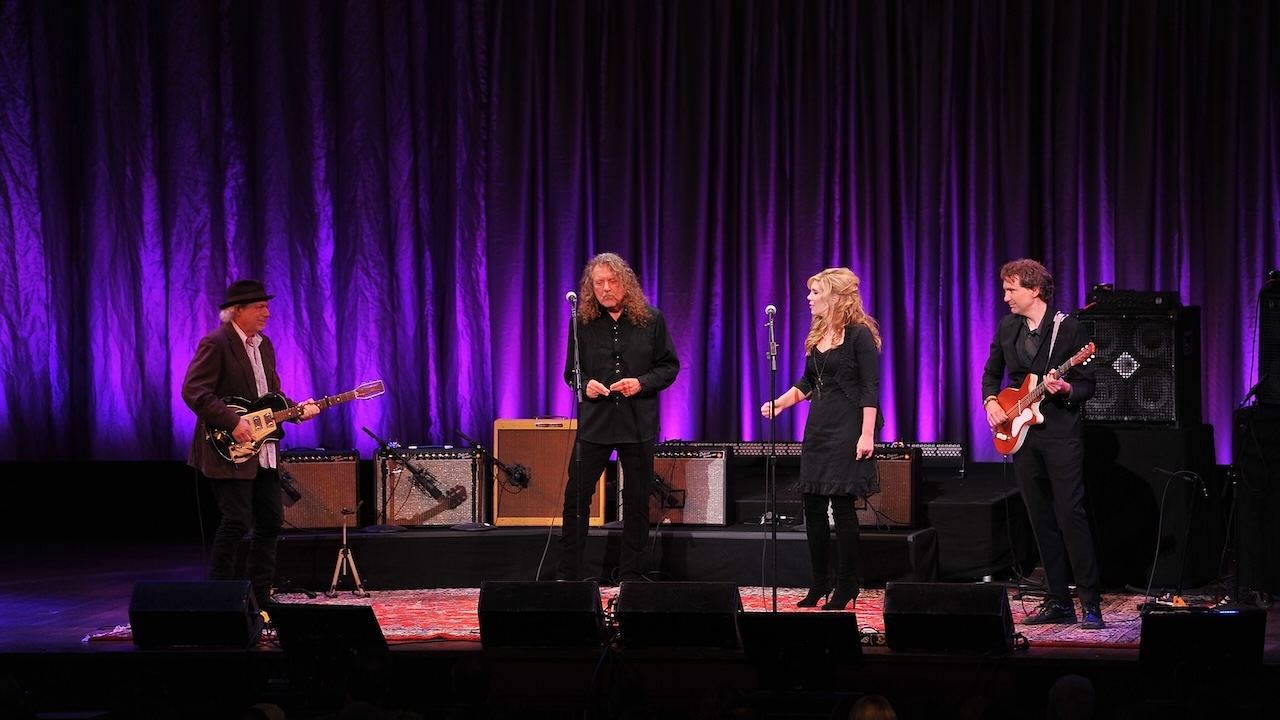
“Sometimes he’ll instinctively create a little extra tension before a phrase resolves, and everybody has to react in real time. His intuition is incredible, and you have to stay on your toes because he’s constantly improvising.
“As someone who grew up as a huge Led Zep fan, there were moments where he’d play a phrase that sounded like something straight out of a Zeppelin record.
“I remember one rehearsal Robert asked, ‘Do you know a Led Zeppelin song called The Ocean?’ I just casually answered, ‘Yeah, I think I know that song.’ Those moments were all pretty amazing.”
How did you get the gig with Lyle Lovett?
Even before I moved to Nashville, I’d heard The Large Band record and started thinking seriously about where I wanted my career to go.
I’d spent a lot of time playing big band music, but what Lyle was doing felt unique. He was blending swing, country, and a lot of other influences, and I remember thinking as early as 1989 that I’d like to play with him someday.
When I moved to Nashville in 1992, I started trying to figure out who was on his team. Through various connections, I eventually got to know some people around his management.
At the time, I was playing with Peter Rowan, who was connected to both the bluegrass world through Bill Monroe and the West Coast scene through Jerry Garcia and the Grateful Dead. Peter was this fascinating combination of influences, and through that network I met people who knew Lyle’s camp.
Eventually I called, and introduced myself. The response was, ‘Lyle doesn’t need anybody now, but I’ll keep you in mind.’ So every once in a while I’d check in.
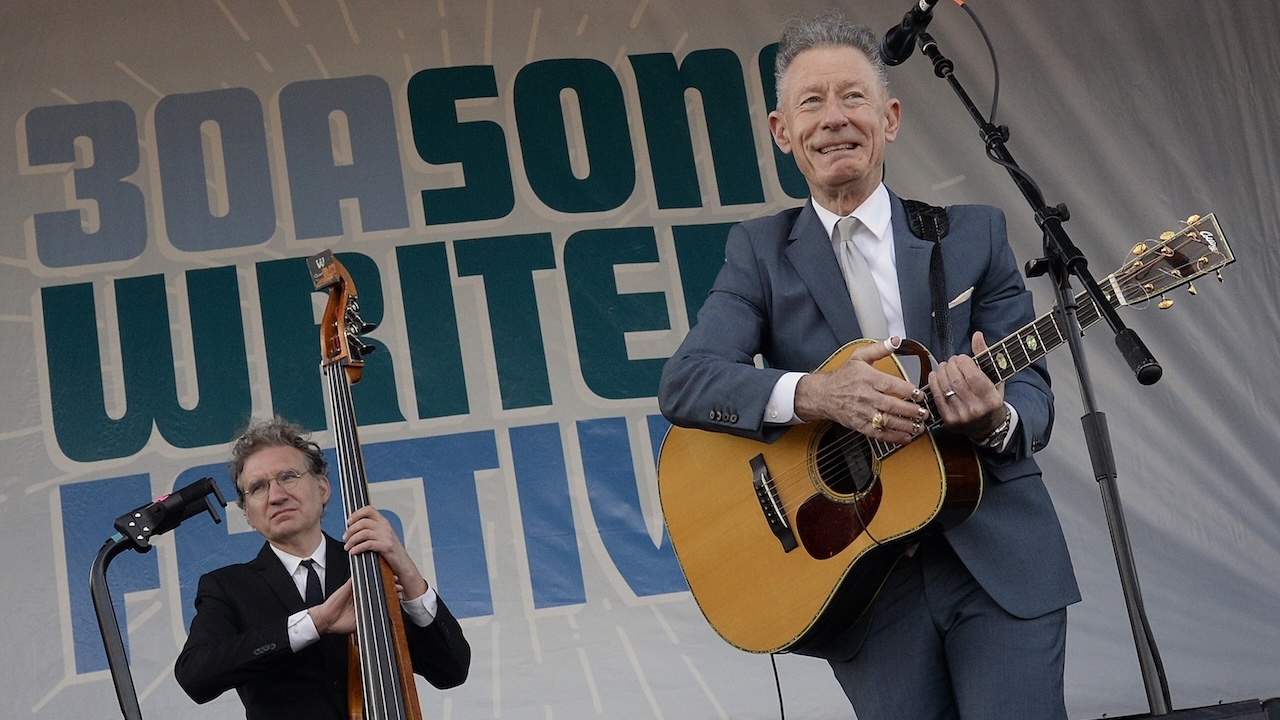
I had a really lean summer in 1994. Peter wasn’t working much, and I just thought, ‘Let me call and see if there’s anything going on.’ Before I could even finish my sentence, the manager said, ‘Oh yeah, Lyle might need a bass player.’
I didn’t know if it was actually going to happen, but about ten days before the tour started, I got the call: ‘You’ve got the gig.’
This was around the I Love Everybody record, which had come out in 1994. It was a huge amount of material to learn. The band was essentially a trio with occasional horns, and the bass parts were pretty demanding. Fortunately, a lot of it featured upright bass, which played to my strengths.
I learned all the material, and from that point on I stayed with Lyle for most of the next 10 or 12 years. There were a few breaks when we were raising kids, but I worked with him regularly until 2022, when I started working more with Robert Plant and Alison. It was an incredible run. I still occasionally do shows with him. I played a couple this year, and every time it’s just fun.
Can you share some insights on your recordings with Bill Frisell?
Working with Bill was amazing. It’s funny – if people know me for anything, it often seems to be those records, especially Gone, Just Like A Train. That’s the one that comes up most often.
I didn’t know Bill before working with him. When he was making the Nashville record, a few people recommended me because I had experience in both jazz and bluegrass circles. They thought I might be a good fit.
Blues for Los Angeles – YouTube
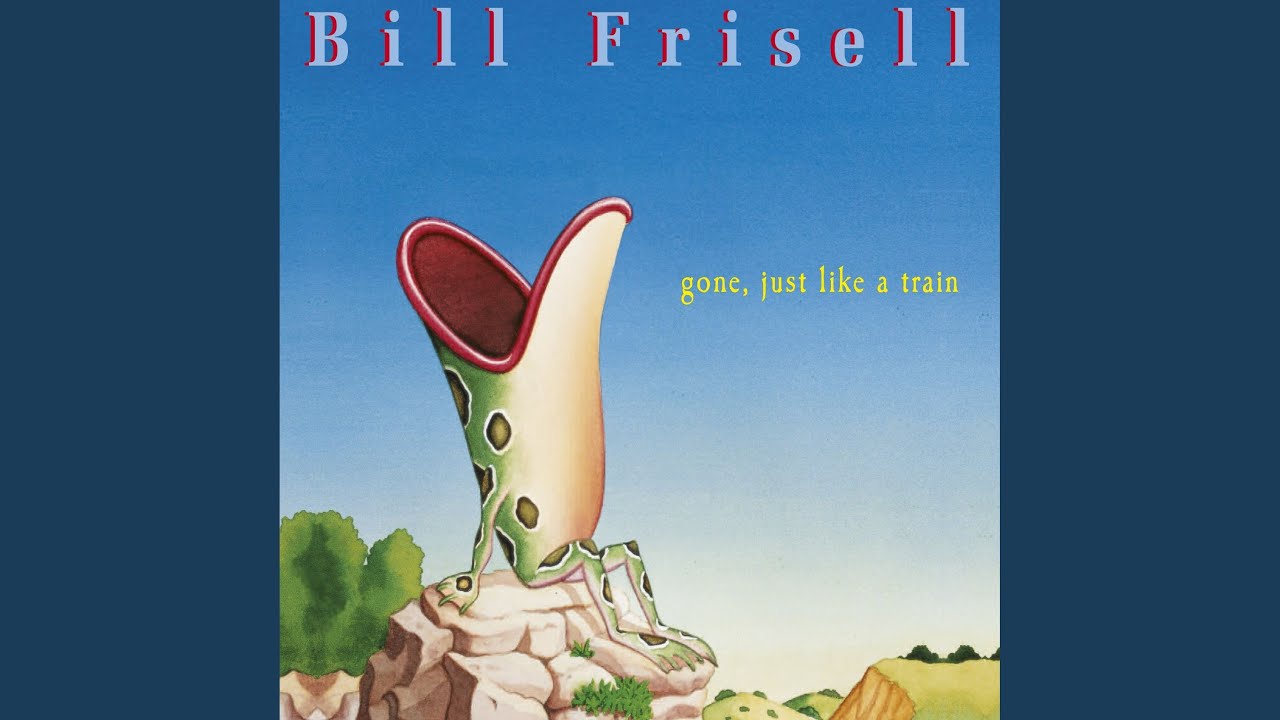
I remember talking to him on the phone, then meeting in the studio in September 1995. We started playing together and I immediately thought, ‘Wow. What is this?’ We seemed to hit it off right away.
We made several records: Nashville, Gone, Just Like A Train, Good Dog, Happy Man, The Sweetest Punch, which was a collaboration involving Burt Bacharach and Elvis Costello. That’s the most overtly jazz-oriented thing I did with Bill.
That record featured Brian Blade, Curtis Fowlkes, and Billy Drewes. I remember feeling like I was part of a very special group of musicians. We also did projects like Disfarmer and some soundtrack work.
Those records were all wonderful experiences because everything made sense to me. I had enough experience in the different musical worlds he was drawing from that I felt very comfortable in that environment.
What was your goal on Gone, Just Like A Train?
On that album, it was just Bill, Jim Keltner, and me. Jim could go way out, Bill could go way out, and I was perfectly happy being the thing that held it all together. That role was more enjoyable to me than playing lots of solos.
Some of the bass parts he wrote out very specifically, almost like piano music, with split staves showing melody and bass movement, but what I really enjoyed was being the anchor.
How about James Taylor?
I initially overdubbed on one or two songs for his American Standard album, but it eventually turned into nine tracks. Some of those overdubs were even recorded from a hotel room while I was out on the road.
American Standard: Sit Down, You’re Rockin’ the Boat | James Taylor – YouTube
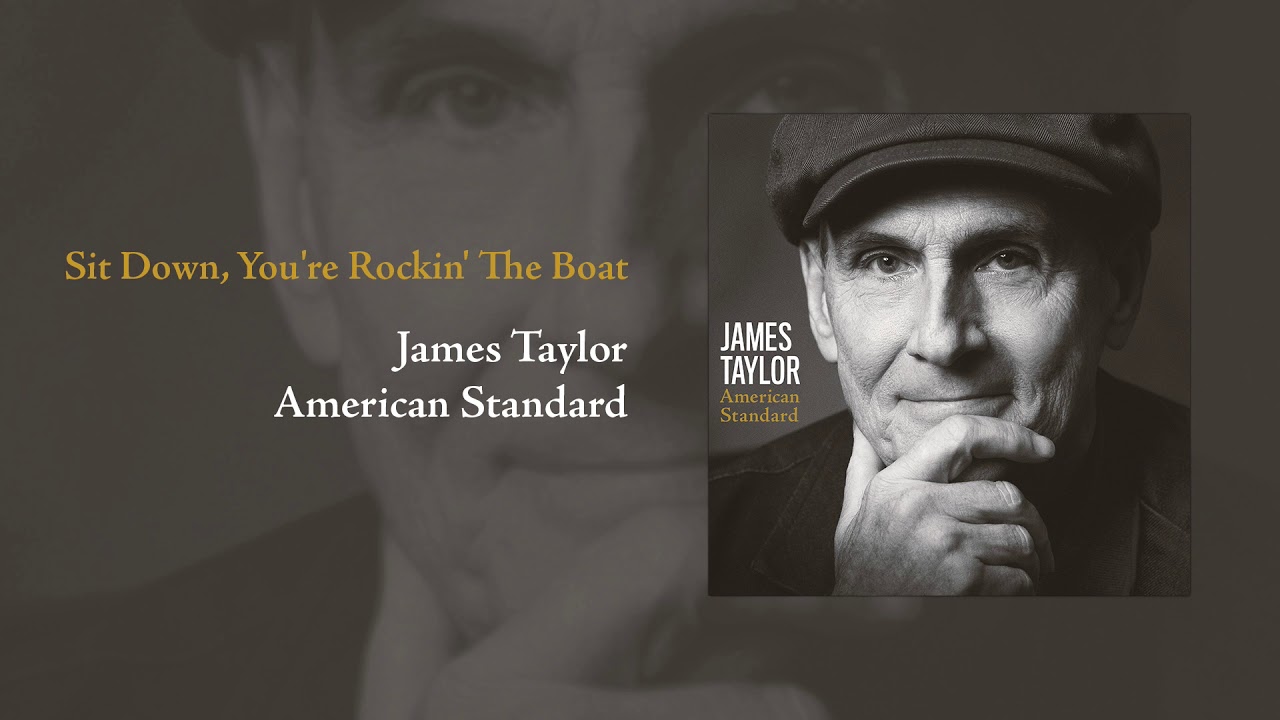
I only spent one day with him in person, but he was everything you’d hope he’d be – kind, thoughtful, and easy to work with. He was another one of those people who completely lived up to the image you have of them.
I’d listened to him so much growing up that when I started playing on those tracks, I realized all I really needed to do was listen to the lowest note of his guitar part and support that. It was a really fun way to fit into the music.
Do you have a go-to bass tone?
My favorite bass sound is actually the live bass tone on No Quarter by Led Zeppelin. John Paul Jones was using those Fender bass pedals, and I have a set myself. They’re organ-style pedals, which give you a huge, thick fundamental low-end. That’s what I’m often chasing on upright bass.
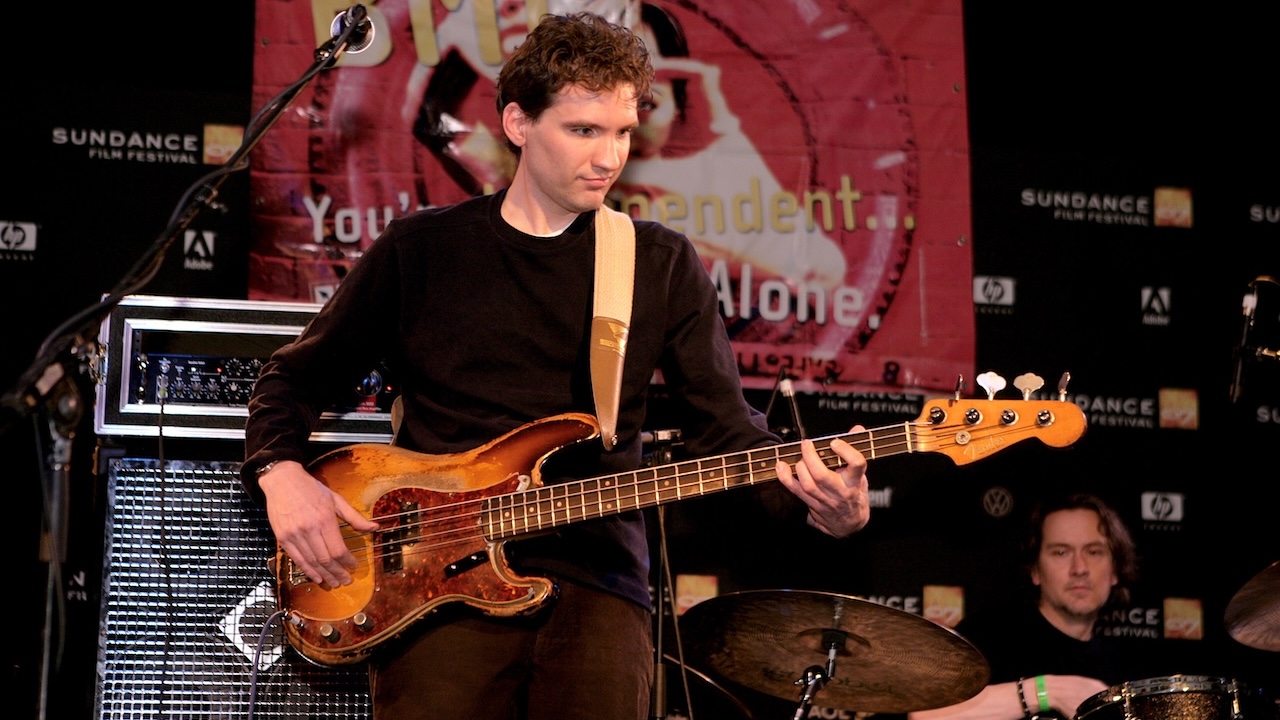
For bass guitar, a lot depends on right-hand placement and how much attack you want. I tend to like flatwound strings with a strong lower-mid-range presence. Something warm and substantial that can be shaped easily in a mix.
How do you setup in the studio?
For upright bass, I have a default microphone position that I like, and I always run a direct signal at the same time. Then I leave it up to the engineer to decide how much of each source they want in the final mix.
I use a Fishman BP-100 pickup. It has a lot of upper-mids and top-end, which helps me hear the pitch more clearly. It’s an insurance policy for playing in tune.
Electric bass is more variable. It depends on the project. Is it a modern record? Something vintage-sounding? Does it call for a short-scale bass? A Precision Bass? A Jazz Bass? Something active? Usually the song dictates the choice.
What skills do musicians need to be successful?
It’s interesting because when you look at successful musicians versus incredibly talented musicians who never quite get the break they’re hoping for, talent alone isn’t usually the deciding factor.
In places like Nashville, it’s almost assumed that you’re a good musician. That’s the minimum requirement. A lot of success comes down to professionalism. Being prepared. Being on time. Being pleasant to work with. Showing genuine enthusiasm for what other people are doing. People want to be around people who seem excited to be there.
Networking matters too. Years ago, I would regularly go through my address book and call people I hadn’t spoken to in a while. I’d reconnect, catch up, and maintain those relationships. Today that often happens through texts and emails, but the principle is the same.
Shine On You Crazy Diamond – YouTube
How about from a playing perspective?
From a playing perspective, I think it’s important to stay open and listen to lots of different music. I don’t really have a strict practice routine. I just enjoy playing.
Even if I’m playing guitar instead of bass, it’s all connected. The more you’re playing, the more alert and responsive you become musically.
I always felt my best after a long tour. It’s like exercising a muscle. If you’re in shape, you’re always going to play better.