


Tsvetana Paraskova
What I Cover
Tsvetana Paraskova is an energy and commodities journalist who has contributed to Oilprice.com for nearly a decade, covering global energy markets, commodities,…
Set us as your preferred Google source
Premium Content
By Tsvetana Paraskova – Jun 08, 2026, 6:00 PM CDT
- Iran-Israel tensions have exposed how fragile oil supply remains, with markets potentially underestimating the risk of further disruptions despite the Strait of Hormuz already being effectively closed.
- A Houthi move against the Bab el-Mandeb Strait could trigger a far bigger supply shock, threatening Saudi Arabia’s key alternative export route and potentially removing millions more barrels per day from global markets.
- Saudi exports currently rely heavily on the East-West pipeline and Red Sea route, but a Bab el-Mandeb disruption would force much longer shipping routes around Africa.
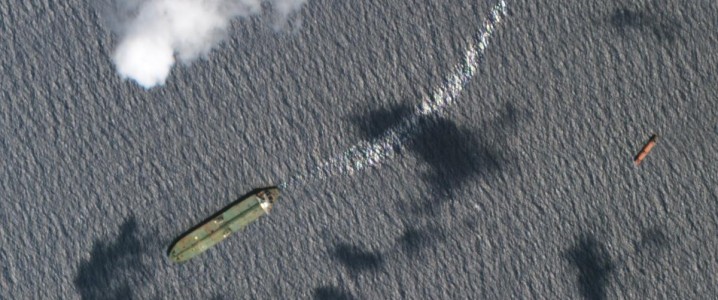
This weekend’s escalation between Iran and Israel showed just how hopes of a deal could be, and how traders may be too complacent about the ongoing oil supply disruption.
Since Iran moved to close the Strait of Hormuz more than three months ago, global oil inventories and China’s more than 1.2 billion barrel stockpile, high levels of oil volumes on water, and the ability of Saudi Arabia to quickly re-route its exports not to depend on the Hormuz chokepoint have kept oil prices from soaring to record highs.
But the constantly changing operational and military situation in the Middle East could quickly turn into a disaster for oil supply and into never-seen price spikes if Iran’s allies in Yemen, the Houthis, move to block the other major chokepoint in the region, Bab el-Mandeb.
Even before the latest Israel-Iran escalation, Iran’s Islamic Revolutionary Guard Corps (IRGC) last week threatened, again, to close the Bab el-Mandeb Strait.
Considering how Tehran managed to effectively halt traffic through the Strait of Hormuz, its Houthi allies – who have largely stayed away from the current hostilities so far – could simply attack a couple of tankers offshore Yemen for traffic through Bab el-Mandeb to collapse amid fears of further attacks and choke off the oil exports from Saudi Arabia.
Related: The Iran Stalemate Could Be the Next Oil Supercycle Trigger
A massive reduction of Saudi oil exports would escalate the war to a new level, and the price of oil to new heights.
Overall traffic through Bab el-Mandeb has been subdued since 2023, when the Iran-aligned Houthis in Yemen began attacking ships in the Red Sea soon after the outbreak of hostilities between Israel and Hamas.
Related: The Iran Stalemate Could Be the Next Oil Supercycle Trigger
Commercial maritime transport rerouted from Bab el Mandeb to the Cape of Good Hope in Africa, adding weeks to journeys between Europe and Asia.
In 2025, the Houthis largely stopped their attacks on commercial shipping in the Red Sea after an Israel-Hamas ceasefire. But traffic never recovered to early 2022 levels.
Yet, since the Strait of Hormuz was closed, shipments of one particular item through Bab el-Mandeb soared. This is the crude oil from Saudi Arabia, the world’s top crude exporter, which has so far remained relatively unscathed by the Hormuz blockage, thanks to the Red Sea route via the Bab el-Mandeb Strait.
Saudi oil exports, especially of its prized Arab Light grade, from the Red Sea port of Yanbu soared as the Kingdom moved to use its East-West pipeline to capacity.
Saudi oil giant Aramco last month said in its first-quarter earnings that capacity on the East-West pipeline to the Yanbu port reached its maximum of 7 million barrels per day (bpd).
“Our East-West Pipeline, which reached its maximum capacity of 7.0 million barrels of oil per day, has proven itself to be a critical supply artery, helping to mitigate the impact of a global energy shock and providing relief to customers affected by shipping constraints in the Strait of Hormuz,” Aramco’s president and CEO Amin Nasser said.
If tanker traffic through Bab el-Mandeb is disrupted by Houthi attacks, Saudi Arabia could lose part of its exports, and the world would lose millions of barrels of oil per day, on top of the about 13 million bpd already lost because of the closed Strait of Hormuz.
“If the Houthis were to disrupt traffic through the Bab el-Mandeb Strait, Asian buyers would further lose access to already constrained Middle Eastern crude supplies,” Muyu Xu, senior crude oil analyst at Kpler, said at the end of March, one month after the Iran war began.
Tanker traffic could be rerouted westward via the Suez Canal and then around the Cape of Good Hope to deliver Saudi crude to Asia. But such a voyage would take nearly 50 days—more than double the transit time via the Red Sea, Xu added.
This would effectively reduce prompt availability in the market—and would significantly raise costs, due to higher freight rates, increased fuel consumption, and reduced market efficiency as supertankers cannot move through the Suez Canal, the analyst said.
By Tsvetana Paraskova for Oilprice.com
More Top Reads From Oilprice.com
- EU Says No Jet Fuel Shortage Coming Despite Middle East Supply Loss
- UK Conservatives Blast Labour North Sea Ban as ‘Utter Madness’
- Australia’s 344-Million-Barrel Oilfield Could Finally Get the Green Light
Download The Free Oilprice App Today


Tsvetana Paraskova
What I Cover
Tsvetana Paraskova is an energy and commodities journalist who has contributed to Oilprice.com for nearly a decade, covering global energy markets, commodities,…
