Key Takeaways:
- Ripple is collaborating with Kyobo Life to conduct tokenized government bond settlement in Korea.
- The initiative accepts the use of Ripple Custody to settle in a secure and on-chain way in a regulated environment.
- The objectives of the project are to reduce the settlement time by T +2 down to close to real-time and risk mitigation.
Ripple is establishing more institutional presence in Asia with a groundbreaking partnership in South Korea. The company is working with one of the country’s largest insurers to test blockchain-based settlement for traditional financial assets.

Ripple and Kyobo Launch Tokenized Bond Initiative
Ripple announced a strategic collaboration with Kyobo Life Insurance to explore tokenized government bond transactions. The project is concerned with creation of infrastructure enabling the issuance, transfer and settlement of bonds on-chain.
This is the first collaboration of Ripple and a large insurance organization in Korea. It marks the transition to the use case related to crypto-native toward the implementation of blockchain in conventional financial systems.
At the center of the program is Ripple Custody, which serves to enable regulated institutions. It facilitates safe storage, transportation, and settlement of online funds.
Read More: Ripple Unveils $13T-Scale Treasury System With Native Onchain Crypto Integration


Faster Settlement and Lower Risk
The refinement of the settlement of government bonds is one of the key objectives. In the traditional systems transactions may take two business days.
From T+2 to Near Real-Time
Ripple and Kyobo are trying to perform transactions just about instantly by shifting settlement on-chain. This will minimize counterparty risk and capital is liberated quicker.
Atomic settlement enables both parties to a transaction to transact simultaneously. This eliminates the time lag in delivery of payment and assets. Transparency is also brought by the system. All transactions can be recorded on-chain, eliminating the need to use manual work and systems that are not interconnected.
Expanding Into Stablecoin Payments
In addition to bonds, the partnership will consider new means of payments. Ripple intends to incorporate rails utilizing stablecoins in order to support 24/7 transactions.
This would allow institutions to move funds continuously instead of being limited by banking hours. It also opens the door to programmable payments and automated treasury operations.
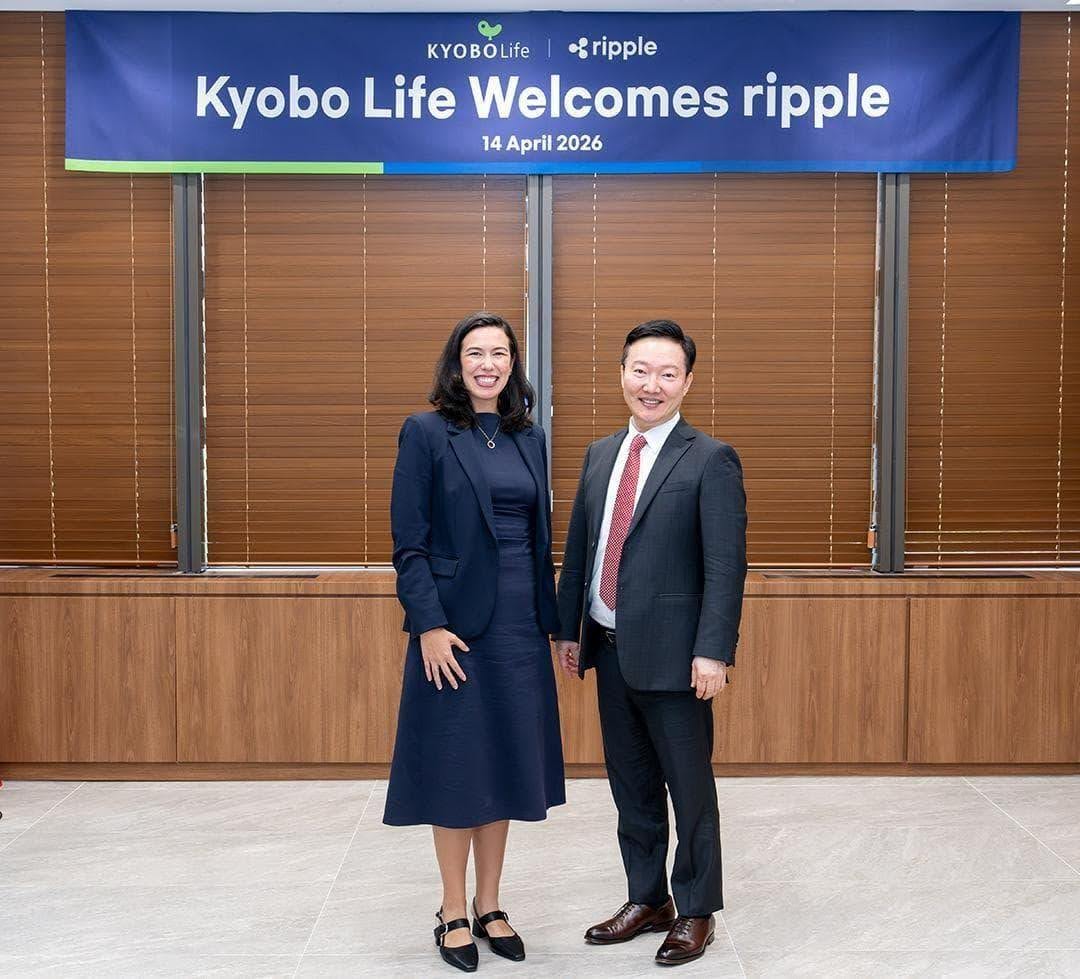
According to Fiona Murray, Korea’s financial sector is at a turning point where blockchain infrastructure is ready for real-world deployment.
Read More: Ripple CEO Says Crypto Is Rewiring Finance as Global Firms Rush Into Stablecoins
Korea Emerges as Key Institutional Market
South Korea has developed one of the most structured regulatory environments for digital assets. Licensed platforms are conducted under obvious control, and they are of interest to institutional players.
In the case of Ripple, entering this market offers them access to controlled funds and corporate customers. The partnership with Kyobo creates a direct pathway into the country’s financial ecosystem.
Kyobo views the project as more than a crypto experiment. Executive Jin Ho Park emphasized that the goal is to validate how traditional financial instruments can operate securely on blockchain.
Building Institutional-Grade Infrastructure
The collaboration reflects a broader trend: tokenization is moving into core financial markets. Blockchain is under testing as an upgrade layer instead of substitute systems.
The strategy used by Ripple involves custody followed by settlement and liquidity. Progressively developing this approach enables institutions to implement blockchain without affecting current operations.
It might become a template of how tokenized assets are implemented at scale by regulated financial institutions as they develop.