







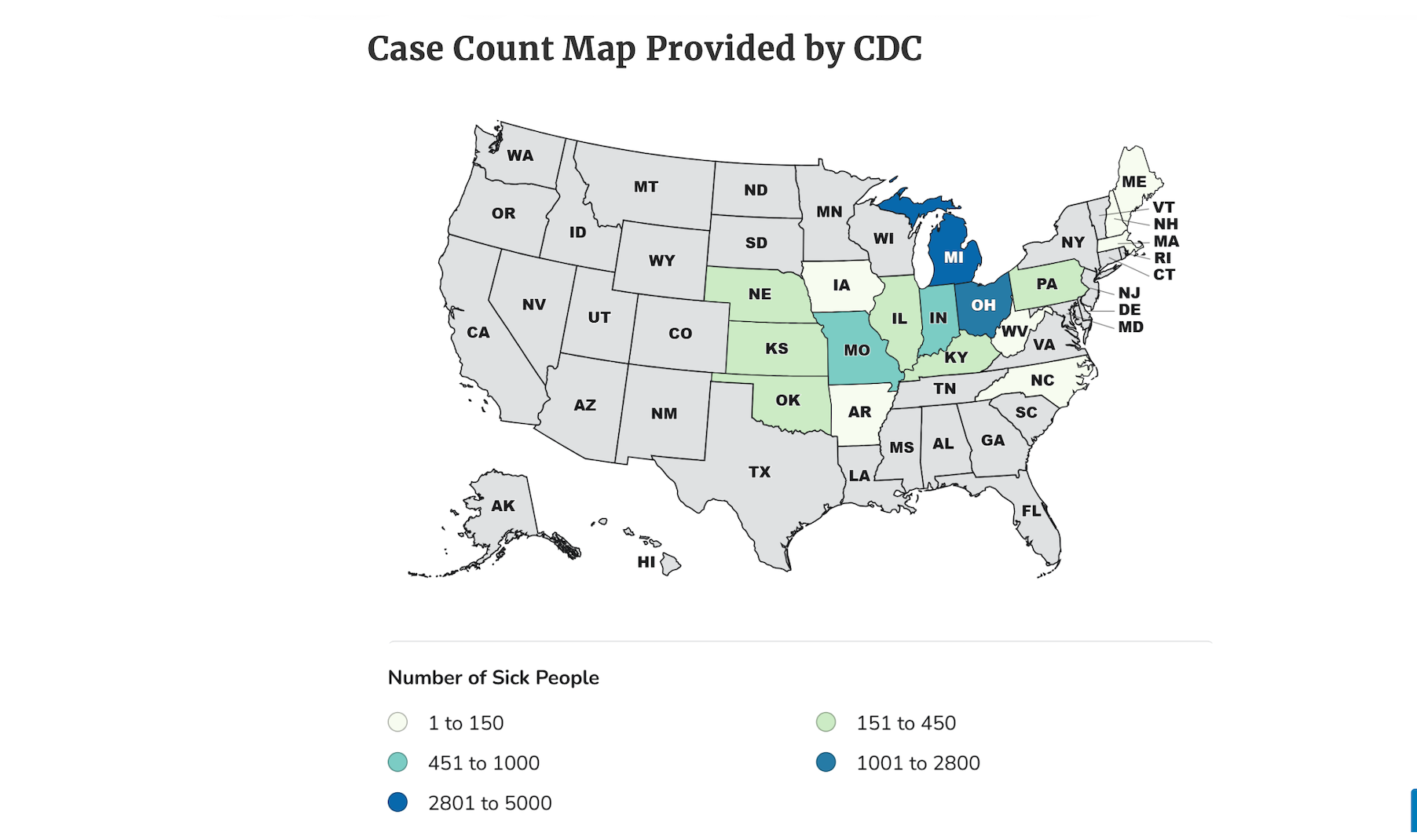
The patient count for an outbreak of infections from the Cyclospora parasite linked to iceberg lettuce has topped 10,000.
The Centers for Disease Control and Prevention is reporting 10,930 patients as of Aug. 21, up from 9,481 reported on Aug. 13. The sick people are spread across 17 states. There are 454 patients who have required hospitalization and two from Michigan have died. Illnesses linked to this outbreak began on June 14 and onset dates have continued through Aug.11.
The outbreak includes people who reported exposure to processed iceberg lettuce from the Taylor Farms growing and processing operation in Central Mexico and served or purchased at various locations, including people who previously reported eating at Taco Bell. Most of these illnesses began before the Taylor Farms iceberg lettuce recall on July 17.
The Food and Drug Administration has begun inspecting the implicated Taylor Farms lettuce growing and production operation.
A recent report by the Government Accountability Office found that FDA averaged only 917 foreign food-facility inspections annually from fiscal years 2018 through 2023 — less than 5 percent of the statutory target established under the Food Safety Modernization Act.
The Taylor Farms operation in question had not been inspected by the U.S. Food and Drug Administration for seven years prior to this year’s outbreak. The facility’s production line includes a wash step, but the FDA reports that washing produce does not remove the parasites. And, chlorine does not kill the parasite.
The outbreak associated with iceberg lettuce is separate from a group of other Cyclospora outbreaks being tracked by the FDA and CDC. Since May 1, the CDC has received reports of 15,716 laboratory-confirmed reports of infections from the Cyclospora parasite. The CDC is reporting at least 828 hospitalizations. The sick people are spread across 47 states, Washington D.C. and Puerto Rico.
For comparison purposes, the CDC logged 1,180 cases of Cyclospora infections from May 1 through Aug. 31 in 2025.
About Cyclospora
Food contaminated with the Cyclospora parasite does not look, smell or taste bad. The parasite is microscopic and amounts of it invisible to the human eye are enough to cause illness.
Anyone who has developed symptoms of Cyclospora infection, and has reason to believe they have been exposed to the parasite, should seek medical attention. Specific tests are required and antibiotics are used to fight the parasite.
Cyclospora infection can cause severe abdominal pain, watery diarrhea, nausea, vomiting, body aches, and fatigue. Symptoms can develop between two and 14 days after exposure. Though symptoms can be severe enough to send people to the hospital, it’s rare for people to die from Cyclospora infections.
Symptoms can last for a month or more and can reoccur for several more months if not treated.
Cyclospora is a type of protozoa, which is a single-celled organism. It is transmitted when people somehow ingest contaminated feces, typically through contaminated food or water. It can be spread only through human waste, unlike E. coli and salmonella, which can also be spread from animal fecal matter.
Previous U.S. outbreaks of cyclosporiasis have been linked to various types of fresh produce, including lettuce, basil, cilantro, mesclun lettuce, raspberries, and snow peas.
Food safety experts say there’s no evidence that washing the produce will remove the parasite because it becomes embedded in the flesh of the produce. Chlorine does not kill the parasite.


