

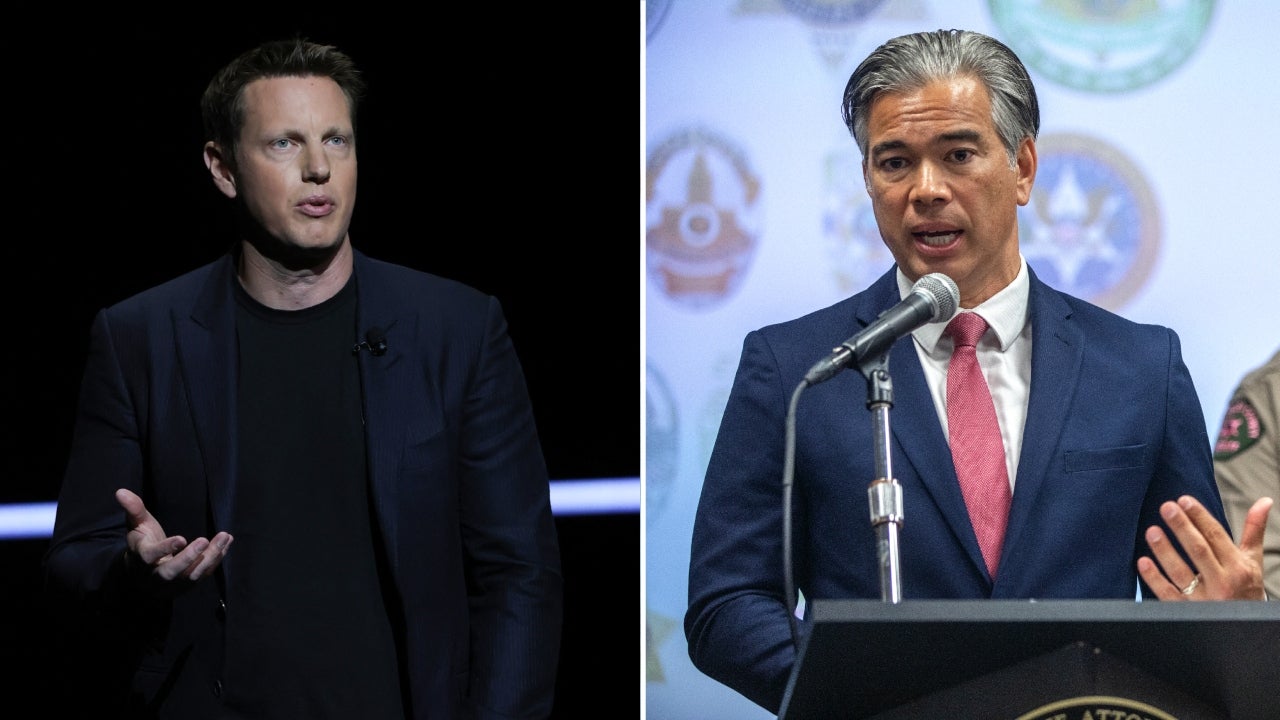
The Paramount-Warner Bros. merger has been put on pause after California Judge Araceli Martínez-Olguín granted a temporary restraining order on Monday, adding a fresh time element to a deal facing a tight deadline.
The move, which comes in response to a lawsuit by a group of 12 state attorneys general, will prevent the deal from closing for 14 days. A hearing for a preliminary injunction has been set for Aug. 3. Paramount needs to close the deal by a Sept. 30 deadline if it wants to avoid paying a penalty.
So what happens next? Below is everything you need to know about the TRO and what happens next:

Why did the judge grant the TRO?
The state AGs argues in their lawsuit that the merger would create an entertainment giant that would control 27% of the wide-release theatrical distribution market, 30% of the submarket comprising “anticipated blockbuster films” and 27% of the basic cable bundle.
The group warns that the deal’s approval could give the combined company increased leverage over movie theaters and cable distributors, lead to an increase in consumer prices and reduce content output.
In her order, Martínez-Olguín said that the states presented “compelling evidence that the combined firm resulting from the transaction will possess substantial market share in the wide-release theatrical distribution market” and that the court is persuaded that the proposed merger is likely to violate antitrust laws on that market share alone.
“Because the Plaintiff States make a strong showing that the Transaction will substantially lessen competition in the wide-release theatrical distribution market, they demonstrate irreparable harm would result if a TRO does not issue,” she wrote. “The Transaction would also be difficult, if not impossible, to unwind if permitted to proceed given the anticipated consolidation of operations, sharing of business-sensitive information, and potential termination or reassignment of employees. The Plaintiff States have sufficiently established that irreparable harm would result in the absence of a TRO.”

How long will the TRO last?
The TRO will last for 14 days, which would push the earliest closing date to August, assuming the merger receives final regulatory approvals. On Wednesday, the European Commission will decide whether to clear the merger or refer it for a more in-depth Phase 2 investigation. There is also an option to extend the TRO by an additional 14 days.
On Friday, Paramount’s attorney Jeffrey Kessler said that a preliminary injunction hearing prior to Sept. 30 was needed in order to prevent the media giant from suffering “very severe harm” due to a 25 cent per share ticking fee for every quarter until closing, translating to around $7 million per day and $650 million per quarter.
Martínez-Olguín wrote in her ruling that Paramount will suffer “no apparent harm in the near term,” but set a preliminary injunction hearing for 3 p.m. PT on Aug. 3. Paramount will have until July 27 to provide their opposition brief, with plaintiffs’ reply due July 30.
“Even if Defendants argued that they would suffer economic harm as a
result of delaying the merger, the equities do not weigh in their favor when contrasted with the potential public harms that would result from consummation of the Transaction, including the loss of competition,” Martínez-Olguín added. “Paramount and Warner Bros. will continue to operate as separate, viable companies competing in the marketplace while they wait for the Court to adjudicate this case. The balance of equities, combined with the public’s vital interest in antitrust enforcement, therefore tips sharply in favor of the requested injunctive relief.”

How did the state AGs react?
California Attorney General Rob Bonta said the ruling is a “critical first win in our case to ensure this megamerger never sees the light of day.”
“History tells the tale of what happens when a few people have great power over markets that are central to Americans’ lives: fewer opportunities for more people, worse products and services for all people,” Bonta added. “With our lawsuit, we’re fighting for a free and fair market and a thriving film and television industry that serves creatives and audiences alike. We have a full tank of gas, the law on our side, and look forward to continuing to make our case.”
In addition to California, states involved in the case include New York, Arizona, Colorado, Connecticut, Massachusetts, Minnesota, Nevada, New Jersey, New Mexico, Oregon and Washington.
What about Paramount?
Paramount said it is “grateful” for the court’s “swift order” on the TRO, which “preserves the status quo while the Court considers the antitrust issues presented.”
“We are confident the evidence will demonstrate that the State AGs’ antitrust arguments are without merit as their alleged markets and claims of anticompetitive effects are without any basis in modern market realities,” Paramount added. “This merger is lawful, pro-competitive, and will benefit consumers, creators, workers, and the entertainment industry. We will continue to vigorously defend the transaction and will look forward to the hearings on the substance of the State AGs’ action.”
What happens if the preliminary injunction is granted?
A preliminary injunction would apply a much longer delay to the deal as the two sides would need to bring their cases to trial. Or it would force Paramount to agree to more significant concessions to avoid going to court.
But Kessler has previously indicated that the company would appeal and is willing to take its fight all the way to the Supreme Court, which could drag the dispute out and delay the merger closing for months — if not longer.
Has Paramount tried anything else?
Paramount Chief Legal Officer Makan Delrahim said that the company has already given the state AGs a list of possible concessions to reach a settlement and that it remains “open to all legitimate discussions” to address potential antitrust harm.
“[We got no] response. Crickets for two months. You know why? Because they just wanted to bring the lawsuit. That’s fine,” Delrahim told Puck’s The Town Podcast on Monday. “But they should settle this thing if they if they really want an enforceable commitment.”
Bonta told a KQED Forum that the state AGs would prefer structural remedies over behavior remedies, arguing the latter is difficult to enforce. He also has emphasized that a CNN sale on its own is not enough to satisfy the states’ concerns.
“What’s a structural remedy? It means keeping corporate entities separate,” Bonta said. “Having a suite of cable channels that remain separate from this merger, from this merged company. Having a streaming service that’s separate. Having a news channel or a TV studio that’s separate. Having a film studio that’s separate. So we would be interested in considering structural remedies, but the behavioral remedies have traditionally not proven to be effective.”
What’s the final deadline for this deal?
Per the terms of the merger, the outside date for its closing is slated for 11:59 p.m. ET on March 4, 2027. That is subject to one automatic extension to June 4, 2027 if all closing conditions except for regulatory approvals and governmental orders have been satisfied or waived.
The ticking fee will take effect starting Oct. 1. In the event the merger does not close at all due to regulatory matters, Paramount is on the hook to pay WBD a $7 billion termination fee.

