







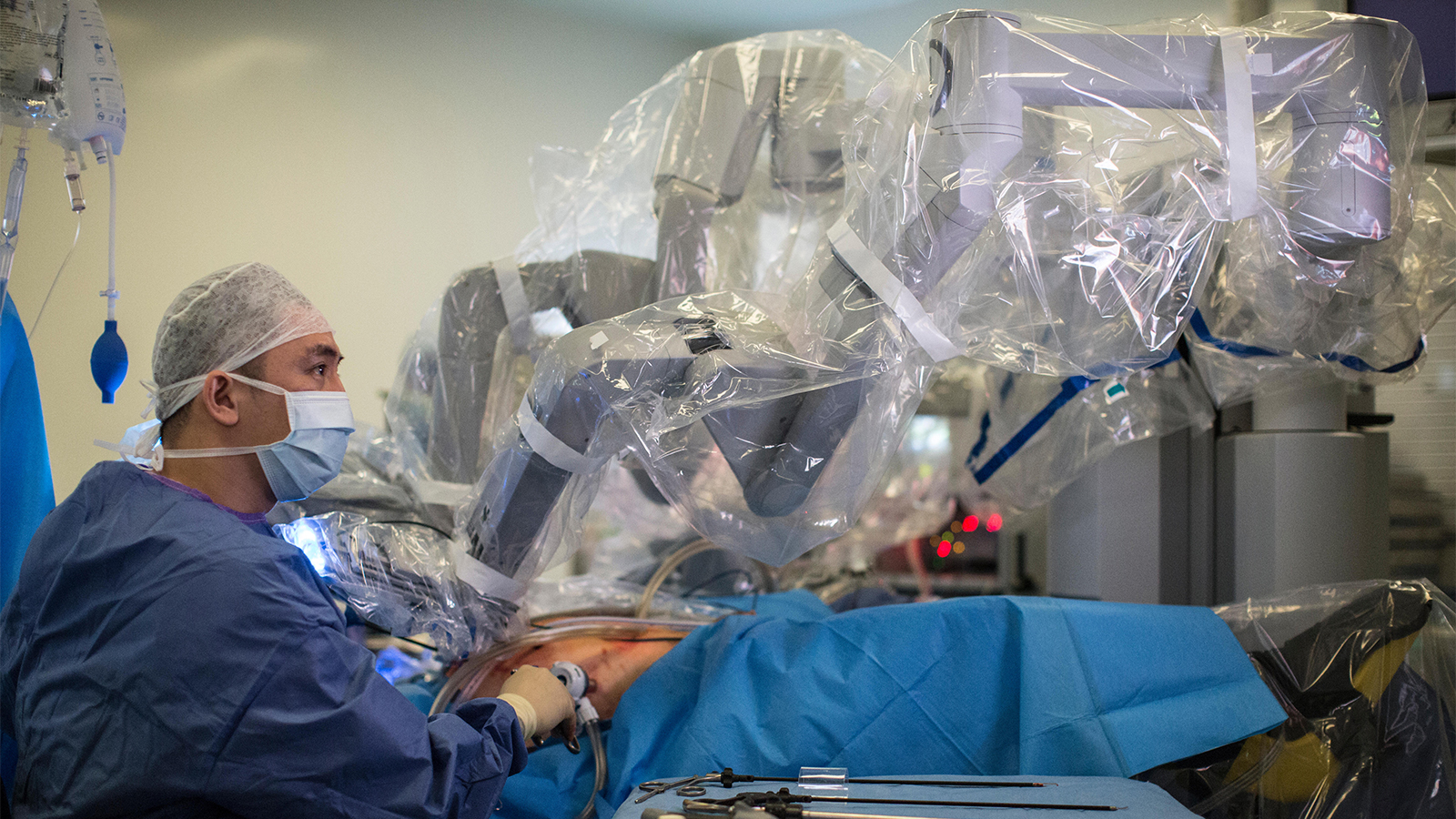
- Extended oral antibiotic prophylaxis eliminated UTIs after robot-assisted radical cystectomy procedures.
- Prophylactic antibiotics reduced overall infections by two-thirds and saved $9,000 per patient.
- Study limitations included small sample size, lack of blinding, and unknown resistance.
The risk of infection, especially urinary tract infection (UTI), after robot-assisted radical cystectomy (RARC) almost disappeared in patients who received extended oral antibiotic prophylaxis, according to a small randomized trial.
No patient developed a UTI within 90 days of RARC with prophylactic antibiotics — with 14% having any kind of infection, a third as many compared with patients who received standard of care (SOC), which did not include oral antibiotics.
The difference translated into a $9,000 per-patient reduction in the cost of care, reported Khurshid Guru, MD, of Roswell Park Comprehensive Cancer Center in Buffalo, New York, and co-authors in the Journal of Urology.
“To our knowledge, this study is the first RCT [randomized controlled trial] that investigated the efficacy of prophylactic antibiotics in the prevention of UTIs after RC [radical cystectomy],” the authors stated. “We found that prophylactic administration of oral antibiotics for 30 days after RARC was associated with a substantial decrease in 90-day UTIs, infectious complications, infection-related readmissions, and cystectomy-related costs without a significant increase in adverse events.”
“UTI-related readmissions represent up to 40% of causes of readmissions after RC, contributing to the significant morbidity of the procedure and adding to the overall cost,” they added. “In this study, none of the patients who received prophylactic antibiotics had a UTI-related hospital readmission or developed sepsis.”
Whether the results apply to open cystectomy remains to be seen, according to the authors.
The study is likely to be practice-changing, despite notable limitations, noted Nicholas Chakiryan, MD, of Oregon Health & Science University in Portland. Lack of a placebo control group and absence of blinding are relevant issues.
“It is usually unclear whether a patient experiencing post-cystectomy failure to thrive has a urinary infection, and if it is known that they are already taking antibiotics, then they will be less likely to receive the diagnosis,” he stated in an accompanying editorial comment. “For this reason, one would expect a degree of bias in favor of the antibiotic arm, as compared with a study that was blinded and placebo controlled.”
“Nevertheless, this represents the highest quality data on the subject and is likely to change practice for many urologic oncologists, myself included,” Chakiryan continued.
Use of a robust definition of UTI (positive culture plus symptoms) is a methodologic strength of the study compared with previous studies, according to a separate commentary by Luigi Nocera, MD, of ASST Spedali Civili in Brescia, Italy, and Alessandro Viti, MD, of Universitá Vita-Salute San Raffaele in Milan. The number needed to treat of 4 is clinically significant and could justify widespread adoption of antibiotic prophylaxis with RARC, they observed.
However, the limited sample size (75 patients), lack of stratification in randomization, sex imbalance between treatment groups, and exclusion of patients with renal dysfunction limit the results’ generalizability. Additionally, the long-term consequences of prophylaxis on antimicrobial resistance remain unknown.
“Although extended antibiotic prophylaxis following RARC appears to significantly reduce infectious morbidity and healthcare costs, its routine adoption requires caution,” Nocera and Viti concluded. “Future large-scale, blinded, placebo-controlled trials with proper stratification are essential to guide evidence-based clinical practice without undermining antibiotic stewardship principles.”
Despite recognition that UTIs contribute significantly to morbidity associated with radical cystectomy, no level 1 evidence exists to support the practice of antibiotic prophylaxis, Guru and co-authors noted. As a result, urologic oncologists and hospitals have adopted various prevention strategies. The current study was designed to address the lack of high-quality evidence.
Investigators in the single-center trial enrolled consecutive patients scheduled for RARC and randomized them to SOC (which included IV ertapenem at anesthesia induction) or SOC plus a 30-day course of prophylactic oral antibiotics following RARC (nitrofurantoin 100 mg daily or trimethoprim/sulfamethoxazole 160/800 mg daily).
Data analysis included 40 patents in the SOC arm and 37 in the antibiotics arm. The study population had a median age of 69, women accounted for a fourth of the patients, and 36% of all patients received neoadjuvant chemotherapy.
The results showed that no patient randomized to oral antibiotics developed a UTI during the first 90 days versus 10 in the control group (P=0.001).
As for secondary endpoints, infectious complications of any type occurred in 43% of the SOC arm versus 14% of the study group (P=0.006), and rates of infection-related readmission were 30% with SOC and 5% with oral antibiotics (P=0.007). UTI-free, infectious complication-free, and infection-related readmission-free survival at 90 days was 74%, 56%, and 69%, respectively, for the control group vs 100%, 87%, and 95% for the study arm (P=0.001, P=0.004, P=0.005, respectively).
The mean cost of post-cystectomy care was $9,074 less per patient in the study arm (P=0.007), and total cost at 90 days was $8,737 lower (P=0.022).
“Antibiotic prophylaxis might be incorporated into standard postoperative care for patients after RC,” the authors concluded.
Disclosures
Guru and co-authors, Chakiryan, Nocera, and Viti reported no relevant relationships with industry.
Primary Source
Journal of Urology
Source Reference: Hussein AA, et al “Do prophylactic antibiotics decrease the rate of urinary tract infections after robot-assisted radical cystectomy? A randomized controlled trial” J Urol 2025; DOI: 10.1097/JU.0000000000004586.
Secondary Source
Journal of Urology
Source Reference: Chakiryan NH “Editorial comments” J Urol 2025; DOI: 10.1097/JU.0000000000004590.
Additional Source
Journal of Urology
Source Reference: Nocera L, Viti A “Editorial comments” J Urol 2025; DOI: 10.1097/JU.0000000000004601.


