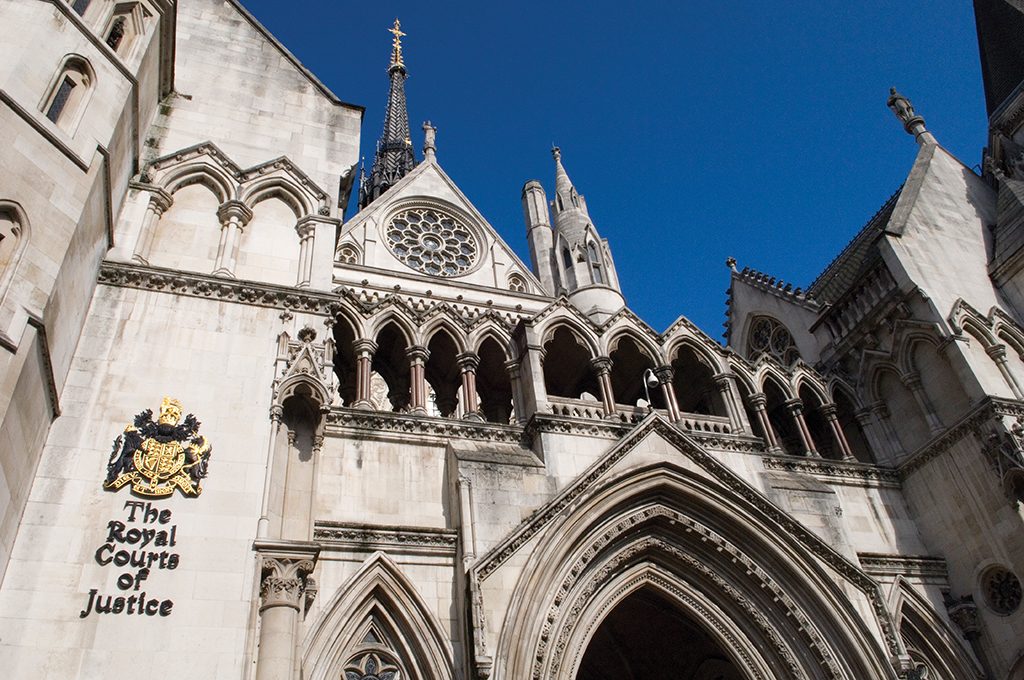


The High Court has dismissed an attempt by NG Bailey Facilities Services to recoup £2.5m in damages it paid out to an injured worker at a subcontractor.
A judge ruled that NG Bailey could not rely on its contractual indemnity because the settlement – made without an admission of liability by the firm – stemmed from its own actual or potential negligence.
NG Bailey took legal action against its subcontractor Beauchamp and Bird Ltd (B&B) after it was sued by James Gambrill.
Gambrill, who was working for Tekna Electrical, suffered a brain injury and was left paraplegic after falling 40ft while changing a lightbulb at Marlowes Shopping Centre in Hemel Hempstead on 21 February 2023.
NG Bailey was providing facilities management services to the shopping centre and had subcontracted the work to B&B, which in turn subcontracted the work to Tekna Electrical.
Gambrill subsequently launched legal action for £10m against NG Bailey alleging that its lead engineer Alastair Kibble instructed him to change a light fitting that was positioned above fragile ducting and boxing, which was unsafe to stand on.
NG Bailey denies Kibble said this.
However, after mediation last October, NG Bailey agreed to settle out of court without admitting liability and paid Gambrill £2.5m in full and final settlement of his claim.
Following the payout, NG Bailey continued with the proceedings in a bid to recover the £2.5m from B&B. Tekna has not been part of the proceedings.
NG Bailey claimed B&B owed it a contribution under the Civil Liability Act on the grounds that Gambrill was employed by B&B and it had a duty to ensure his safety at work.
The contractor also pursued B&B for a breach of contractual indemnity it had under a Trade Framework Agreement (TFA) signed between them in 2020.
Now, ahead of a trial in April, deputy high court judge Guy Vassall-Adams KC has rejected NG Bailey’s claim.
The decision came after B&B applied to the judge last October for summary judgment in respect of the claims on the grounds it was not Gambrill’s employer.
An application by NG Bailey a month later to amend its case to add a new breach of contract claim and a fallback argument for partial indemnity was also dismissed.
The judge found there was “overwhelming evidence” that Gambrill was employed by Tekna and not B&B and therefore B&B had no duty of care to him.
NG Bailey also lost its claim for contractual indemnity as B&B only agreed to pay it for losses “arising from its activities”.
The judge found that even though NG Bailey had made no admission of liability there was an inferred risk of negligence due to the nature of the claim and the size of the settlement.
“Whether this settlement was paid on the basis that Kibble had been negligent or on the basis that it was apprehended he might be found negligent, this was a settlement based on NG Bailey’s liability or contingent liability in negligence,” he said.
“It follows that the loss NG Bailey seeks to recover under the indemnity is a loss arising from its own negligence.”
He has now granted summary judgment to B&B on both the contribution and indemnity claims.
In dismissing NG Bailey’s amended application for partial indemnity, the judge said the “main driver” for it was in response to B&B’s application for summary judgment.
“It was at that point in time that NG Bailey realised that its contribution claim was fundamentally flawed and that its indemnity claim was also imperilled,” he said.
He said this was an “all or nothing” case in which either the TFA entitled NG Bailey to full indemnity or it did not and, as a result of his findings, he ruled it had no “real prospect of success”.
NG Bailey’s new breach of contract claim was also refused due to its late application.