







An article from


Dive Brief
The effort will incorporate a tech-forward curriculum into apprenticeship programs, teaching real-world applications from safety compliance to jobsite problem-solving.
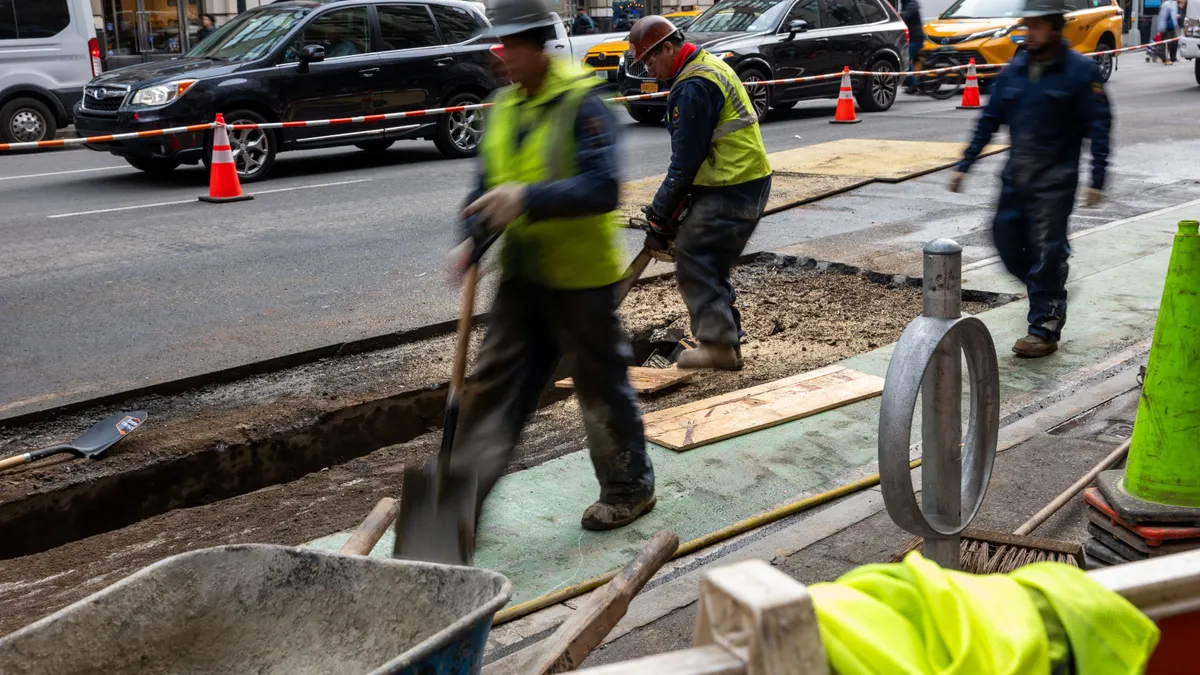

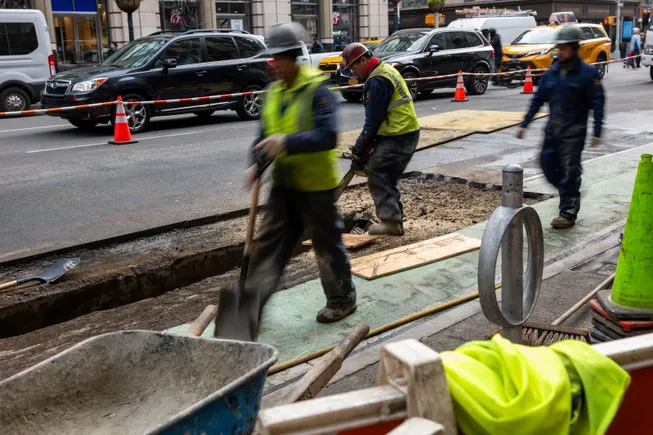
Workers at a construction site in New York City, N.Y. on Jan. 09, 2026.
Spencer Platt via Getty Images
This audio is auto-generated. Please let us know if you have feedback.
Dive Brief:
- North America’s Building Trades Unions and Microsoft have teamed up to deliver AI training to construction trades workers nationwide, aiming to scale digital skills across apprenticeship programs and jobsites.
- The program, announced April 21, focuses on AI literacy, data security and practical applications. It will help instructors generate lesson plans, quizzes and training materials more efficiently and introduce jobsite use cases such as code compliance and safety updates.
- The initiative is designed to reach tens of thousands of workers through NABTU’s network of training centers, with input from contractors to ensure the curriculum reflects real-world jobsite needs.
Dive Insight:
The partnership between NABTU and Microsoft reflects a broader push to define how AI will be used in construction.
The training is structured in phases, beginning with data security and basic AI literacy before moving into practical applications for both instructors and workers, according to Tom Kriger, director of research and education at NABTU.
Early efforts have focused heavily on improving efficiency within apprenticeship programs. Instructors are trained to use AI tools to streamline administrative and teaching tasks, such as lesson planning. The idea is to reduce time spent on preparation and allow more time for hands-on mentoring.
“That’s the whole goal, to make our instructors more efficient so they can spend more time with apprentices,” Kriger said.
But the plan is to also increase the knowledge within jobsite use cases, where younger workers have already begun to informally adopt AI. Focus groups conducted with apprentices revealed that many are using AI tools to solve real-world construction problems, such as interpreting electrical codes or staying current with changing regulations.
For instance, one key use case is safety and compliance. Instead of manually reviewing lengthy OSHA documents, workers and instructors can use AI to quickly identify updates or reconcile changes in standards, which could previously require extended manual review.
Still, construction presents a different environment for AI adoption compared to other industries. While white-collar roles such as estimating or accounting may see greater automation, Kriger noted the hands-on nature of trade work provides a buffer.
“AI can’t turn wrenches and it’s not going to lay bricks,” he said. “AI is more likely to support decision-making and knowledge access than replace craft labor.”


