

Diesel is critical to Australia. Any supply disruption has immediate and widespread consequences, given Australia imports almost 80% of its liquid fuels. As the energy shocks of the Iran war ripple out, Australia’s leaders have scrambled to shore up supplies of fuel – especially diesel and aviation fuel.
Disruptions to fuel supplies have happened before, such as in 2008 and 2022. This disruption won’t be the last.
What should policymakers do? One option is to ramp up local production of biofuels made not from crude oil but from natural oils such as canola, animal fats – or algae.
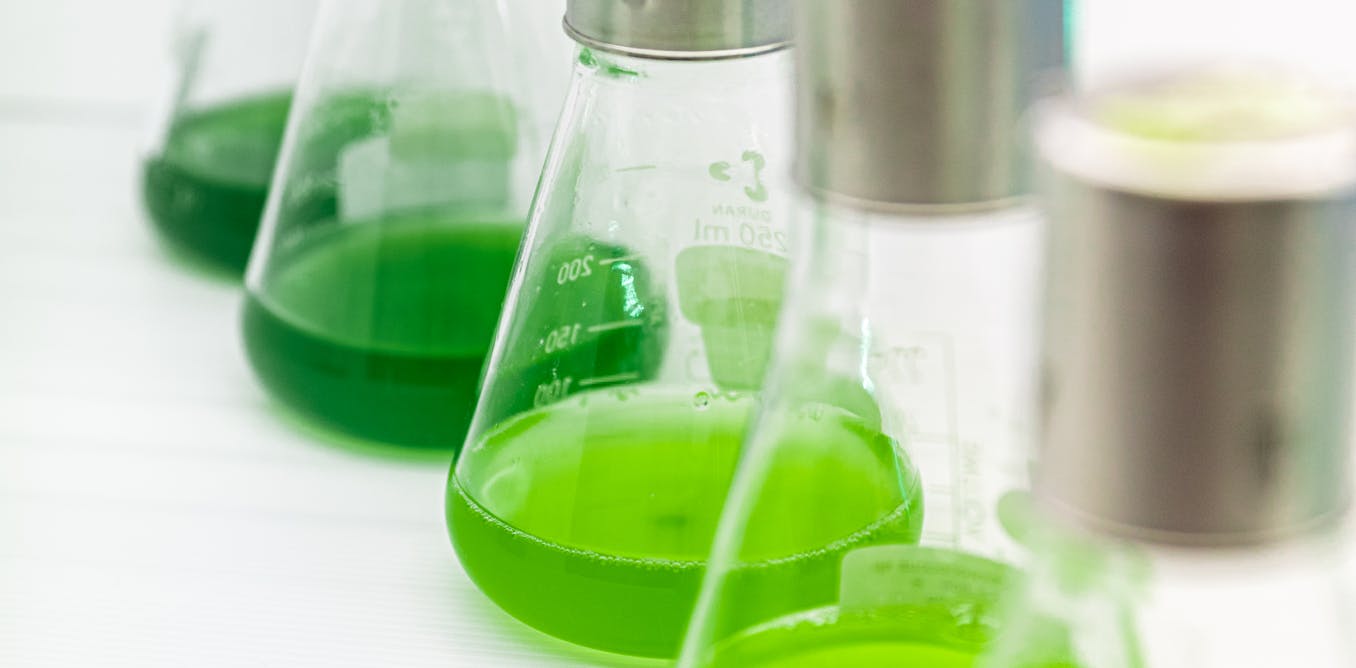
As algae researchers, we believe these humble organisms are worth exploring. Making biodiesel and sustainable aviation fuel from these fast growing organisms can be done with much less land than other crops. Technological advances mean the fuel could scale up.
Many biofuels come with trade-offs
Biofuels have gained traction worldwide as efforts to reduce dependence on fossil fuels and meet climate targets accelerate.
The Australian biofuel sector is relatively small. Farmers exported about 6 million tonnes of canola in 2023–24 to be turned into biofuels overseas.
The Australian government last year announced A$1.1 billion in incentives to boost low-carbon fuels such as biofuels.
Biofuels from corn, soybean, canola and palm oil have boosted fuel security in some nations. Brazil produces 22% of its own transport fuel from biofuels, while biofuels account for 6% of the fuel used in the United States.
The problem is, biofuels often come at an environmental cost. A third of all US corn is used to make ethanol for fuel.
What’s so good about algae?
The type we’re interested in are microalgae, single-celled organisms, not macroalgae such as kelp and other types of seaweed.
These small organisms can grow exceptionally rapidly and hold high concentrations of oils. Many microalgae species can double their weight every day. Nannochloropsis and Chlorella are the two main types used to make oil.
Traditionally, algae was grown in large, shallow outdoor pools called “raceways”. They’re now increasingly grown in high-efficiency algae bioreactors.
Algae can be processed using proven technologies such as hydrothermal liquefaction to produce biodiesel able to be used in existing trucks and machinery. It can also produce sustainable aviation fuel.
Compared to crop-based biofuels, algae has several advantages. It doesn’t compete with food production and it can be grown on non-arable land or in industrial facilities. Some species can grow in saltwater or even treat wastewater while using it for growth. If algal facilities are located near heavy industry, carbon emissions can be captured and used for algal growth in a form of carbon storage.
Algal fuels needs much less land than conventional biofuels. A hectare of algae can yield more than 58,000 litres of oil per year. By contrast, a hectare of corn produces just 172 litres.

mayaluana, Author provided (no reuse)
What are the barriers?
Interest in algal fuel dates back many decades. Oil shocks in the 1970s and 1990s drove significant research into algae-based fuels. But when oil prices fell, algal biofuels were no longer cost-competitive.
Since the 1990s, technologies have matured and policy settings become more favourable. Efforts to reduce fossil fuel use have put an implicit or explicit price on carbon. Mandates to increase output of sustainable aviation fuel are emerging in the European Union.
Fossil fuel price shocks in 2022 and 2026 have nudged authorities to seriously explore alternatives. Sovereign fuel security has become a strategic priority. Both the United Arab Emirates and the US are exploring algal fuels as a long-term strategic asset.
Algae for Australia?
Australia would be well placed to explore the potential of algal fuels. It has plenty of non-arable land, abundant sunlight and some of the world’s best algae research capabilities. Plus, it depends very heavily on imported diesel and aviation fuel.
Our research group and many others have been systematically working to overcome previous limitations of algal biofuels. We now know how to produce high-quality algal fuels and scale up production at costs low enough to challenge fuels derived from crude oil.
The first step would be to invest in pilot projects to prove the technology can work at scale under real-world conditions. Overseas, similar pilots have been set up next to industry to test the use of carbon capture, or alongside research partners.
If this is successful, the next step would be to build facilities in regional locations where fossil diesel is in demand and expensive to transport – and where algae can offer a dual benefit by treating wastewater or capturing carbon.
Over time, the versatile technology could be expanded, as algae can produce not only biodiesel but also other useful products such as edible protein for animal feed and biochar, highly porous charcoal able to soak up pollutants such as heavy metals.

mayaluana, CC BY-NC-ND
Algae deserves our attention
Many previous efforts to scale up biofuels have run into problems over environmental impact or cost.
It’s important to be sceptical of claims of the next big thing. But it’s also important not to overlook the potential of humble technologies such as making fuel from algae.
As leaders look for ways to bolster fuel security, algae deserves a closer look.
