



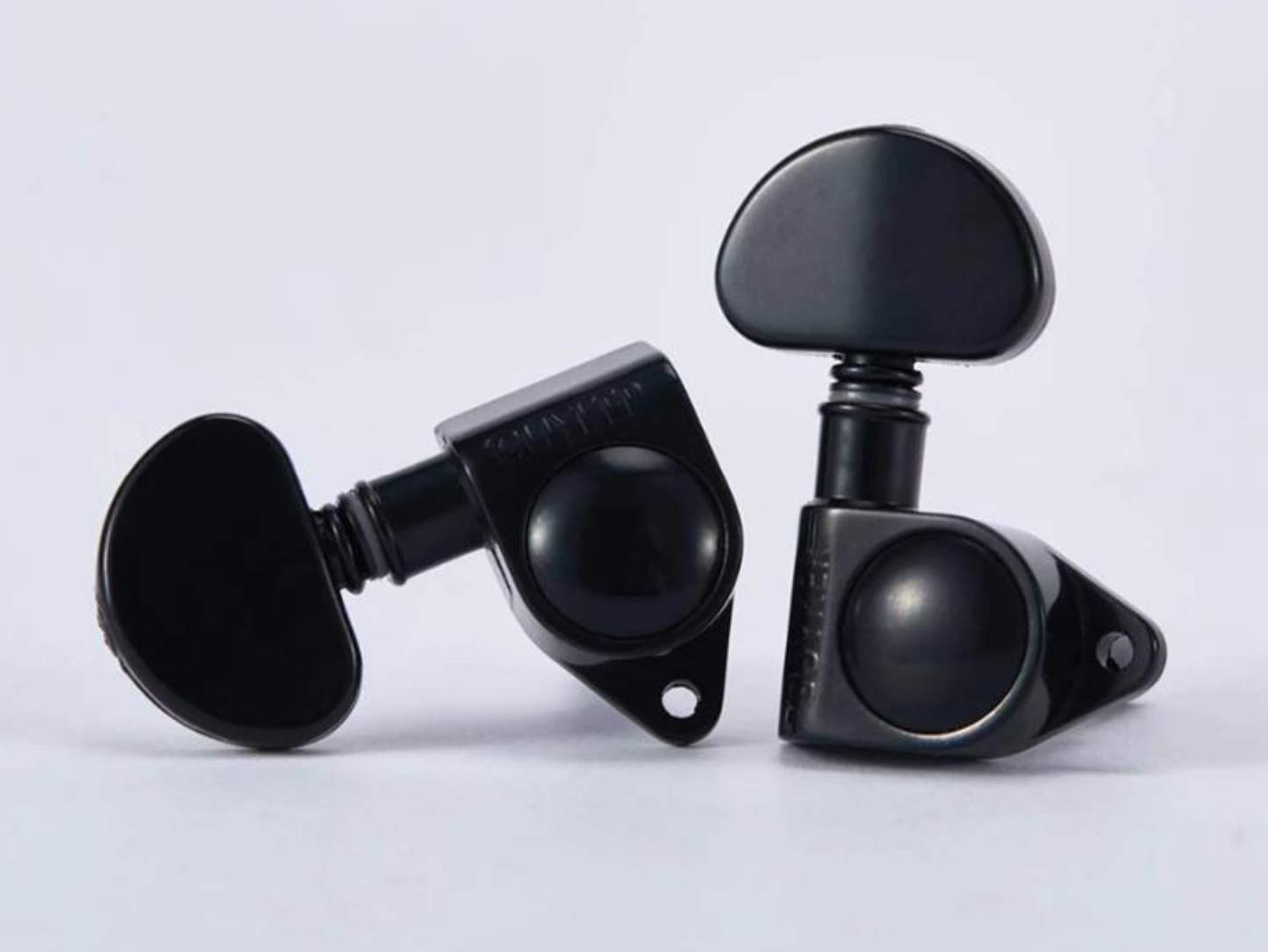
You tune your guitar, and then you play. Yet there is still a slip out of tune. This is one of the issues that many players have. This problem is usually because of the guitar tuning machines.
Some guitars come with standard tuners, while others use locking tuners; both types of the guitar’s tuning machines offer unique advantages. Choosing the right one can make a noticeable difference in tuning stability and overall performance.
In this blog, we will make a comparison between the two and assist you in making a decision.
What are Standard Tuning Machines?
The most typical type of tuning machine on the guitar is standard tuning machines. They have a basic gear mechanism to slacken or tighten strings.
These tuners are simple to operate and cheap. They are included with many entry-level and intermediate guitars.
Basic Design and Function
Normal tuners have a tuning peg, gear, and post. The cord is around the post. Turning the peg adjusts string tension. The mechanism controls pitch. The design is simple and easy to understand. It is perfect for daily use and practice.
How Do They Work?
You insert the string through the post. Then you wrap it several times. Turning the tuner increases or decreases tension. More wraps assist in securing the string. But too many wraps can cause tuning instability over time.
Advantages of Standard Tuning Machines
These tuners are easy and common. Like,
- Easy to install and replace.
- Affordable choice for beginners.
- Works well for basic playing needs.
- Compatible with most guitar types.
- Simple design with low maintenance.
Disadvantages of Standard Tuners
They also come with some limitations. Like,
- Strings can slip if not wrapped properly.
- Tuning may go out faster.
- It takes more time to change strings.
- Less stable during heavy playing.
- Requires more adjustments.
What are Locking Tuning Machines?
Locking tuning machines are advanced tuners. They hold the string firmly using a locking mechanism. This technique saves the use of several wraps.
They are used by professional players because they tune more easily, and the strings can be changed quickly.
Design and Locking Mechanism
Tuners with locks have a built-in clamp. It locks the string in place. You do not need many wraps. It takes only a little twist to tune. This increases the speed and reliability of the process.
How Do They Work?
You insert the string into the post. Then tighten the locking knob. The string is held securely. A small turn is enough to tune. This makes the process quicker and more dependable.
Advantages of Locking Tuning Machines
These tuners offer modern benefits. Like,
- Faster and easier string changes.
- Better tuning stability.
- Less string slipping.
- Ideal for live performances.
- Great for heavy playing styles.
Disadvantages of Locking Tuners
Although they have these advantages, they also have disadvantages. Like,
- More expensive than standard tuners.
- Slightly heavier design.
- May not fit all guitars.
- Requires careful installation.
- Not always needed for beginners.
Key Differences Between
Locking and Standard Tuners
Both types are similar, but their modes of operation are different. Let’s compare them clearly.
-
Tuning Stability
Locking tuners provide better stability. They hold the string tightly to reduce slipping. Standard tuners depend on proper wrapping. If not done correctly, tuning may go out more often.
-
String Changing Speed
Locking tuners are much faster. You lock the string and tune quickly. Standard tuners take more time because of multiple wraps. This process can slow down string replacement.
-
Cost and Value
Standard tuners are affordable. They can be used by beginners and amateurs. Tuners that are locked are more expensive and have better performance. They are a good investment for serious musicians.
-
Ease of Use
Standard tuners are simple but require skill in string wrapping. Tuners with locks are simpler to operate. They make tuning easier for beginners. This technique helps those who struggle with string tuning.
Which One Should You Choose?
It is up to your playing style. When you are a beginner, regular tuners are enough. They are easy and cheap.
Locking tuners are better when you play frequently or play live. They save time and enhance tuning stability. Select depending on the requirement and price.
When to Upgrade Your Tuning Machines?
You should upgrade when tuning becomes unstable. If strings slip often, it is a sign. Frequent string changes also indicate the need for better tuners.
Upgrading to locking tuners can improve performance. It makes tuning easier and more reliable, especially for regular players.
Conclusion
Both locking and standard tuning machines have their own value. Standard tuners are simple and cost-effective. Tuners with locking are more convenient.
The correct decision will rely on your playing requirements. Standard tuners can be used by beginners. Upgrading helps advanced players get better performance. It improves tuning stability and control.
Choosing the right guitar tuning machines matters. It gives a smoother and more reliable sound.