







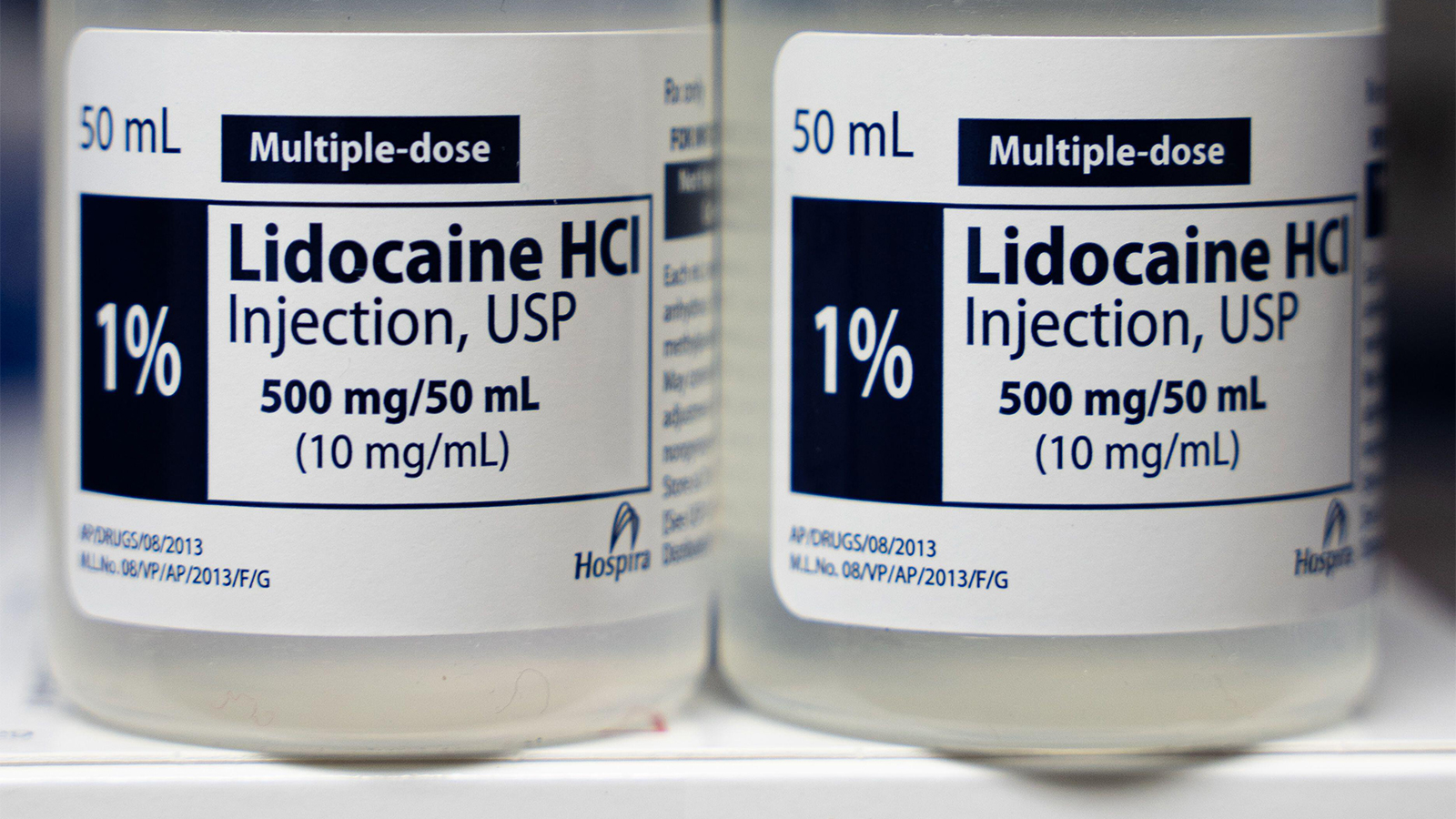
- Deaths from lidocaine poisonings more than doubled since 2010, calls to poison control centers suggested.
- Calls about local anesthetic poisonings decreased by 23%, mainly due to fewer non-lidocaine cases.
- Case reviews attributed increases in lidocaine poisonings to large doses administered in emergency settings.
Deaths associated with lidocaine poisoning more than doubled since 2010, calls to poison control centers suggested.
Reports of lidocaine mortality in the American Poison Centers National Poison Data System (NPDS) increased 2.7 fold from 2011 to 2022 relative to the prior decade (P=0.0094), according to Michael Fettiplace, MD, PhD, of the University of Illinois Chicago College of Medicine, and co-authors.
In the same period, overall reports of local anesthetic poisonings decreased by 23% (OR 0.77, 95% CI 0.76-0.78, P<0.0001), driven by a drop in non-lidocaine reports, the researchers reported in Regional Anesthesia & Pain Medicine.
About half (47%) of local anesthetic mortality reports before 2010 were in the operating room; that percentage fell to 15% after 2010. Local anesthetic mortality reports in prehospital settings (emergency medical services or emergency department) rose from 7% to 31% in the same period.
The overall reduction in the number of poison control calls “undoubtedly reflects the success of safety measures related to potent peri-operative local anesthetics, including bupivacaine and ropivacaine [Naropin],” Fettiplace said.
“These measures include professional society advisories that incorporate the use of lipid emulsion as a treatment for local anesthetic systemic toxicity, as well as the routine use of ultrasound for regional anesthesia. Our study provides the first epidemiological evidence supporting the impact of these interventions, likely reflecting the lives they have saved,” he told MedPage Today.
The rise in deaths associated with lidocaine was unexpected, Fettiplace said. “In retrospect, it is not surprising. Practitioners have a healthy fear of bupivacaine, but most providers think lidocaine is safe,” he observed.
“Consistent with this fear, more potent local anesthetics like bupivacaine and ropivacaine are distributed in doses that reflect upper limits in humans — 150 mg in a vial, equal to the upper limit recommended dose in adult humans,” Fettiplace pointed out. “Conversely, lidocaine is distributed in doses intended for multiple or prolonged use — 2,000 mg in a bottle or IV bag when 300 mg is the upper limit recommended dose in adult humans.”
Lidocaine is available in over-the-counter formulations that have been used for self-harm, he added.
Local anesthetics are widely used for pain control but come with the risk of local anesthetic systemic toxicity (LAST), prompting the American Society of Regional Anesthesia and Pain Medicine to issue a practice advisory in 2010. Treatment recommendations evolved after that, with anesthesia groups, toxicology societies, and the American Heart Association issuing new guidance.
To examine what happened before and after the 2010 practice advisory, the researchers reviewed reports submitted to U.S. poison control centers from 1983 through 2022. They evaluated the annual number of reports of poisoning and deaths from local anesthesia, grouped by lidocaine and non-lidocaine drugs.
From 1983 through 2022, there were 203,853 local anesthetic poisonings and 74 deaths. From 2001 to 2022, 0.11% of lidocaine poisoning reports resulted in a death report, compared with 0.012% of reports of non-lidocaine poisoning.
Lidocaine poisoning reports rose from 1,600 in 2016 to 2,500 in 2021. Individual case reviews attributed this surge to large doses of intravenous lidocaine being administered by emergency medical services and in emergency department settings. Lidocaine deaths frequently involved doses exceeding the recommended upper limit, including doses of 2,000 mg.
“There is an apparent disconnect between management of LAST by anesthesiologists and management of LAST by emergency providers. Beyond the operating room, we suggest assessing the use of large doses of lidocaine and availability of lipid emulsion in emergency and prehospital settings,” Fettiplace and colleagues wrote.
“Lidocaine is not as safe as we think,” Fettiplace noted. “Steps are needed to prevent further adverse events, including education of providers, modification of access to high doses of lidocaine, professional society recommendations about safe use, and potential changes to packaging.”
The analysis had limitations centered around reporting bias in NPDS data, the researchers acknowledged, including under-reporting and a lack of clinical information about all cases.
“Importantly, this study does not quantify the actual risk of poisonings/death from local anesthetics, but instead the relative rate of reporting to NPDS about local anesthetics as a source of poisoning/death,” they wrote. “Additional studies are needed to corroborate this result.”
MedPage Today. She writes about brain aging, Alzheimeru2019s disease, dementia, MS, rare diseases, epilepsy, autism, headache, stroke, Parkinsonu2019s disease, ALS, concussion, CTE, sleep, pain, and more. Judy started her career with the Congressional watchdog agency GAO and has been a magazine reporter, academic text editor, and radio producer. She holds a BA in English from University of Detroit, MBA from Xavier University, and attended Columbia Radcliffe Publishing Course. Besides writing about neurology, sheu2019s reported on topics ranging from mental health to environmental contamination. Her work has been published in outlets as diverse as Business Week, Conde Nast’s Self, and AlterNet.”,”affiliation”:””,”credential”:””,”url_identifier”:”jg8109″,”avatar_url”:””,”avatar_alt_text”:”Judy George”,”twitter”:”https://twitter.com/MedPageNeuro”,”byline”:”Deputy Managing Editor, MedPage Today”,”full_name”:”Judy George”,”title”:”Deputy Managing Editor, MedPage Today, “,”url”:”https://www.medpagetoday.com/people/jg8109/judy-george”}]”>
Disclosures
The researchers did not report funding for this research from any agency in the public, commercial, or nonprofit sectors.
Fettiplace had no disclosures. One co-author reported being an officer and shareholder of ResQ Pharma.
Primary Source
Regional Anesthesia & Pain Medicine
Source Reference: Fettiplace M, et al “The impact of local anesthetic systemic toxicity advisories on reporting to the National Poison Data System (NPDS)” Reg Anesth Pain Med 2025; DOI: 10.1136/rapm-2025-106464.


