



India’s southwest monsoon is unevenly advancing, with Mumbai awaiting its onset. Bengal and Tamil Nadu experience heavy rainfall.


India’s southwest monsoon is advancing unevenly across the country. Mumbai awaits its official onset while heavy rain batters Bengal and Tamil Nadu.
Parts of central India continue to swelter under heat wave conditions. Meanwhile, a significant rainfall deficit is raising early concerns over kharif crops and food prices.
Mumbai on Orange Alert
The Brihanmumbai Municipal Corporation (BMC) issued an Orange alert for Mumbai on Monday, 22 June. It cited IMD forecasts of thunderstorms, lightning and gusty winds.
Wind speeds of 30-40 kmph were predicted at isolated places. Several areas, including Bandra East, witnessed pre-monsoon showers in the morning. Waterlogging and traffic disruptions were reported in some locations.
The monsoon onset in Mumbai was expected on Monday or Tuesday. The IMD will confirm the onset only when all required parameters are met. Mumbai’s monsoon normally arrives around 10 June. This year, its progress stalled due to unfavourable weather conditions.
Rainfall data showed sharp variations across the city. Pali Chimbai School and Supari Tank School in Bandra recorded 70 mm each. Savitribai Phule BMC School at Worli Naka recorded 61 mm in one hour. The island city averaged 17 mm between 6 am and 7 am. No major waterlogging incidents were reported during this period.
Heatwave in India
The IMD expects further monsoon advance into parts of Maharashtra around 23 June. Conditions are also favourable for advancing into Telangana, Odisha, Jharkhand and Bihar. Konkan and Goa will see intensifying rainfall between 23 and 27 June. Thunderstorms with winds up to 60 kmph are expected over Konkan and Goa.
Heat wave conditions pose a concern in parts of central India. Vidarbha, East Madhya Pradesh and East Uttar Pradesh face severe heat for 4-5 days. Chhattisgarh faces heat wave conditions for the next 3 days. Telangana remains under a heat wave alert for 2 more days.
Bengal Battered by Heavy Rain
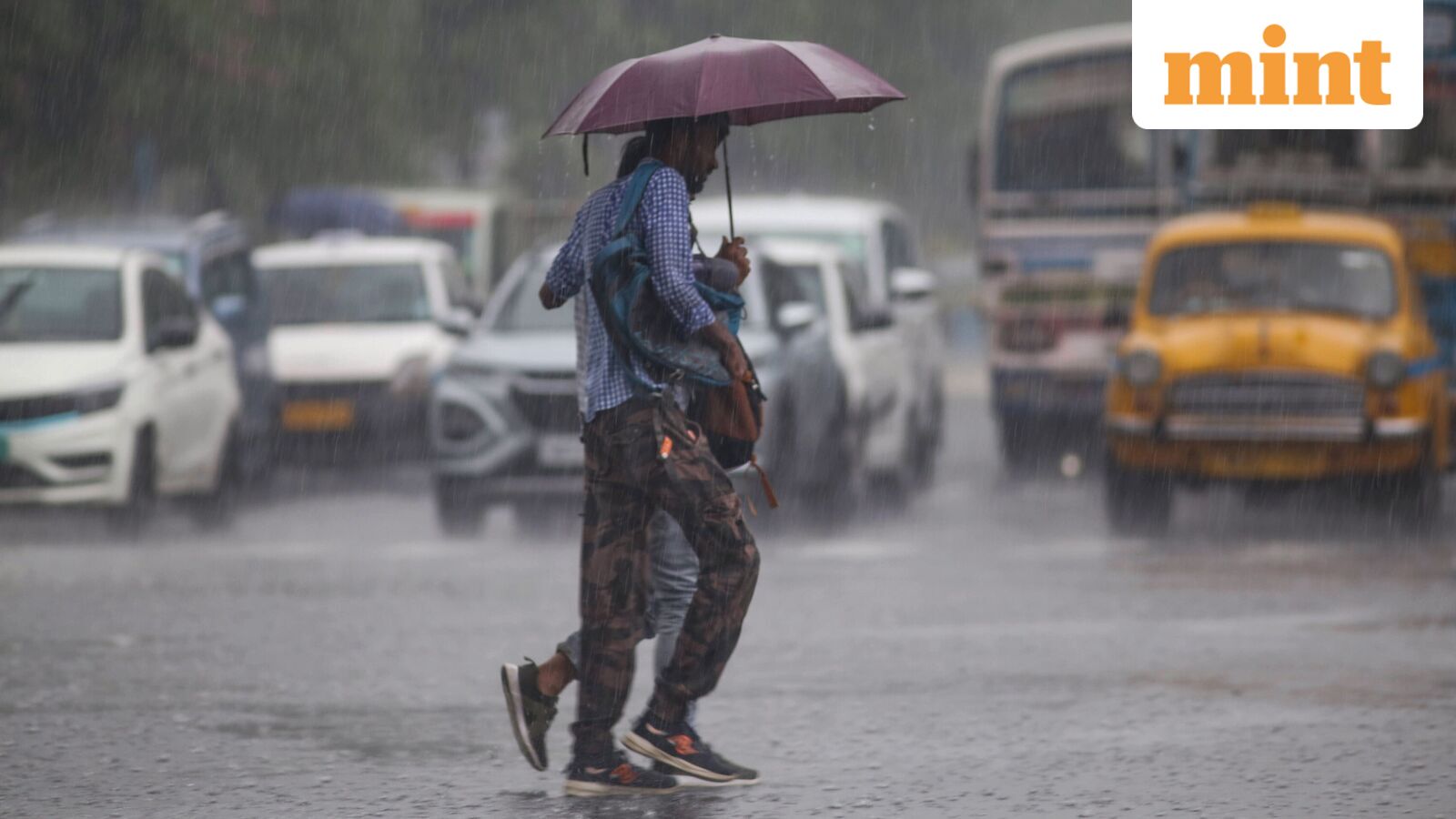
Heavy rains lashed Kolkata and surrounding areas on Sunday, 21 June. Severe waterlogging brought vehicular traffic to a standstill. NEET re-test aspirants struggled to reach their examination centres. The local weather office confirmed the monsoon had advanced into West Bengal.
North Bengal faces more severe conditions than the southern districts. A red alert has been issued for Alipurduar and Jalpaiguri districts. Orange alerts are active for Darjeeling, Kalimpong and Cooch Behar. Sub-Himalayan West Bengal and Sikkim are bracing for extremely heavy rainfall this week.
Tamil Nadu and Goa
Heavy rain is expected over the Nilgiris, Coimbatore, Theni and Kanyakumari. Ghat areas of Tirunelveli district also face significant rainfall through Monday. Aavoor in the Thiruvarur district recorded 14 cm of rain in 25 hours. Fishermen have been warned of squally conditions over the Bay of Bengal.
Goa received light showers on Sunday ahead of a two-day alert. The average temperature in Goa stood four degrees above normal. State reservoirs currently hold enough water to last about one month.
Kharif Crops
A research report by 360 ONE Capital Research raised concerns about agriculture. Cumulative rainfall as of 17 June stood at 46.2 mm against a normal of 74.3 mm. This represents a 38% deficit for the season so far. Nearly 66% of India’s districts have received scanty or deficient rainfall.
Kharif sowing as of 12 June fell 3.9% compared to last year. Pulse sowing dropped sharply by 43.2% year-on-year. Cotton sowing declined by 28%. Rice sowing, however, rose 28.4%, offering some relief.
Reservoir levels remain a positive factor. Live storage stood at 28.3% of total capacity on 11 June. This is around 16% above the ten-year average. The July–August period will be critical for the season’s overall outcome.
(With PTI and ANI inputs)
About the Author
Sounak Mukhopadhyay
Sounak Mukhopadhyay covers trending news, sports and entertainment for LiveMint. His reporting focuses on fast-moving stories, box office performance, digital culture and major cricket developments. He combines real-time updates with clear context for everyday readers.
Sounak brings newsroom experience across breaking news, explainers and long-form features. He has a strong emphasis on accuracy, verification and responsible storytelling. His work tracks audience behaviour, celebrity influence and the business of sport and cinema. He helps readers understand why a story matters beyond the headline.
Sounak has contributed to widely read digital publications. He continues to build a body of journalism shaped by consistency, speed and editorial clarity. He is particularly interested in the intersection of media, popular culture and public conversation in contemporary India.
At LiveMint, he writes daily coverage as well as analytical pieces that interpret numbers, trends and cultural moments in accessible language. His approach prioritises factual depth, balanced framing and reader trust. The reporting aligns with modern newsroom standards of transparency and credibility.
Outside daily reporting, he explores storytelling across formats including podcasts, filmmaking and narrative non-fiction. Through his journalism, Sounak aims to document the rhythms of modern entertainment and sports while maintaining rigorous editorial integrity.
Sounak continues to develop audience-focused journalism that connects speed with substance in a rapidly-changing information environment. His work seeks clarity, trust and lasting public value in every story he reports.