



National News
Federal courts in Rhode Island and Massachusetts issued rulings Friday ordering the Trump administration to continue funding SNAP through the government shutdown.

By Jenna Russell, New York Times Service
5 minutes to read
Share
Share
Send this article to your social connections.
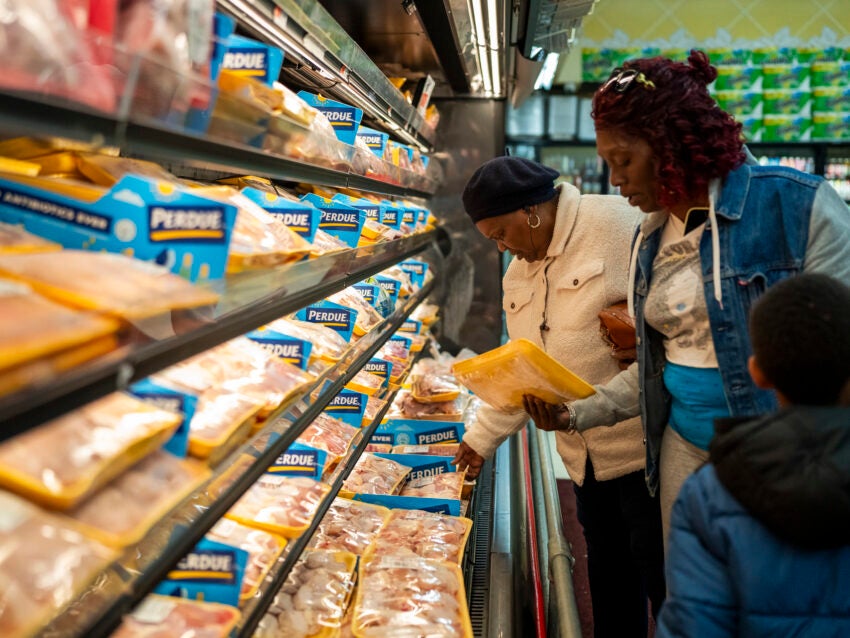
SPRINGFIELD, Mass. — On a normal Saturday morning grocery run, Angela Duncan of Springfield, Massachusetts, would have stacked the usual staples in her cart: potatoes, rice, cereal, juice. Maybe some cookies for her grandchildren.
But on this Saturday, with the future of her federal food assistance benefits clouded by uncertainty, she moved cautiously through the store, America’s Food Basket, a look of worry on her face as she shopped with her daughter and young grandson. Duncan, 65, had $52 of her $289 monthly food benefit left, and little hope that her card would be reloaded Sunday as scheduled.
She placed one can of pinto beans in her cart. “I think I have another can at home,” she said. Then she leaned in to study the jugs of canola oil on the shelf.
“Oh, child,” she said softly to her daughter. “Does that say $6.49?”
“That’s too much,” replied her daughter, Levitica Thomas, 46.
Across the country, families like Duncan’s woke to another day of anxiety about how they would get their next meals in the weeks ahead. Federal courts in Rhode Island and Massachusetts issued rulings Friday ordering the Trump administration to continue funding the Supplemental Nutrition Assistance Program, or SNAP, through the government shutdown. The regular budget for the program was set to run out Saturday.
President Donald Trump, who had previously refused to tap emergency funds to continue the food benefits, said after the court rulings that his administration would do so. But he warned that the flow of benefits would be delayed as he sought further direction from the courts on how to “legally” comply, and as states resumed distributing the money.
In a written decision Saturday, the judge in the Rhode Island case ordered the administration to begin restoring funding as early as Monday.
At America’s Food Basket, a small chain grocery tucked into a busy shopping plaza with a nail salon, a dollar store and a McDonald’s drive-thru, shoppers on Saturday said the legal wrangling gave them little comfort. The store sits in a neighborhood where many residents are immigrants and migrant workers; at the elementary school across the street, 93% of students come from low-income families, according to state data.
More than 1 million residents in Massachusetts rely on federal food assistance, according to the state. One-third are children; one-quarter are older adults. More than 20,000 are veterans. Springfield, a city of 155,000 people 90 miles west of Boston, has the highest rate of SNAP reliance in the state: 46% of all residents, about 71,000 people, receive the monthly benefits.
Among them was Duncan, whose efforts to spend as little as possible on groceries quickly collided with the ways she cares for her family and community. She expected to feed 11 people at dinner Saturday night, including children and grandchildren. On Sunday morning, she had planned to bring food to her church for a midday meal after the worship service.
With some trepidation, she picked up a 10-pound package of turkey wings, priced at $38.41. “I’m going to stretch it,” she said, to cover meals throughout the weekend.
Her grandson ran up with a package of Oreo cookies.
“No, we are not getting that,” his mother, Thomas, firmly told the 7-year-old.
Even so, when the family’s bill was totaled, Duncan’s $52 fell short. Her daughter ran out to the car and returned with her wallet to pay the $10 her mother could not.
Nicole Sanchez, a human resources assistant at the market, said the aisles were unusually quiet Saturday, and managers may have to reduce shifts and hours for employees if the government shutdown and benefit disruptions continue.
A majority of customers there rely on federal food aid, she said.
“Normally it would have picked up by now, and all the registers would be open,” Sanchez said around noon, as some cashiers stood idle at their stations.
Several shoppers said they were buying less and stretching to make their groceries last longer, worried that their scheduled benefits may be delayed, if they show up at all. Fernando Rosario, 50, left the store with just an armful of items, for a total of $22.40: cans of tomato sauce, beans and peas; a 10-pound bag of rice; and a small box of seasoning.

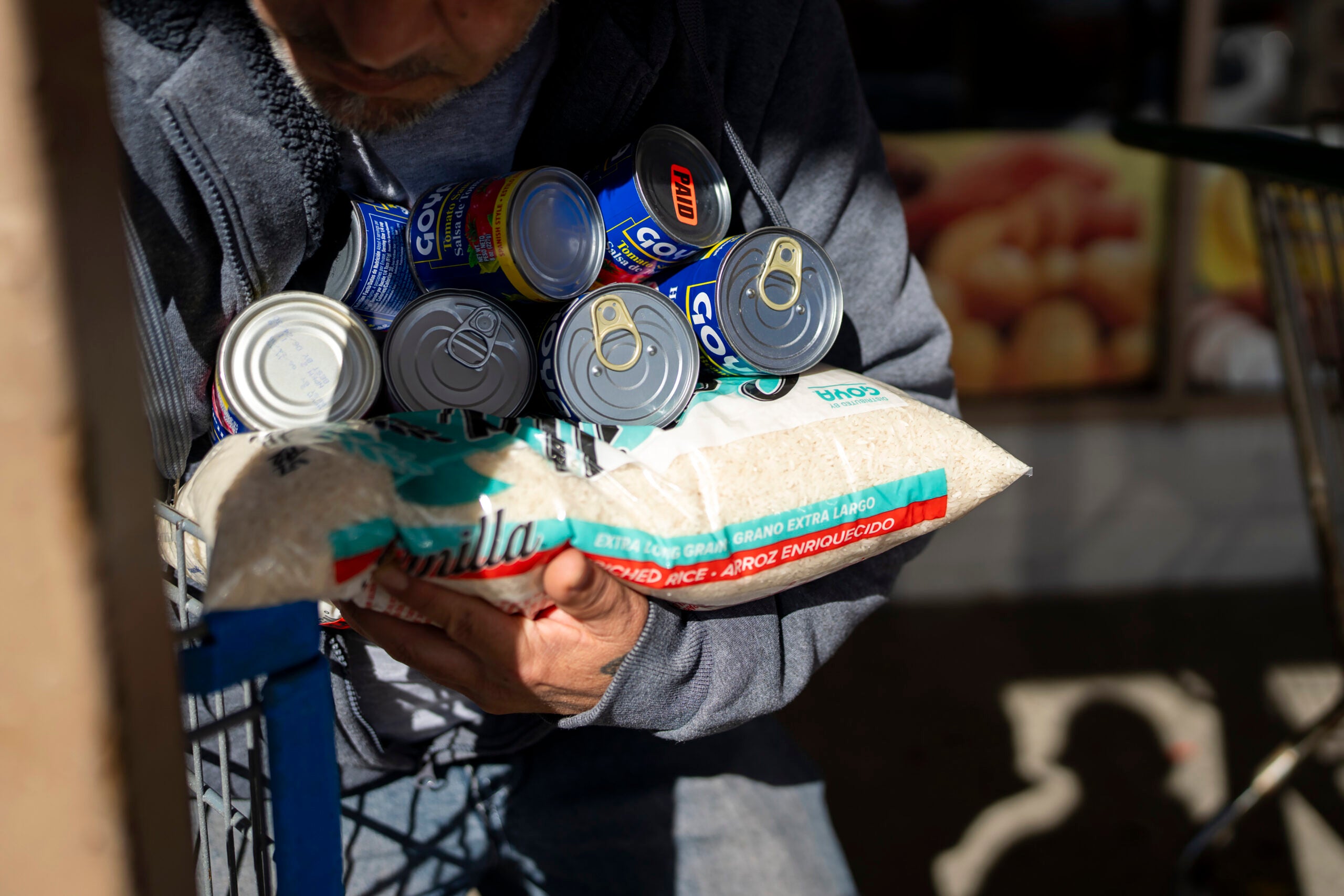
“Normally I would get meat,” he said. But worries about his wife’s $100 monthly SNAP benefit, and his own dwindling work hours, made him hesitant.
“I could be mad at the world, but that’s not going to help,” he added. “I’ve just got to do what I can, and pray to God.”
Christophe Niyibizi, 67, said he and his wife had begun limiting themselves to one full meal each day, in midafternoon, to try and make their food last longer. After spending $14 on Saturday for a few groceries, he had $83 remaining — and no way of knowing if his next monthly benefit would show up as scheduled in 10 days.
Placing his small grocery bag into his car, Niyibizi shrugged and smiled when asked if he felt hungry. A U.S. citizen who immigrated to the United States from Congo a dozen years ago, he recalled how he had prayed, while still in Africa, that he would make it to America one day.
“This country is a good country, 100%,” he said. “This is the first time we’ve had this problem.”
Several shoppers at the store said they did not receive food benefits but felt deeply worried for those who did.
“This shouldn’t happen in this country,” said Johnnie Gomes, 62, of Springfield. “People who need help shouldn’t have to beg.”
Gov. Maura Healey and state legislators fast-tracked millions of dollars to food banks statewide to help address the crisis, while nonprofit fundraising campaigns tapped private donors. An appeal sent out Thursday by the nonprofit Boston Foundation generated $750,000 in emergency relief donations “overnight,” Lee Pelton, its CEO, said at a news conference Friday, and “that is just the beginning.”
In Springfield, smaller efforts to fill gaps were underway. Half a mile from America’s Food Basket, at the nonprofit Walnut Street Farm Store, where SNAP recipients can use a state-funded benefit to buy fresh local produce, Liz Wills-O’Gilvie, the executive director, had decided to hand out free milk and eggs to customers caught in the SNAP funding freeze, before she had devised a plan to pay for it.
By Saturday, a local car dealer, Balise Chevrolet, had stepped forward to help foot the bill. And by midafternoon, workers at the farm store had gifted a gallon of milk and a dozen eggs to a woman who came in to buy carrots and a cabbage.
“These are my neighbors,” Wills-O’Gilvie said.
This article originally appeared in The New York Times.
Extra News Alerts
Get breaking updates as they happen.


